
An elevated PSA level means the amount of prostate-specific antigen in your blood is higher than expected. An enlarged prostate, inflammation, infection or prostate cancer can all raise PSA. A single high PSA result cannot diagnose prostate cancer. If this is your first raised result and you feel well, your doctor will often suggest repeating the blood test before deciding whether you need further investigations.
What does the PSA test measure?
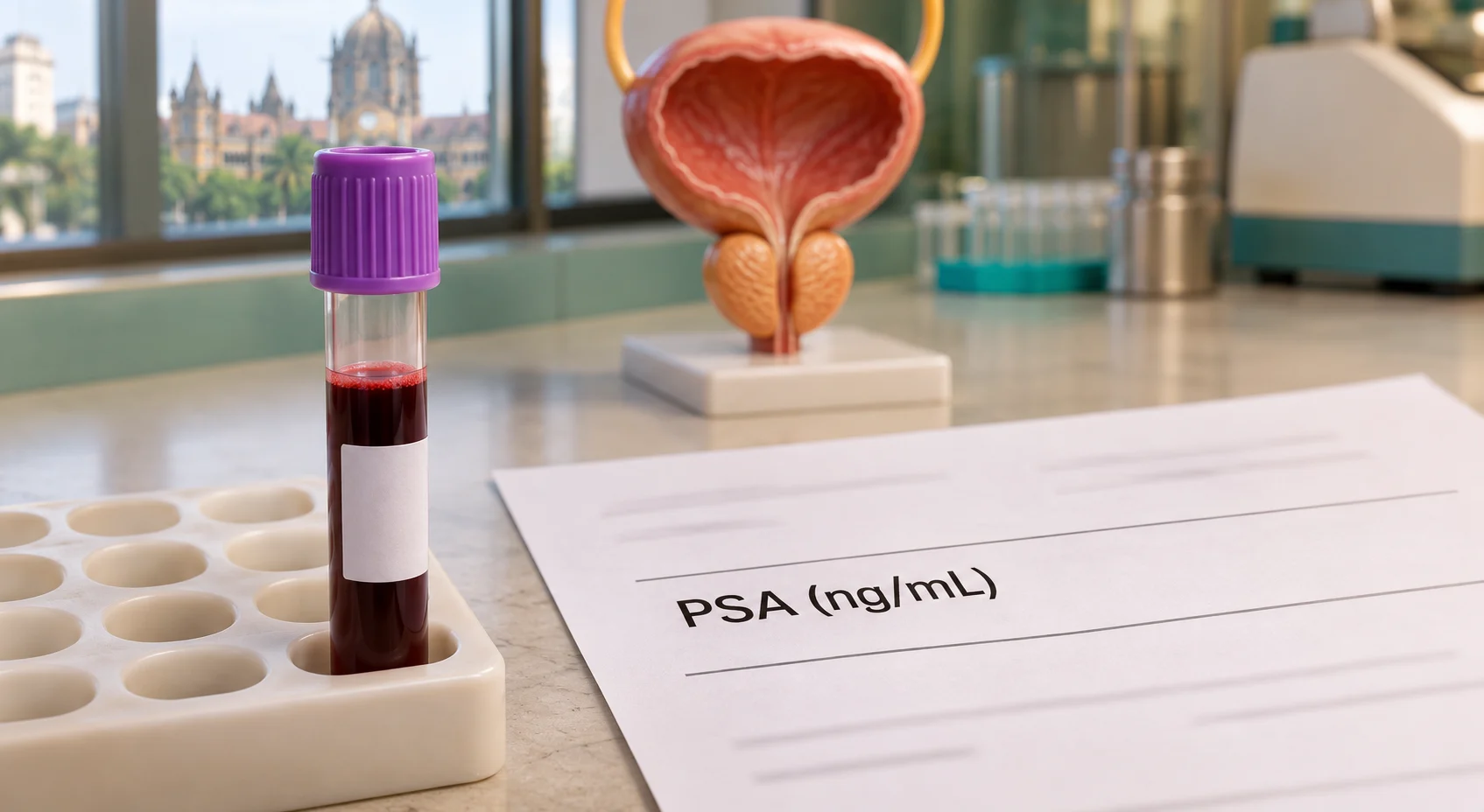
PSA is a protein made by cells in the prostate gland. A PSA blood test measures its concentration in nanograms per millilitre, written as ng/mL on your report. Healthy prostate cells also produce PSA, so it is usual to have some in your blood.
The reason for the test matters. A doctor may order it during a discussion about prostate cancer screening, to investigate urinary symptoms or to monitor someone after prostate cancer treatment. If you have already had treatment for prostate cancer, your treating team will interpret your PSA according to the treatment you received. The guidance below focuses on a newly raised result in someone without a previous prostate cancer diagnosis.
What can cause a high PSA level?
| Possible cause | What it means for your result |
|---|---|
| Benign prostate enlargement (BPH) | A larger prostate can produce more PSA. You may also notice a weaker urine stream or wake more often at night to pass urine. |
| Prostate inflammation or a urinary infection | PSA can rise during an infection and stay raised for a while afterwards. Tell your doctor if you had burning while passing urine, pelvic discomfort or fever around the time of the test. |
| A recent prostate biopsy | A biopsy can temporarily increase PSA. The date of the procedure helps your doctor decide when another blood test would be meaningful. |
| Recent ejaculation or vigorous cycling | These may briefly affect the reading in some people. Mention them if they occurred shortly before the blood sample. |
| Prostate cancer | Cancer is one possible cause. Your doctor considers the PSA alongside your medical history, examination and, when appropriate, imaging or biopsy findings. |
These causes can overlap. For example, someone with a known enlarged prostate can still develop an infection or prostate cancer. A previous diagnosis of BPH is one part of interpreting a new result.
Is a PSA above 4 ng/mL always concerning?
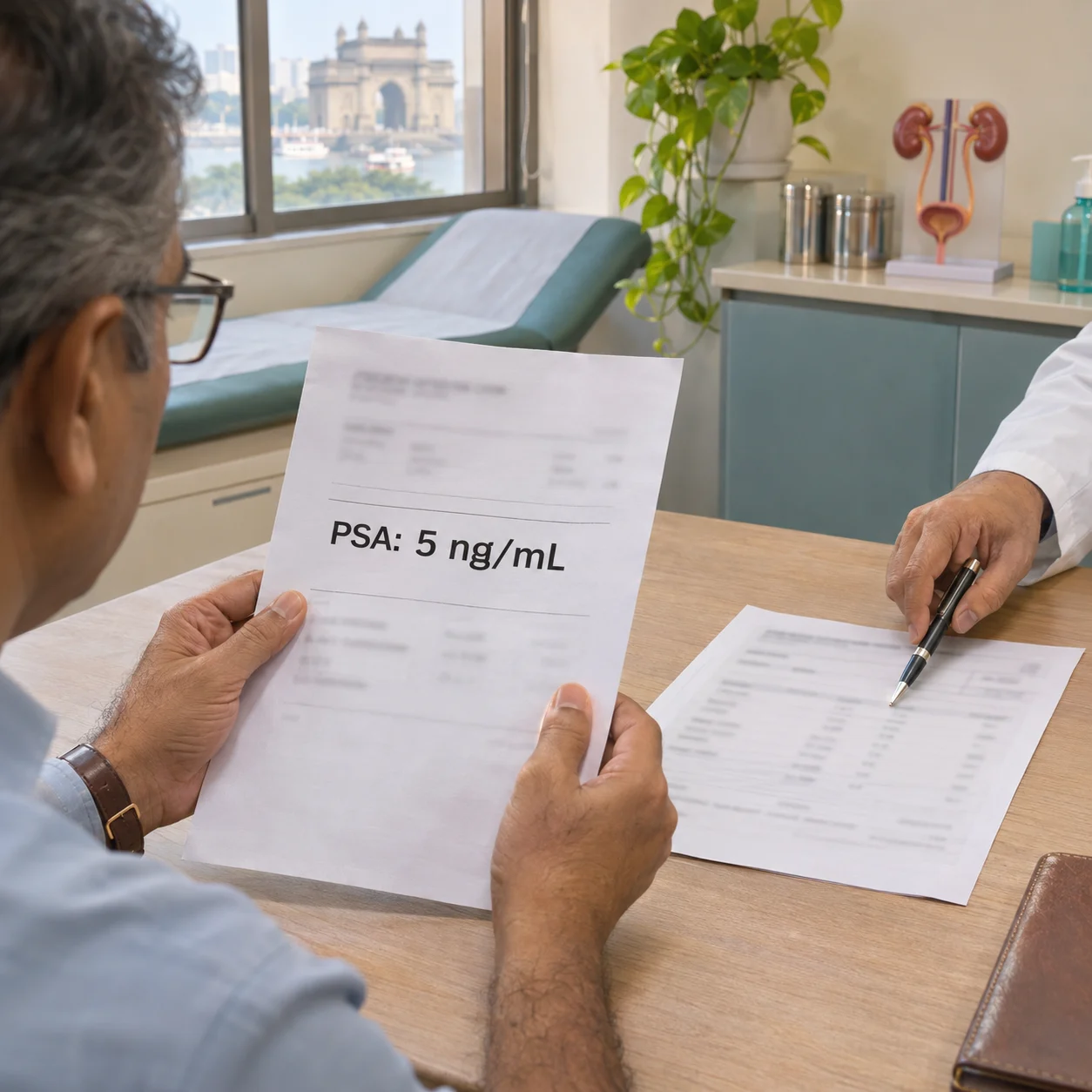
There is no single PSA cut-off that reliably separates people with prostate cancer from those without it. A result above 4 ng/mL can have a benign cause, and prostate cancer can occur at lower levels. Your age, prostate size, previous PSA readings and family history all help your doctor interpret the number.
For example, if your report shows 5 ng/mL, two useful questions are “What was my previous PSA?” and “Was anything affecting my prostate when this sample was taken?” A result obtained during a urinary infection needs different follow-up from one that remains raised on repeat testing after you have recovered.
What happens after an elevated PSA result?
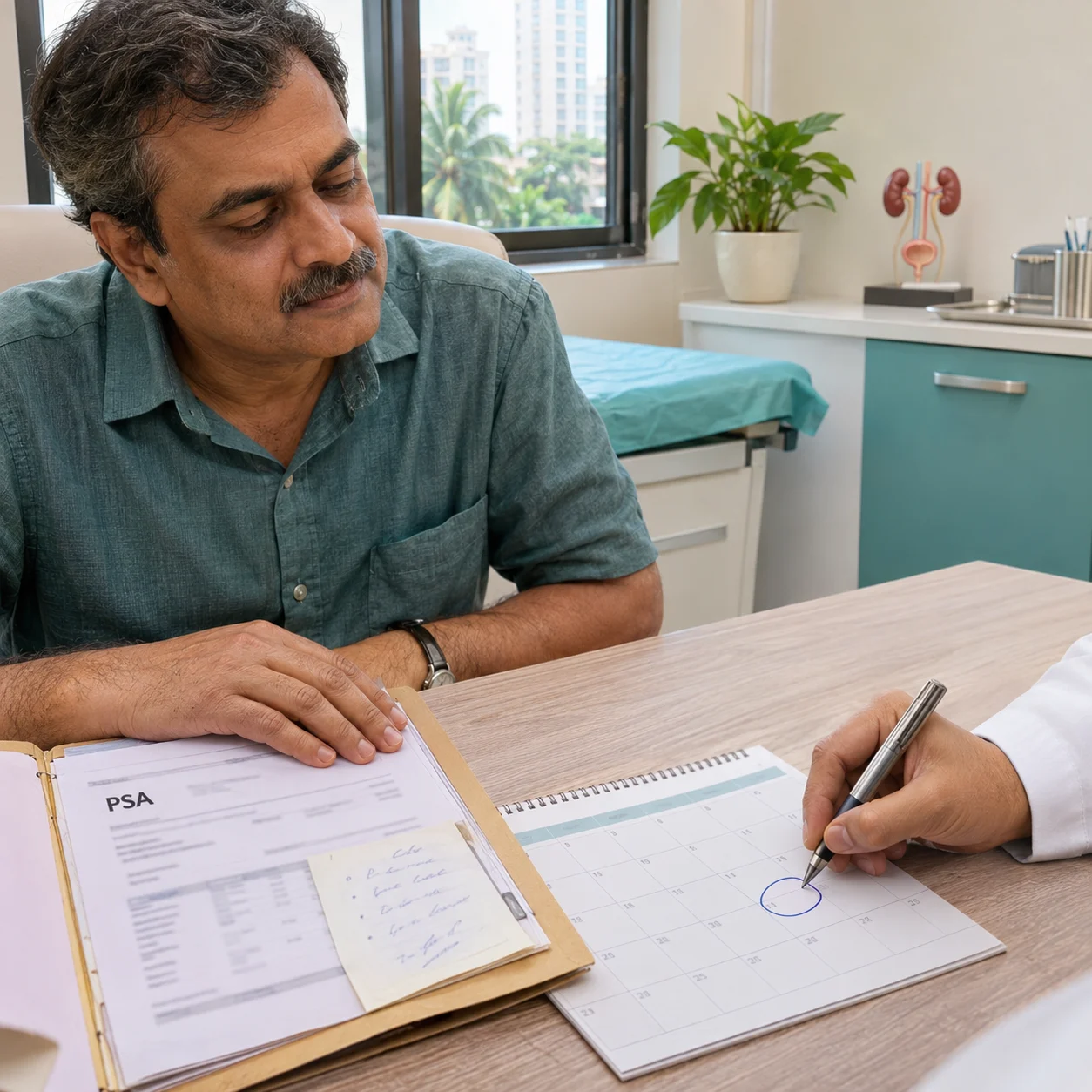
- Review the circumstances of the test. Bring previous PSA reports with their dates, even if they were within the laboratory’s reference range. Mention recent urinary symptoms, prostate procedures and any close relative who had prostate cancer. Include medicines such as finasteride or dutasteride on your list because they can lower the measured PSA.
- Decide when to repeat PSA. For someone who feels well and has a newly raised screening result, a repeat test in about 6 to 8 weeks is a common next step. The timing can change after an infection or procedure, or if the examination raises concern. If you currently have fever or painful urination, contact your doctor about those symptoms promptly.
- Assess whether further tests would help. If PSA remains elevated, a urologist may examine the prostate or recommend a prostate MRI. One measure they may use is PSA density, which relates your PSA level to the size of your prostate. These findings help guide a discussion about monitoring or biopsy.
- Consider a biopsy when the findings warrant it. A biopsy takes small tissue samples from the prostate so a pathologist can check for cancer cells. An MRI can identify an area to sample. Even when an MRI looks reassuring, your urologist may discuss a biopsy if your overall risk remains high.
Frequently asked questions

About Dr. Shyam Mohan
Consultant Urologist, Uro-Oncologist & Robotic Surgeon
Dr. Shyam Mohan holds recognised medical qualifications including MBBS, MS (General Surgery), and MCh (Urology), along with a specialized Fellowship in Advanced Robotic Uro-Oncology.
His clinical practice focuses on prostate health, PSA evaluation, advanced laser and endoscopic procedures, robotic surgery, and comprehensive urological care at Synergy Health Clinic in Chembur, Mumbai.