 class="img-fluid rounded-4 shadow-sm w-100"
style="max-height: 420px; object-fit: cover;">
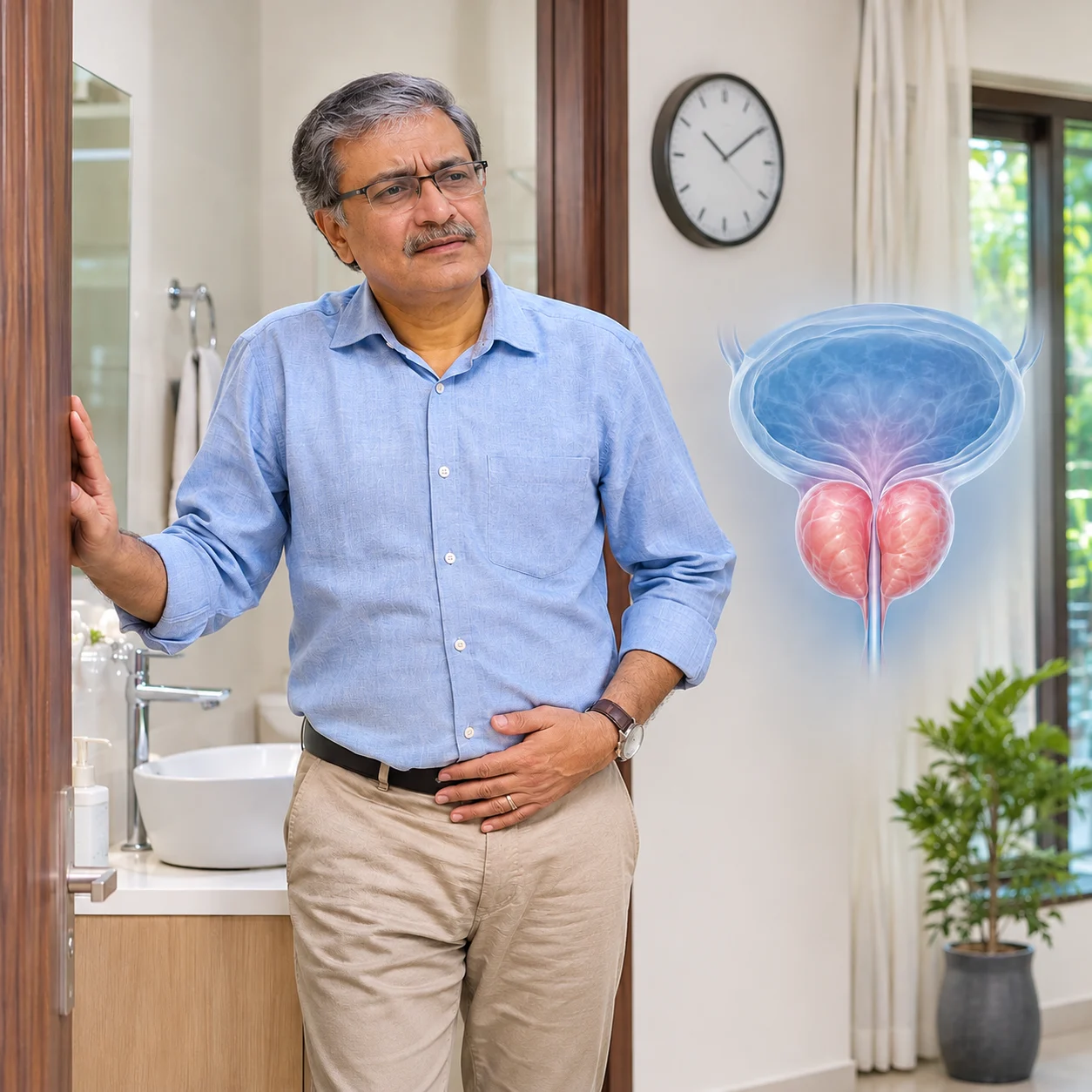
Common symptoms of an enlarged prostate include a weak urine stream, difficulty starting urination, frequent or urgent urination, waking at night to pass urine, dribbling and a feeling that the bladder has not emptied. These symptoms can also have other causes, so a medical assessment is important. An enlarged prostate may cause a weak urine stream, difficulty starting urination, frequent or urgent urination, waking at night to pass urine, dribbling, and a feeling that the bladder has not emptied. These symptoms can have other causes, so a medical assessment is needed to identify the reason. [1,2]
Small changes in urination can be easy to overlook. You may spend longer in the bathroom or start planning your day around toilet access. When these changes persist, understanding the cause can help you decide what to do next. If you suddenly cannot pass urine, seek emergency medical care. [1]
What Is an Enlarged Prostate?
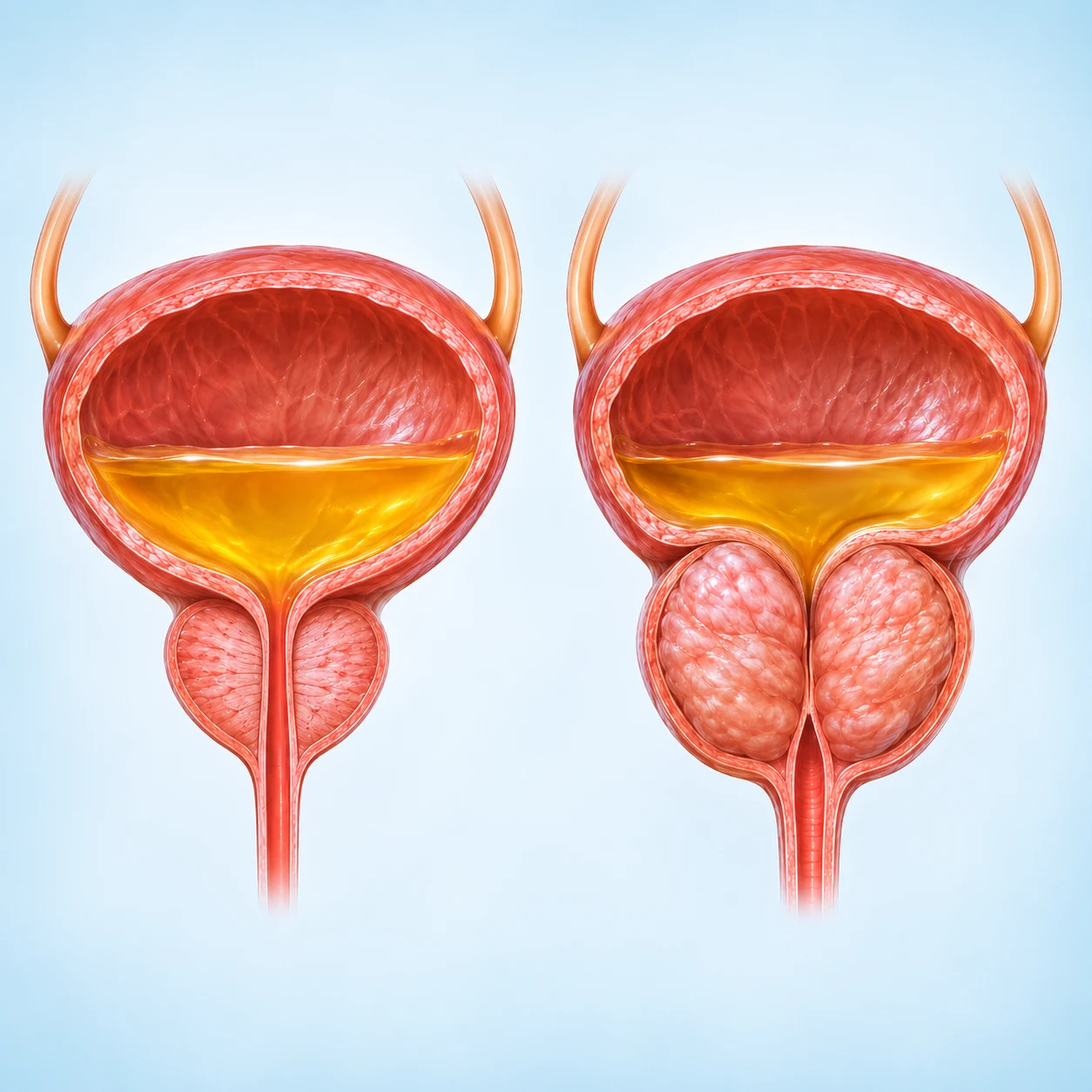
The prostate is a gland below the bladder that surrounds the urethra, the tube through which urine leaves the body. Benign prostatic hyperplasia (BPH) refers to non-cancerous growth of prostate tissue.
What Is an Enlarged Prostate?
As the prostate enlarges, it can narrow the passage for urine. Prostate enlargement becomes more common with age, particularly after 50. However, enlargement does not always cause symptoms. The prostate lies below the bladder and surrounds part of the urethra, the tube carrying urine out of the body. Benign prostatic hyperplasia (BPH) means non-cancerous growth of prostate tissue. This growth can press on the urethra and interfere with urine flow. [3]
Common Enlarged Prostate Symptoms
Which Urinary Changes Should You Notice?
Urinary changes may develop gradually. The following symptoms are worth discussing with a doctor if they persist. Symptoms often develop gradually. The following changes may be associated with prostate enlargement: [2]
| Symptom | What you may notice | ||
|---|---|---|---|
| Weak urine stream | Urine flows more slowly or with less force than before. | Difficulty starting | A delay before urine begins to flow |
| Difficulty starting | You wait before urine begins to flow, despite feeling the need to urinate. | Weak stream | Urine flows more slowly or with less force |
| Stop-start flow | The stream pauses and restarts during the same visit. | The stream pauses and restarts during urination | |
| Straining | You feel you need to push to pass urine. | Feeling you need to push to pass urine | |
| Frequent urination | You visit the toilet more often than usual. | More toilet visits than usual | |
| Urinary urgency | The need to urinate comes on suddenly and is difficult to postpone. | Urgency | A sudden need to urinate that is difficult to postpone |
| Nighttime urination | You wake from sleep to pass urine. This is called nocturia. | Waking from sleep to pass urine | |
| Incomplete-emptying sensation | You feel there is urine left after finishing. | Dribbling | A few drops escape towards the end or after finishing |
| Dribbling | Small amounts of urine escape towards the end of urination or shortly afterwards. | Incomplete-emptying sensation | Feeling that urine remains after a toilet visit |
A feeling of incomplete emptying does not show how much urine actually remains. Your doctor may recommend a measurement if needed. These observations are useful to describe at an appointment. They do not establish the diagnosis by themselves. [1]
Does a Larger Prostate Always Cause Worse Symptoms?
Does a Bigger Prostate Always Cause Worse Symptoms?
No. A mildly enlarged prostate can cause troublesome urinary symptoms, while a much larger prostate may cause few problems. No. Prostate size and symptom severity do not always match. A markedly enlarged prostate may cause little trouble, while a smaller enlargement can interfere with urination. An ultrasound measurement alone does not explain how much someone is affected. [1]
An ultrasound measurement alone does not determine whether treatment or surgery is needed. The effect on daily life and how well the bladder empties also matter.
When Do Symptoms Need Urgent Medical Attention?
Seek emergency care if you cannot urinate at all, particularly with lower abdominal pain or swelling. This may be acute urinary retention. [1]
Get prompt medical assessment for:
- Visible blood in the urine.
- Fever or chills with painful, frequent or urgent urination.
- Significant lower abdominal or urinary tract pain. [1]
Do not assume that bleeding or painful urination is simply due to prostate enlargement. Infection and other conditions may need evaluation. Read more about blood in urine evaluation. [3]
Could These Symptoms Have Another Cause?
Could These Symptoms Be Prostate Cancer?
Yes. Lower urinary tract symptoms are not unique to BPH. A comprehensive general urology evaluation helps differentiate prostate conditions from other urinary issues, which may include: BPH is not prostate cancer and does not itself increase prostate cancer risk. However, urinary symptoms cannot reliably identify or exclude cancer. Early prostate cancer often causes no symptoms. [3]
- Urinary tract infections.
- Prostatitis, which is inflammation of the prostate.
- Narrowing of the urethra.
- Bladder stones or problems with bladder function.
- Other conditions affecting the prostate or bladder.
Nighttime urination can also relate to evening fluid intake, diabetes, sleep disorders or medicines. Burning or pain should be assessed rather than automatically attributed to age-related enlargement. A clinician considers your history, examination and relevant tests. An elevated prostate-specific antigen (PSA) result does not automatically mean cancer; benign prostate conditions and infections can also raise it. [3]

When Should You Seek Urgent Medical Help?
If you suddenly cannot pass urine, seek emergency medical care. Do not wait for a routine appointment.
Urgent assessment is also needed for:
- Severe lower abdominal pain or swelling, particularly with difficulty urinating.
- Fever or chills together with urinary symptoms.
- Visible blood in the urine.
These warning signs need assessment even if you have previously been diagnosed with BPH. Significant obstruction can sometimes lead to retention, infections, bladder stones or kidney problems.
How Are Enlarged Prostate Symptoms Evaluated?
A urologist will ask when the symptoms began, how they affect sleep and daily activities, and which medicines you take. An examination may include checking the abdomen and prostate.
Depending on your symptoms, assessment may involve:
- A urine test: To look for infection, blood or other abnormalities.
- A bladder diary: To record fluid intake, toilet visits and urine volumes.
- A symptom questionnaire: To document the severity and impact of urinary problems.

How Are Enlarged Prostate Symptoms Assessed?
An assessment usually begins with your symptoms, medical history, current medicines and a physical examination. A urine test helps check for infection or blood. A symptom questionnaire, such as the International Prostate Symptom Score (IPSS), can record severity and track changes. [4]
Depending on the findings, further assessment may include:
- Urine flow testing: To measure the speed and pattern of urination. A prostate examination through the rectum.
- Residual urine measurement: To check how much urine remains after passing urine. Discussion of whether PSA testing is appropriate.
- A urine-flow test.
- Measurement of urine remaining in the bladder after urination.
- A PSA discussion: To consider whether a prostate-specific antigen blood test would be appropriate. Kidney function testing when kidney impairment is suspected. [4]
Not everyone needs every investigation. PSA results require clinical interpretation; an elevated result does not automatically mean malignancy. If diagnostic findings warrant oncological screening, Dr. Shyam Mohan provides specialized prostate cancer treatment and evaluation. Not everyone needs every test. Cystoscopy and additional imaging are used selectively rather than routinely for uncomplicated symptoms. [4]
Does an Enlarged Prostate Always Need Surgery?
Does an Enlarged Prostate Always Need Surgery?
No. Mild symptoms may be managed with watchful waiting and lifestyle measures. Medications or a procedural intervention may be considered when symptoms significantly impact daily quality of life or complications occur. No. Management may involve monitoring, changes to daily habits, prescribed medicines or a procedure. The choice depends on symptom burden, test results, complications and individual preferences. [5]
When surgical intervention is required to clear urinary obstruction, modern endourological procedures—such as TURP or laser enucleation—allow treatment through the natural urinary channel without external incisions. For complex or severely enlarged glands, advanced robotic surgery offers high anatomical precision and expedited recovery. Persistent obstruction can sometimes lead to retention, recurrent infections, bladder stones or kidney problems. These findings may change the treatment plan. [5]
Treatment decisions are always tailored to gland volume, symptoms, and individual health goals. For comprehensive information, read about prostate enlargement treatment in Chembur, Mumbai. For further information, see prostate enlargement assessment and treatment in Chembur, Mumbai.
What Can Help With Mild Urinary Symptoms?
What Can Help While You Arrange an Assessment?
After assessment, your doctor may suggest: For mild symptoms, reducing caffeine and alcohol and avoiding large drinks close to bedtime may help. Keep adequate fluid intake during the day; do not deliberately dehydrate yourself. Managing constipation may also improve comfort. [2]
- Reducing caffeine or alcohol if they worsen symptoms.
- Moving more of your fluid intake to earlier in the day.
- Avoiding large drinks just before bedtime while staying adequately hydrated.
- Managing constipation.
- Reviewing medicines that may contribute to urinary difficulty.
Ask a clinician or pharmacist whether your medicines could contribute to urinary difficulties. Do not stop prescribed treatment on your own. [5]
Do not stop prescribed medicines without advice. Lifestyle changes may ease symptoms, but they cannot be relied on to relieve significant obstruction. Bring a list of medicines and previous reports to your appointment. A record of your drinks, toilet visits and nighttime awakenings can help describe the problem. [4]

About Dr. Shyam Mohan
Consultant Urologist, Uro-Oncologist & Robotic Surgeon
Dr. Shyam Mohan holds recognised medical qualifications including MBBS, MS (General Surgery), and MCh (Urology), along with a specialized Fellowship in Advanced Robotic Uro-Oncology.
His clinical practice focuses on prostate enlargement evaluation, advanced endourological procedures (TURP, Laser Enucleation), prostate cancer diagnosis and robotic surgery, and comprehensive urological care in Chembur, Mumbai.
Frequently Asked Questions
Related Prostate & Urology Services
Explore specialized urological consultations and advanced surgical treatments provided by Dr. Shyam Mohan in Mumbai:
This article provides general health information and does not replace an individual medical consultation.
Urology Assessment in Chembur, Mumbai
Persistent changes in urination can be discussed during a urology consultation. Bring a list of your medicines and any previous urine tests, PSA results or ultrasound reports.
Dr. Shyam Mohan
Consultant Urologist, Uro-Oncologist & Robotic Surgeon
MBBS, MS (General Surgery), MCh (Urology)
Fellowship in Advanced Robotic Uro-Oncology
Clinic: Synergy Health Clinic, Chembur, Mumbai
Contact: +91 9892533940
This article provides general health information and does not replace an individual medical assessment.