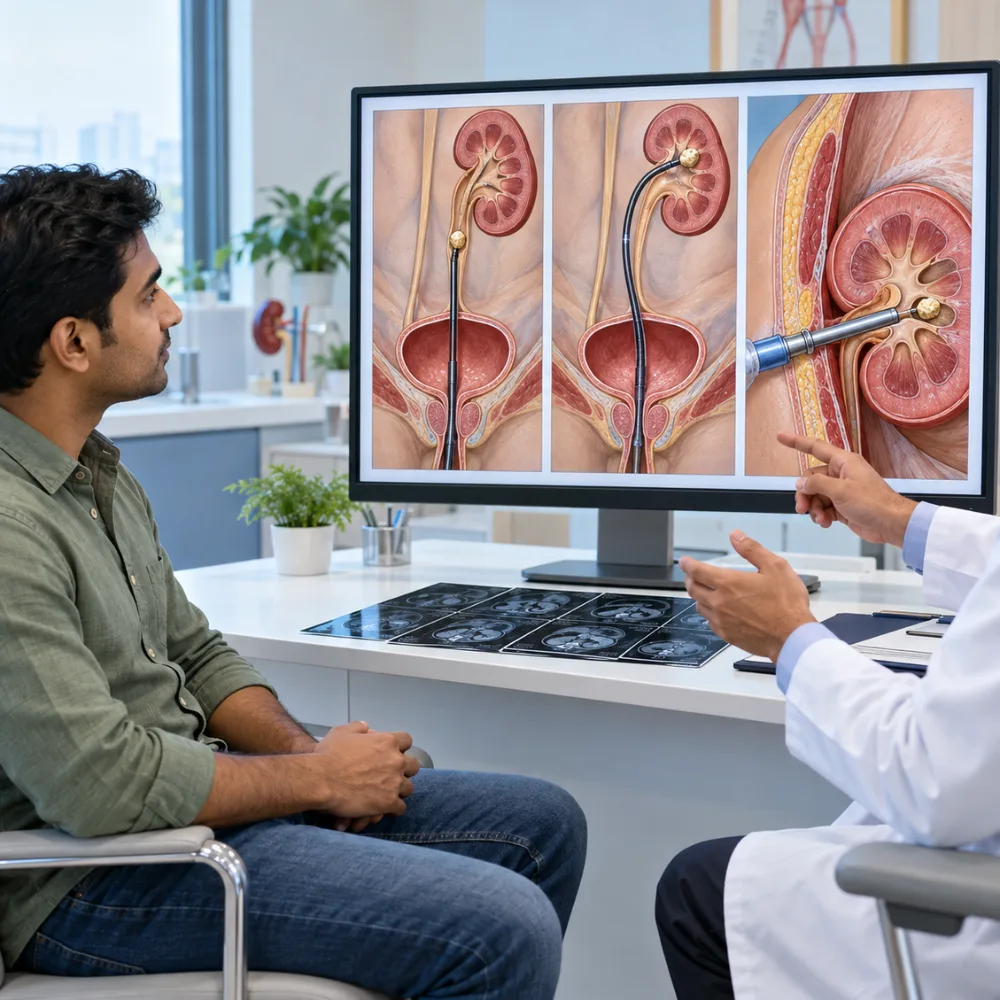
Your scan has confirmed a stone, and your doctor has mentioned RIRS, PCNL, or URS. These medical acronyms can sound overwhelming when you are already dealing with pain, upcoming surgery, and recovery concerns.
The fundamental difference between these three procedures is how the surgeon reaches the stone. URS and RIRS use the body's natural urinary passage without any skin incisions, whereas PCNL accesses the kidney through a small keyhole opening in the back or side.
Selecting the right procedure depends on the stone's exact size, anatomical location, mineral density, and complexity, along with your overall kidney function and medical health.
What Is the Difference Between RIRS, PCNL and URS?
URS (Ureteroscopy) commonly treats stones lodged in the ureter. RIRS (Retrograde Intrarenal Surgery) uses an ultra-flexible scope to navigate inside the kidney to pulverise stones with holmium or thulium lasers. PCNL (Percutaneous Nephrolithotomy) provides direct access through a keyhole puncture in the back and is generally preferred for kidney stones larger than 2 cm or complex staghorn calculi.
RIRS is essentially an advanced, flexible form of ureteroscopy. In everyday medical discussions, clinicians use "URS" to refer to ureteric stone clearance and "RIRS" to describe flexible endoscopic surgery inside the kidney. They are related endoscopic techniques rather than completely separate categories.
Head-to-Head Comparison: URS vs RIRS vs PCNL
| Feature | URS (Ureteroscopy) | RIRS (Retrograde Intrarenal Surgery) | PCNL (Percutaneous Nephrolithotomy) |
|---|---|---|---|
| Full Name | Semi-Rigid Ureteroscopy | Retrograde Intrarenal Surgery | Percutaneous Nephrolithotomy |
| Usual Treatment Site | Ureter (between kidney and bladder) | Inside the kidney (calyces and renal pelvis) | Inside the kidney (renal pelvis and calyces) |
| Access Route | Through the urethra and bladder into the ureter | Through urethra, bladder, and ureter using a flexible scope | Through a small keyhole tract in the back or flank |
| Skin Incision | None (Natural orifice) | None (Natural orifice) | Small Keyhole (~0.5 to 1 cm) |
| Primary Role | Ureteric stones causing obstruction | Small to medium kidney stones (< 2 cm), lower pole stones | Large stones (> 2 cm), complex or staghorn calculi |
| Laser / Fragmentation | Holmium laser or pneumatic lithoclast | Holmium / Thulium fiber laser (dusting & fragmentation) | Pneumatic, ultrasonic, or high-power laser lithotripsy |
| Temporary Drainage | Double-J (DJ) stent may be placed | Double-J (DJ) stent commonly placed | Double-J stent or nephrostomy tube |
| Hospital Stay | Day-care or 24-hour observation | Day-care or 24 to 48 hours | 2 to 3 days hospital monitoring |
These represent general clinical guidelines. Certain patients with complex anatomies or extensive stone burdens may require staged procedures or combined endourological techniques (ECIRS).
How Does Each Procedure Work?
Understanding the step-by-step surgical process helps alleviate apprehension and prepares you for what to expect during your hospital stay:
1. What Happens During URS (Ureteroscopy)?
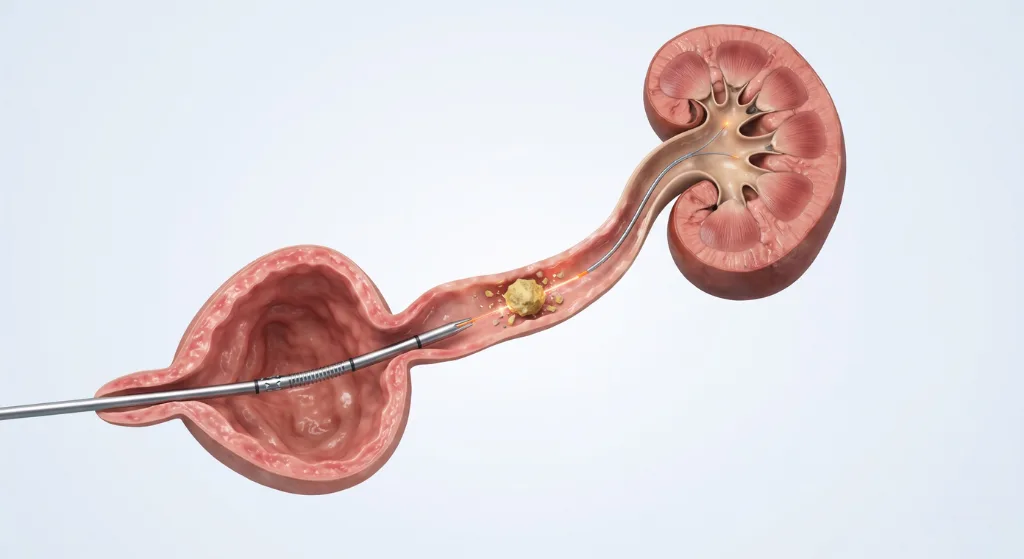
During ureteroscopy, the surgeon gently introduces a slender, rigid or semi-rigid miniature telescope through the urethra and bladder directly into the ureter under visual camera guidance.
Once the ureteric stone is visualised, a fine laser fiber delivers targeted energy pulses to shatter the stone into tiny gravel. Larger fragments are retrieved using specialized nitinol stone extraction baskets, while fine dust washes out naturally in the urine.
Key takeaway: URS involves zero skin cuts and is the gold standard for obstructing ureteric stones. However, it remains a formal surgical procedure performed under spinal or general anaesthesia. Discover more on Ureteric Stone Treatment in Mumbai.
2. What Happens During RIRS (Retrograde Intrarenal Surgery)?
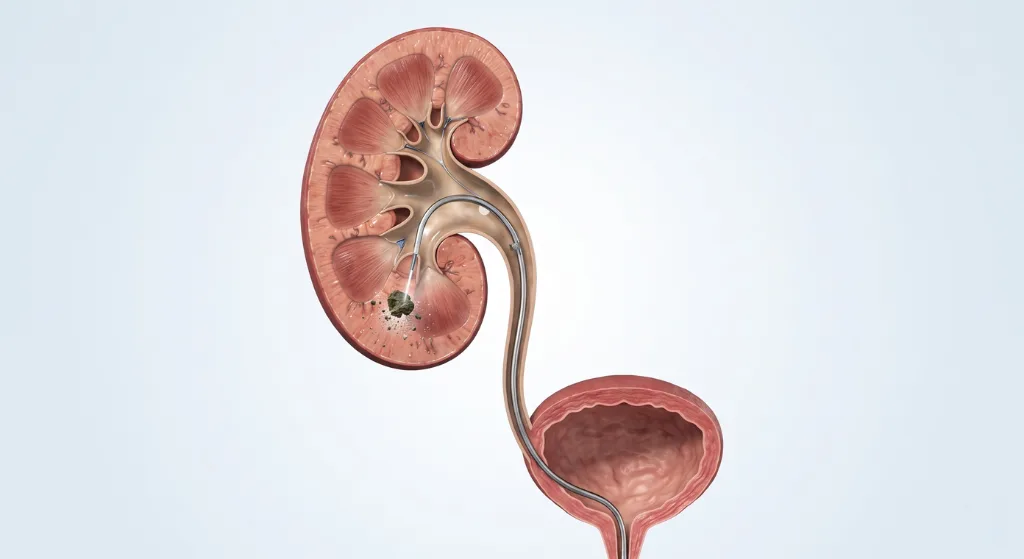
RIRS employs a state-of-the-art, highly flexible digital ureterorenoscope. Because the scope can bend up to 270 degrees, it navigates upward from the bladder, through the ureter, and into the intricate collecting chambers (calyces) of the kidney.
A microscopic holmium or thulium fiber laser delivers high-frequency pulses to "dust" kidney stones into microscopic sand. An access sheath is frequently placed to maintain low intrarenal pressures and protect kidney tissue during irrigation.
Clinical note: If a patient has a naturally narrow ureter, the surgeon may place a temporary DJ stent for 1 to 2 weeks (pre-stenting) to gently dilate the passage before completing RIRS safely in a second session. Read more about RIRS Surgery.
3. What Happens During PCNL (Percutaneous Nephrolithotomy)?
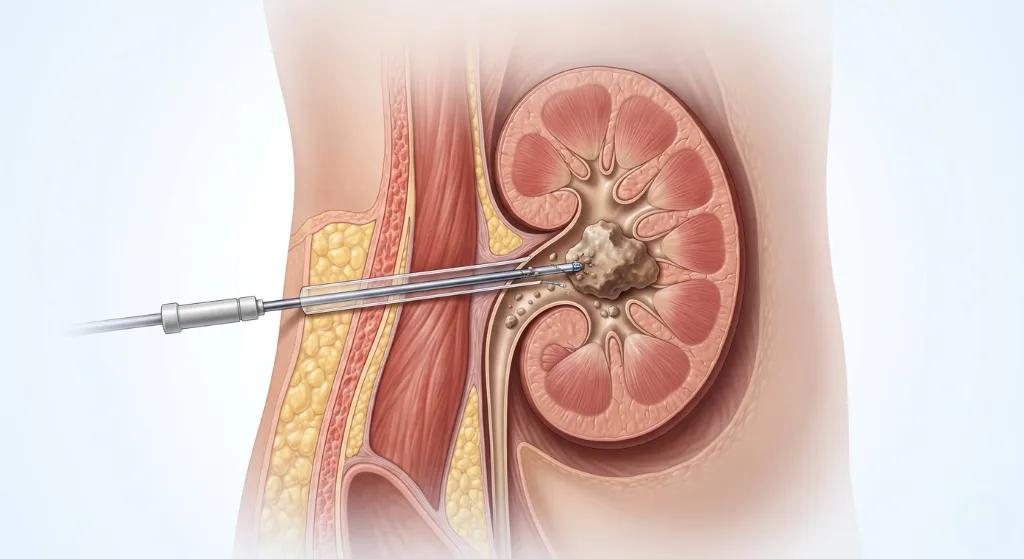
For PCNL, the urologist creates a precise keyhole access tract through the flank or back directly into the kidney under real-time fluoroscopic (X-ray) or ultrasound guidance while the patient is under general anaesthesia.
A rigid nephroscope is inserted through this tract. High-powered pneumatic, ultrasonic, or laser lithotripters break massive stones into pieces, which are evacuated immediately through the sheath.
Key advantage: PCNL achieves exceptional clearance for heavy stone burdens in a single operation. Modern Mini-PCNL uses smaller access tracts to reduce bleeding risk, though anatomical precision remains paramount. Explore our Laser Kidney Stone Surgery service.
How Does a Urologist Choose the Procedure?
Stone dimensions measured on a scan are important, but size alone does not determine the best surgical path. A comprehensive urological assessment evaluates several critical parameters:
Stone Location
Ureteric stones require URS, while calyceal kidney stones are approached with RIRS or PCNL.
Total Stone Burden
For kidney stones > 2 cm, PCNL is the international gold standard. RIRS is preferred for stones under 2 cm.
Stone Density (HU)
Hard stones (> 1000 Hounsfield units, such as calcium oxalate monohydrate) require high-energy laser settings.
Renal Anatomy
Lower-pole stones with narrow infundibulopelvic angles may drain poorly after RIRS, favoring PCNL.
Patient Health & Coagulation
Patients on anticoagulants or with bleeding diatheses may be safer candidates for retrograde RIRS than percutaneous PCNL.
Solitary or Ectopic Kidney
Anomalous kidneys (horseshoe kidney, pelvic kidney) require customized access planning to safeguard nephrons.
Does Every Kidney Stone Need Surgery?
No. Not every detected kidney stone demands operative treatment. Small, asymptomatic stones (< 4 mm) nestled peacefully inside renal calyces can often be managed with periodic surveillance and dietary hydration.
Similarly, many small ureteric stones will pass spontaneously with oral analgesics and Medical Expulsive Therapy (MET). External Shock Wave Lithotripsy (ESWL) remains another non-invasive alternative for selected radiopaque stones.
However, intervention becomes necessary when a stone triggers persistent colic, causes progressive obstruction, leads to recurrent urinary infections, or grows continuously. Remember that absence of pain does not guarantee that a stone has safely passed.
Which Procedure Has an Easier Recovery?
Recovery timelines vary depending on whether the procedure involved an incision and how the kidney was accessed:
URS & RIRS Recovery
- Hospitalisation: Typically day-care or discharge within 24 hours.
- Activity: Return to light desk work within 2 to 4 days.
- Wound Care: No incisions or bandages to manage.
- Discomfort: Mild urinary burning or frequency due to the stent.
PCNL Recovery
- Hospitalisation: 2 to 3 days of inpatient clinical monitoring.
- Activity: Desk work after 7 to 10 days; avoid heavy lifting for 3 to 4 weeks.
- Wound Care: Small flank dressing; any nephrostomy tube is removed before discharge.
- Discomfort: Local flank soreness managed with oral pain relievers.

What Are the Possible Risks?
All surgical procedures carry inherent clinical risks, which should be openly discussed during informed consent:
- Risks of URS and RIRS: Transient blood in urine (hematuria), urinary tract infection, ureteric mucosal abrasion or injury, post-procedure stent discomfort, rare late ureteric stricture, and residual stone dust requiring further observation or second-look procedure.
- Risks of PCNL: Postoperative bleeding (occasionally requiring blood transfusion or angioembolisation), fever or urosepsis, temporary urine leakage from the flank puncture, and rare injury to adjacent organs (pleura, bowel, or spleen).
- General Risks: Reactions to spinal or general anaesthesia, deep vein thrombosis, and cardiovascular stress.
Will a Stent Be Necessary?
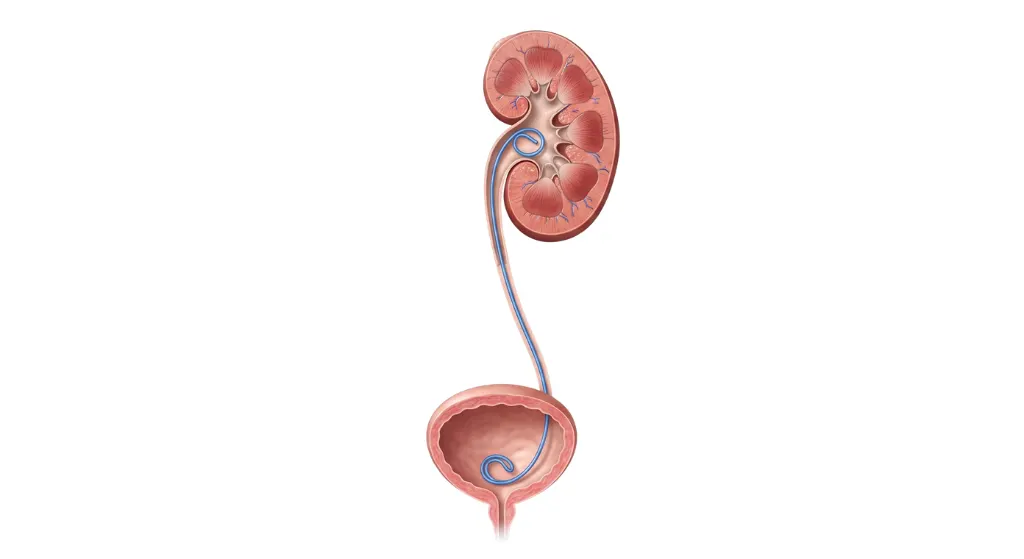
A Double-J (DJ) ureteric stent is a soft, flexible silicone tube with coils at both ends that sits inside the ureter, connecting the kidney to the bladder.
Following URS, RIRS, or PCNL, the stent keeps the passage open, prevents agonizing colic from postoperative tissue edema, and permits small gravel to wash down safely. While in place, it may cause mild urinary frequency, urgency, or loin ache during urination.
Critical Rule: Stents are temporary! Confirm the exact date for stent removal (usually 1 to 3 weeks later) before discharge, and never miss this appointment.
When Is a Kidney Stone an Emergency?
An infected, obstructed kidney is a urological emergency requiring immediate intervention. Urine trapped behind a blocking stone rapidly turns into pus (pyonephrosis), which can trigger septic shock within hours.
Seek urgent hospital emergency care immediately if you have:
- Stone symptoms accompanied by high fever or uncontrollable shivering chills.
- Severe reduction in urine output or complete inability to urinate (anuria).
- Unbearable pain that fails to respond to prescribed injectable or oral medicines.
- Intractable vomiting leading to dehydration and inability to retain fluids.
In such scenarios, urgent decompression (via a stent or PCN tube) and intravenous antibiotics take priority. Stone removal is safely deferred until sepsis has fully resolved.
Questions to Ask Before Kidney Stone Treatment
Being an active participant in your healthcare helps you feel confident and prepared. Consider asking your urologist these key questions before undergoing kidney stone treatment:
1. Stone Burden
Where exactly is the stone, and what is the total stone size or volume?
2. Procedure Rationale
Why is this specific technique (URS, RIRS, or PCNL) best suited for my scan findings?
3. Conservative Options
Are active monitoring, medical therapy, or ESWL reasonable alternatives in my case?
4. Staged Surgery Risk
Is there any likelihood that I might need a second procedure to achieve complete stone clearance?
5. Stent Management
Will I require a Double-J stent, and on what exact date will it be removed?
6. Fragment Verification
How will you verify whether all stone fragments have been cleared after surgery?
7. Long-Term Prevention
What metabolic tests, stone analysis, and dietary modifications will help reduce my risk of forming future stones?

About Dr. Shyam Mohan
Consultant Urologist, Uro-Oncologist & Robotic Surgeon
Dr. Shyam Mohan holds recognised medical qualifications including MBBS, MS (General Surgery), and MCh (Urology), along with a prestigious Fellowship in Advanced Robotic Uro-Oncology.
His clinical practice in Chembur, Mumbai focuses on advanced endourological procedures (RIRS, Mini-PCNL, Laser URS), laser stone clearance, prostate surgery, and robotic urological reconstruction.