Bladder Stone Treatment in Mumbai
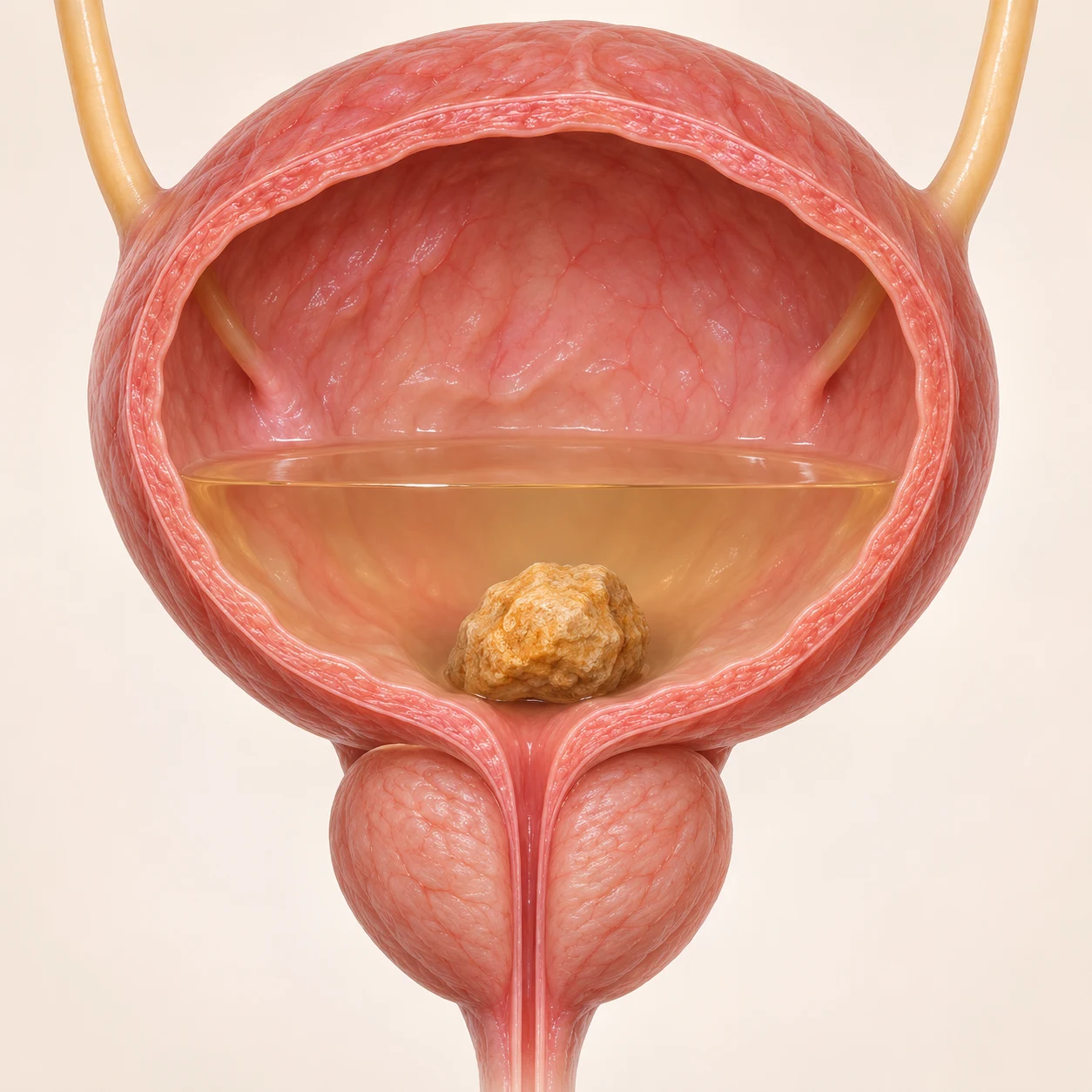
Bladder stone treatment in Mumbai involves two equally important goals: removing the stone safely, and finding out why it formed. Bladder stones (vesical calculi) are hard mineral deposits that develop inside the urinary bladder, most often when urine is not emptied completely.
At Synergy Health Clinic in Chembur, Dr. Shyam Mohan, Consultant Urologist, evaluates bladder stones and their underlying causes, such as prostate enlargement or urinary retention, and explains endoscopic options including laser cystolitholapaxy, as well as percutaneous and open approaches when they are needed.
What are Bladder Stones?
Direct Answer: Bladder stones are hard collections of minerals that form inside the urinary bladder, usually because urine is not emptied completely. In adults they are most often linked to prostate enlargement, urethral stricture or nerve-related bladder problems. They are commonly removed by cystolitholapaxy, an endoscopic procedure that breaks the stone through the urethra without a skin incision.
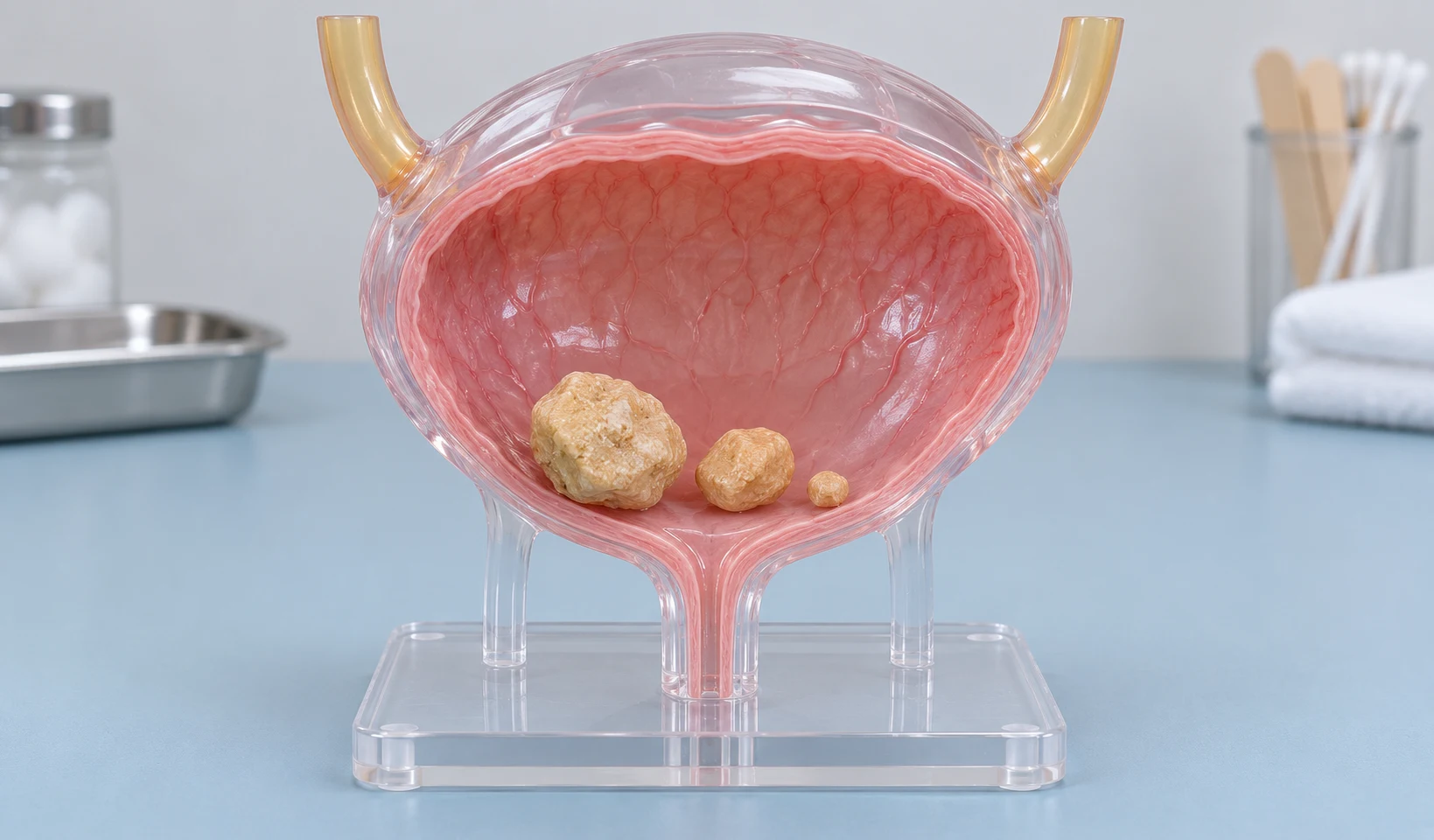
When urine stands in the bladder for long periods, dissolved salts can crystallise and gradually clump together. Infection, a foreign body such as a catheter balloon or old suture, or a small kidney stone that has travelled down the ureter can act as a core on which a larger stone builds up. Bladder stones vary from a few millimetres to several centimetres and may be single or multiple.
In adults, bladder stones are more common in men, largely because of prostate-related outflow obstruction. Common stone compositions include uric acid, calcium oxalate, and struvite (infection-related) stones. Bladder stones are distinct from kidney and ureteric stones; for those, see kidney stone treatment and ureteric stone treatment.
What Causes Bladder Stones?
Bladder Outlet Obstruction
- Benign prostatic enlargement (BPH), the most common cause in older men
- Urethral stricture or bladder neck narrowing
- Chronic urinary retention with a large post-void residual volume
Neurogenic Bladder
- Spinal cord injury, spina bifida, multiple sclerosis or diabetic nerve damage
- Bladders that do not contract well and leave urine behind
- Long-term use of intermittent or indwelling catheters
Infection and Foreign Bodies
- Recurrent urinary tract infections, especially with urease-producing bacteria
- Catheters, stents left in place too long, or non-absorbable sutures
- Bladder diverticulum (a pouch in the bladder wall) where urine pools
Metabolic and Other Factors
- Low fluid intake and concentrated urine, especially in hot climates
- High uric acid levels or gout
- Kidney stones that migrate down into the bladder
- Previous bladder augmentation or urinary diversion surgery
Symptoms and Diagnosis of Bladder Stones
Some bladder stones cause no symptoms and are found on a scan done for another reason. When symptoms do occur, they may include:
- Lower abdominal or penile tip discomfort, often worse at the end of passing urine or with movement
- Interrupted urine stream that stops suddenly and restarts on changing position
- Frequency, urgency and waking at night to pass urine
- Blood in the urine, especially after physical activity
- Burning, cloudy urine or repeated urinary infections
- Difficulty passing urine or episodes of urinary retention
Tests commonly used
- Urine tests: urinalysis and culture to look for blood and infection.
- Ultrasound of the kidneys, ureters and bladder: shows the stone, the prostate size and how much urine is left after voiding.
- X-ray KUB or non-contrast CT: helps measure stone size and number, and checks the kidneys for stones.
- Uroflowmetry: assesses the strength of the urine stream when outflow obstruction is suspected.
- Cystoscopy: a direct look inside the bladder, often combined with stone treatment, which also allows assessment of the prostate, urethra and bladder lining.
- Blood tests: kidney function, and sometimes uric acid and calcium levels.
Bladder Stone Treatment Options in Mumbai
The choice of procedure depends on stone size and number, the condition of the urethra and prostate, whether another procedure is needed at the same time, and the patient's general health. Guidelines from the EAU describe endoscopic removal as the usual approach for most adults.
Transurethral cystolitholapaxy (endoscopic removal)
A cystoscope is passed through the urethra into the bladder, the stone is broken into small pieces, and the fragments are washed out. Energy sources include holmium laser lithotripsy, pneumatic or ultrasonic devices, and mechanical lithotrites. Laser lithotripsy allows the stone to be fragmented under direct vision. There is no skin incision, and the procedure is performed under spinal or general anaesthesia.
Combined treatment of the cause
When an enlarged prostate is the underlying cause, stone removal may be combined with a prostate procedure such as TURP in the same sitting, if this is considered appropriate after assessment. A urethral stricture may similarly be treated before or along with stone removal.
Percutaneous cystolitholapaxy
For large stones, or when the urethra is too narrow or has been reconstructed, a small tract is made through the lower abdomen directly into the bladder. The stone is fragmented and removed through this tract, which can reduce trauma to the urethra.
Open cystolithotomy
Open surgery through a lower abdominal incision is now uncommon but may be considered for very large or hard stones, when a bladder diverticulum must be removed, or when another open procedure, such as open prostatectomy for a very large prostate, is planned at the same time.
Medical dissolution
Pure uric acid stones may sometimes be dissolved by making the urine less acid with prescribed medicines. This is suitable only for selected patients and is monitored with imaging.
Comparing Bladder Stone Removal Methods
The table gives a general comparison. The approach recommended for an individual depends on clinical evaluation.
| Feature | Transurethral Cystolitholapaxy | Percutaneous Cystolitholapaxy | Open Cystolithotomy |
|---|---|---|---|
| Access route | Through the urethra; no skin incision | Small puncture through the lower abdomen | Lower abdominal incision |
| Typically used for | Most adult bladder stones | Large stones, narrow or reconstructed urethra | Very large stones, diverticulum or combined open surgery |
| Combine with prostate treatment | Often possible (for example, TURP) | Possible in selected cases | Possible with open prostatectomy |
| Catheter after surgery | Usually short-term | Short-term urethral and/or suprapubic catheter | Usually longer |
| Hospital stay and recovery | Generally short | Generally short to moderate | Longer, with wound healing time |
What to Expect After Bladder Stone Removal
First 24–48 Hours
A urinary catheter may be left in briefly, sometimes with bladder irrigation. Mild blood-stained urine and a stinging sensation are common early on.
First 1–2 Weeks
Drink fluids regularly, avoid heavy lifting and strenuous activity as advised, and complete any prescribed medicines. Report fever, clots or difficulty passing urine.
Follow-Up
Stone analysis results, urine tests and a check of bladder emptying help plan prevention and decide whether the underlying cause needs further treatment.
Reducing the chance of new stones
- Treat the cause of incomplete emptying, such as prostate enlargement or stricture, where appropriate
- Maintain an adequate daily fluid intake so that urine stays pale
- Follow catheter care and change schedules carefully if you use a long-term catheter
- Seek early treatment for urinary infections
- Follow dietary advice based on the stone type identified
Frequently Asked Questions
Bladder Stone Consultation in Chembur, Mumbai

Dr. Shyam Mohan
Related pages: Kidney Stone Treatment, Laser Stone Surgery, Prostate Enlargement (BPH) Treatment, TURP Surgery and Cystoscopy.
Medical disclaimer: The information on this page is for general education and is not a substitute for individual medical consultation. Treatment decisions depend on clinical evaluation, imaging and a discussion of benefits and risks with your doctor. Outcomes and recovery vary from person to person.
Clinical Reference Sources
- European Association of Urology (EAU) Guidelines on Urolithiasis, section on bladder stones.
- European Association of Urology (EAU) Guidelines on Management of Non-neurogenic Male Lower Urinary Tract Symptoms.
- American Urological Association (AUA) Guideline on Management of Lower Urinary Tract Symptoms Attributed to Benign Prostatic Hyperplasia.
- British Association of Urological Surgeons (BAUS) patient information on removal of bladder stones (cystolitholapaxy).