TURP Surgery for Enlarged Prostate in Mumbai
Transurethral Resection of the Prostate (TURP) is an established, endoscopic surgical treatment for severe urinary symptoms caused by an enlarged prostate (Benign Prostatic Hyperplasia or BPH). Performed entirely through the natural urinary channel without abdominal incisions, TURP relieves bladder outlet obstruction to restore normal urinary flow.
At Synergy Health Clinic in Chembur, Mumbai, Dr. Shyam Mohan—Consultant Urologist, Uro-Oncologist & Robotic Surgeon—conducts comprehensive diagnostic assessments including uroflowmetry, ultrasound, and post-void residual urine checks to determine whether medical therapy, modern bipolar TURP, or laser enucleation (HoLEP) is the most clinically appropriate solution for your condition.
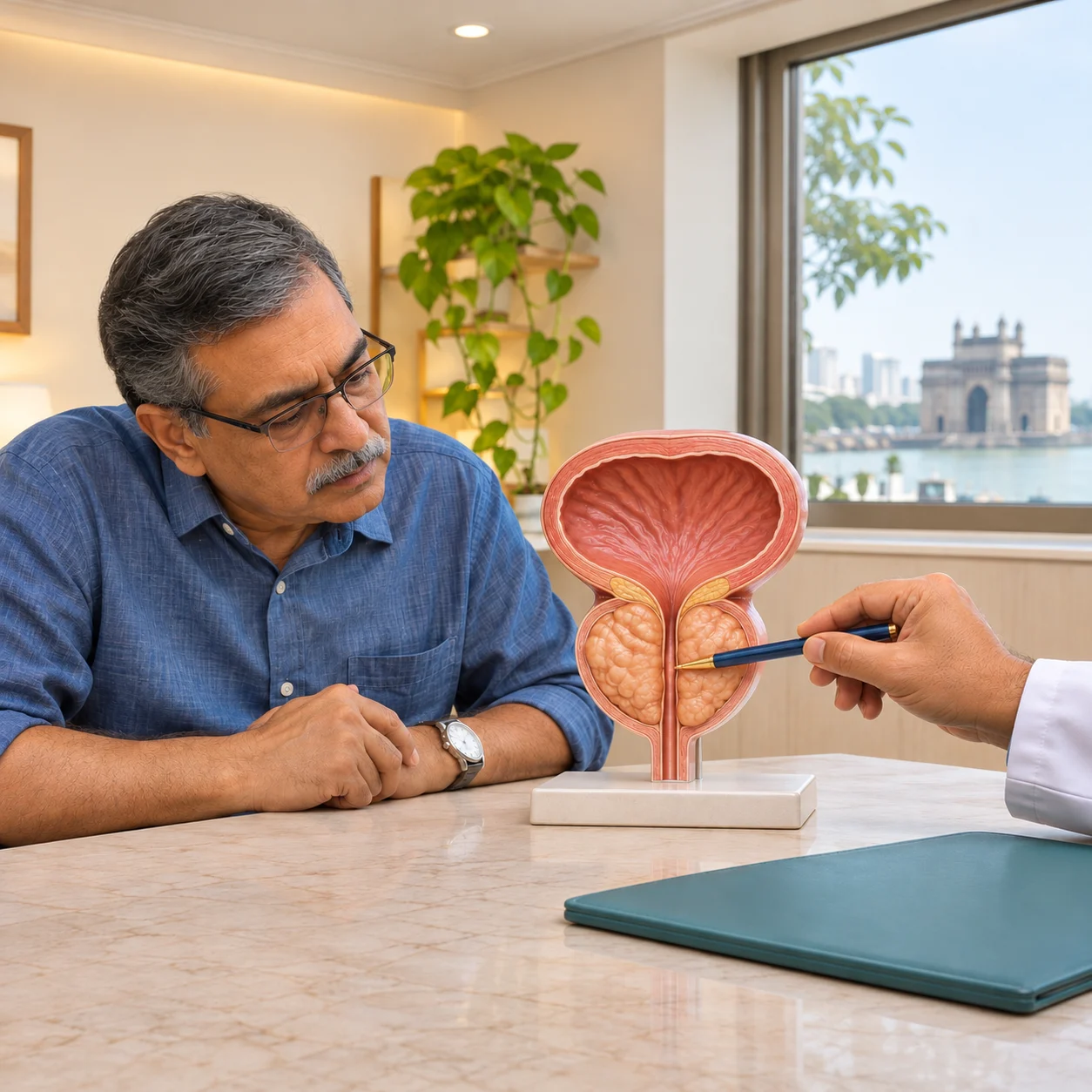
What is TURP Surgery?
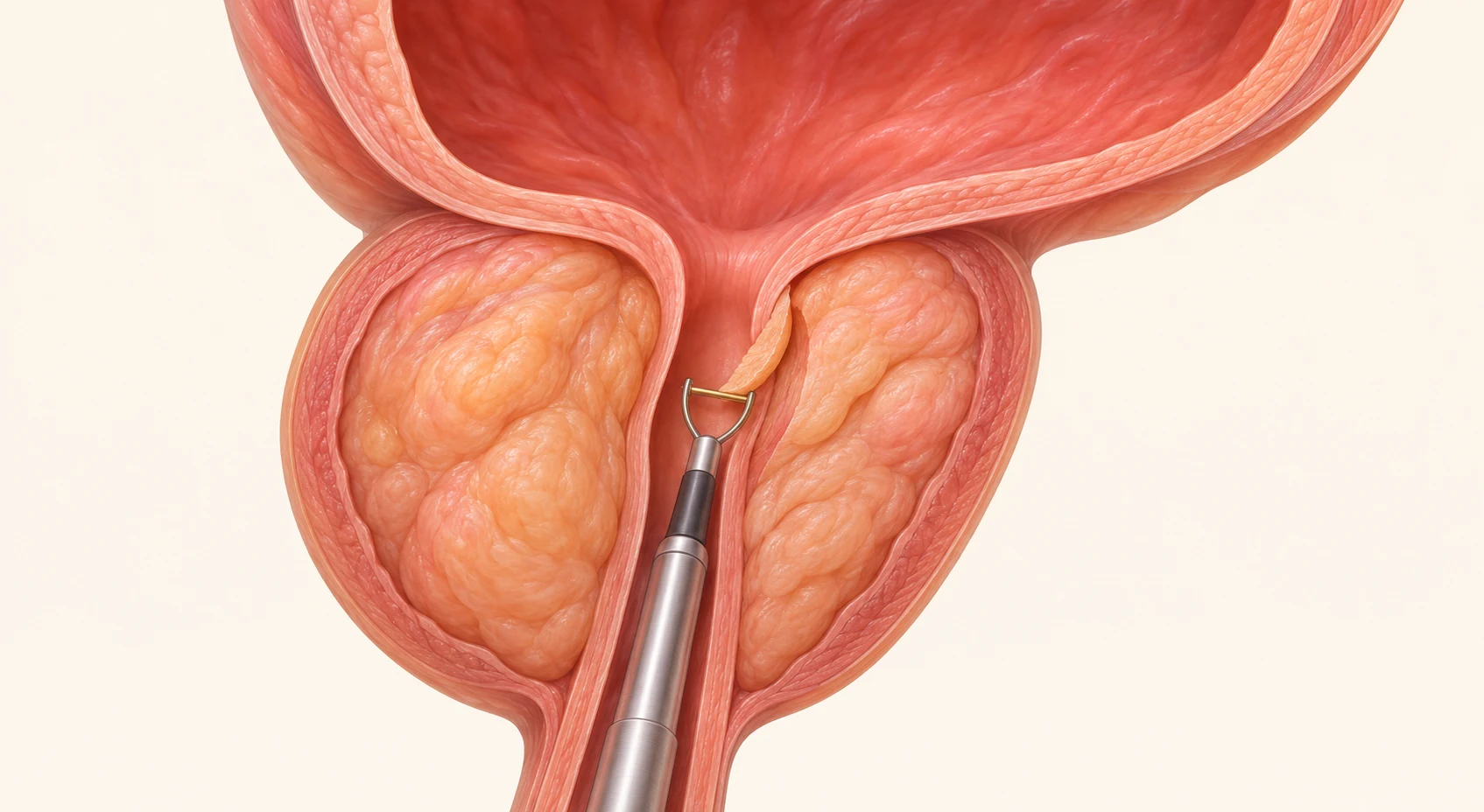
Direct Answer: Transurethral Resection of the Prostate (TURP) is a minimally invasive surgical procedure that removes excess prostate tissue constricting the urethra. Using an optical resectoscope equipped with an electrical cutting loop, the urologist shaves away obstructing tissue from inside the urinary tract, instantly widening the bladder outlet without cuts or scars on the skin.
As men age, the prostate gland naturally enlarges—a non-cancerous condition termed Benign Prostatic Hyperplasia (BPH). When the prostate enlarges inwards, it acts like a tight clamp around the urethra, impeding the smooth flow of urine from the bladder. For decades, TURP has served as the benchmark international surgical standard for relieving moderate-to-severe lower urinary tract symptoms (LUTS) when prescription medications cease to be effective.
When is TURP Considered for an Enlarged Prostate?
Surgery is generally recommended when urinary symptoms significantly interfere with sleep, work, and quality of life, or when complications of urinary retention arise. Clinical criteria for evaluating surgical intervention include:
Persistent LUTS Symptoms
- Weak, slow, or interrupted urinary stream
- Hesitancy (difficulty starting urination) and straining
- Severe nocturia (waking 3–6 times per night to void)
- Inability to completely empty the bladder
- Intolerable side effects or failure of BPH medications (Alpha-blockers / 5-ARIs)
BPH Complications
- Episodes of acute urinary retention requiring a catheter
- Recurrent urinary tract infections (UTIs) due to stagnant urine
- Bladder stones caused by incomplete bladder emptying
- Recurrent macroscopic blood in urine (hematuria)
- Kidney damage or bilateral hydronephrosis from chronic back-pressure
Monopolar vs Bipolar TURP: Understanding the Difference
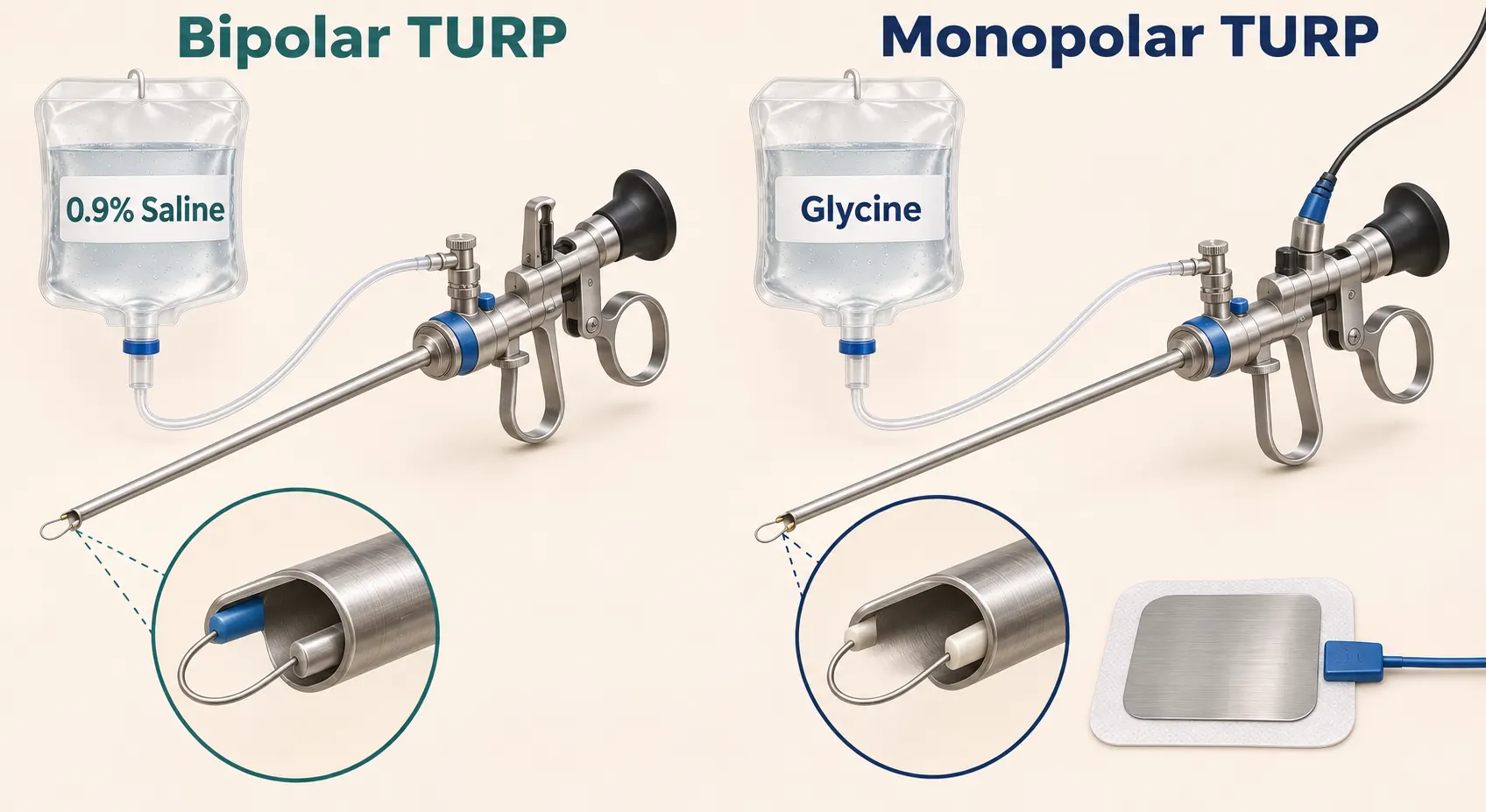
Modern endoscopic urology has evolved with the introduction of Bipolar TURP (Transurethral Resection in Saline - TURis). Understanding how modern bipolar energy improves patient safety over traditional monopolar surgery helps patients make well-informed healthcare decisions:
| Feature | Bipolar TURP (Modern Saline Technique) | Traditional Monopolar TURP |
|---|---|---|
| Irrigation Fluid | 0.9% Normal Saline (Physiologic solution) | Non-conductive Glycine or Sorbitol solution |
| TUR Syndrome Risk | Virtually Eliminated — Saline prevents severe hyponatremia | Low but present risk if prolonged surgery (>60 mins) |
| Bleeding & Coagulation | Superior simultaneous haemostasis and coagulation | Standard point-by-point electrocautery |
| Cardiac Pacemaker Safety | High safety profile; current is contained between loop electrodes | Requires precautions due to circuit flow to thigh grounding pad |
| Prostate Size Limits | Can safely resect larger prostates (up to 80–100 grams) | Usually preferred for smaller glands (<60 grams) |
| Catheter & Stay Duration | Often 24–48 hours catheter; 1–2 days hospital stay | Typically 48–72 hours catheter; 2–3 days hospital stay |
How TURP Compares with HoLEP & Other Alternatives
No single treatment fits every patient. During your consultation in Chembur, Dr. Shyam Mohan evaluates your prostate size, age, baseline urinary function, anticoagulant medications, and personal priorities:
| Approach | Mechanism | Ideal Candidate | Key Clinical Benefit |
|---|---|---|---|
| BPH Medications | Relaxes prostate smooth muscle (Tamsulosin) or reduces size (Dutasteride) | Mild to moderate symptoms without urinary retention or bladder stones | Non-surgical; avoids operative risks but requires lifelong daily pills |
| Bipolar TURP | Endoscopic resection loop cores out obstructing prostate channel | Prostate gland size 30g to 80g; standard anatomy | Gold-standard long-term data, cost-effective, widely available |
| HoLEP (Laser Surgery) | Holmium laser enucleates whole anatomical lobes along the surgical capsule | Any size, especially large (>80g) or men on blood thinners | Minimal bleeding, lower retreatment rate, handles very large glands |
The Surgical Procedure: What Happens During TURP?
- Pre-Operative Assessment: Blood tests (complete blood count, renal function, coagulation profile), PSA check, urine culture, electrocardiogram (ECG), and anaesthetic clearance. Blood-thinning medications are adjusted safely under medical supervision.
- Anaesthesia Administration: TURP is typically conducted under regional (spinal) anaesthesia, ensuring total numbness from the waist down while you remain comfortable, or under general anaesthesia based on clinical consensus.
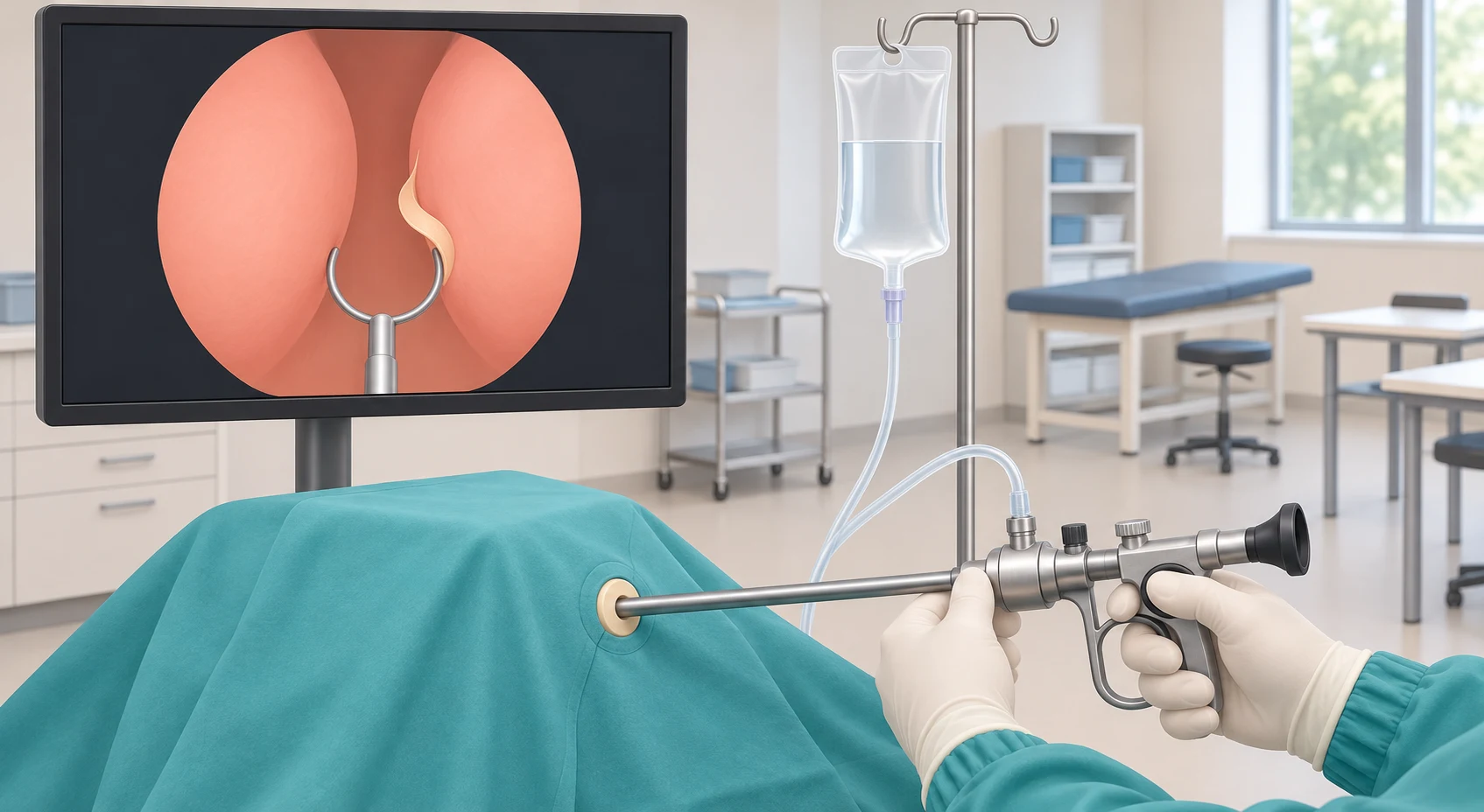
- Resection of Tissue: The urologist gently passes the resectoscope through the tip of the penis into the urethra. Viewing the enlarged lobes on a high-definition surgical monitor, an electrically activated wire loop shaves off thin slices of blocking prostate tissue while simultaneously sealing blood vessels.
- Flushing & Tissue Retrieval: The resected tissue chips are washed into the bladder with sterile fluid and evacuated using an Ellik evacuator. These tissue fragments are sent to a histopathology laboratory for microscopic analysis to exclude incidental malignancy.
- Catheter Placement: A three-way Foley catheter is positioned in the bladder with continuous saline irrigation to prevent blood clot formation, keep the urine clear, and permit the healing process to begin.
What to Expect During Recovery After TURP
Recovery from transurethral surgery is typically smooth because there are no abdominal incisions. Most men experience progressive improvement over several weeks:
Days 1–3 (Hospital)
Bladder irrigation runs until urine is light pink or clear. You will walk around within 24 hours. The catheter is removed once drainage is clear, and spontaneous urination is verified before discharge.
Weeks 1–2 (Home)
Mild burning sensation, urinary frequency, and occasional flecks of blood in urine are normal during early tissue healing. Drink 2–2.5 litres of water daily. Avoid straining during bowel movements.
Weeks 3–6 (Resumption)
Urinary stream strengthens noticeably. Avoid vigorous cycling, strenuous workouts, sexual intercourse, and heavy weight lifting (>5 kg) for 4 weeks to prevent secondary bleeding from the healing prostate bed.
Frequently Asked Questions
Prostate Consultation in Chembur, Mumbai
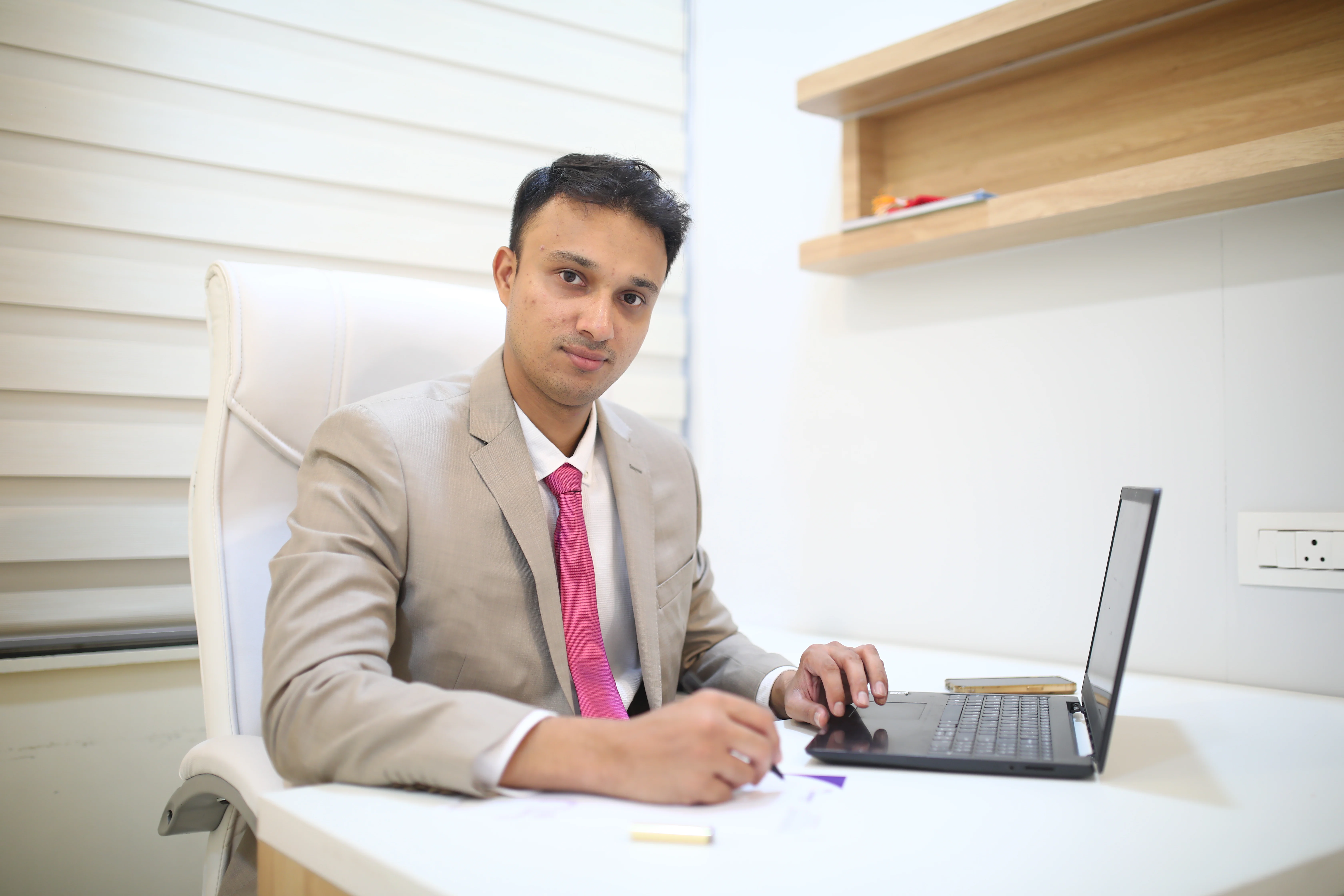
Dr. Shyam Mohan
Also explore laser prostate solutions: Laser Prostate Surgery (HoLEP) in Mumbai and general diagnostic evaluations for Prostate Enlargement Treatment.
Clinical Reference Sources
- European Association of Urology (EAU) Guidelines on Management of Non-Neurogenic Male LUTS (2024).
- British Association of Urological Surgeons (BAUS) – Transurethral Resection of Prostate (TURP) Procedure Leaflet.
- American Urological Association (AUA) Guideline on the Management of Benign Prostatic Hyperplasia.