Robotic Bladder Cancer Surgery in Mumbai
Robot-Assisted Radical Cystectomy (RARC) is a state-of-the-art, minimally invasive surgical intervention for muscle-invasive and aggressive bladder cancer. By utilizing high-magnification 3D optics and articulating instruments, the procedure ensures complete oncological bladder and lymph node removal while minimizing blood loss and surgical trauma.
As a trained Robotic Uro-Oncologist, Dr. Shyam Mohan specializes in complex pelvic robotic oncological resections and advanced reconstructive urinary diversions—including Orthotopic Neobladder (creating a new bladder from bowel) and Ileal Conduit. Consultations and individualized treatment planning are provided at Synergy Health Clinic in Chembur, Mumbai.
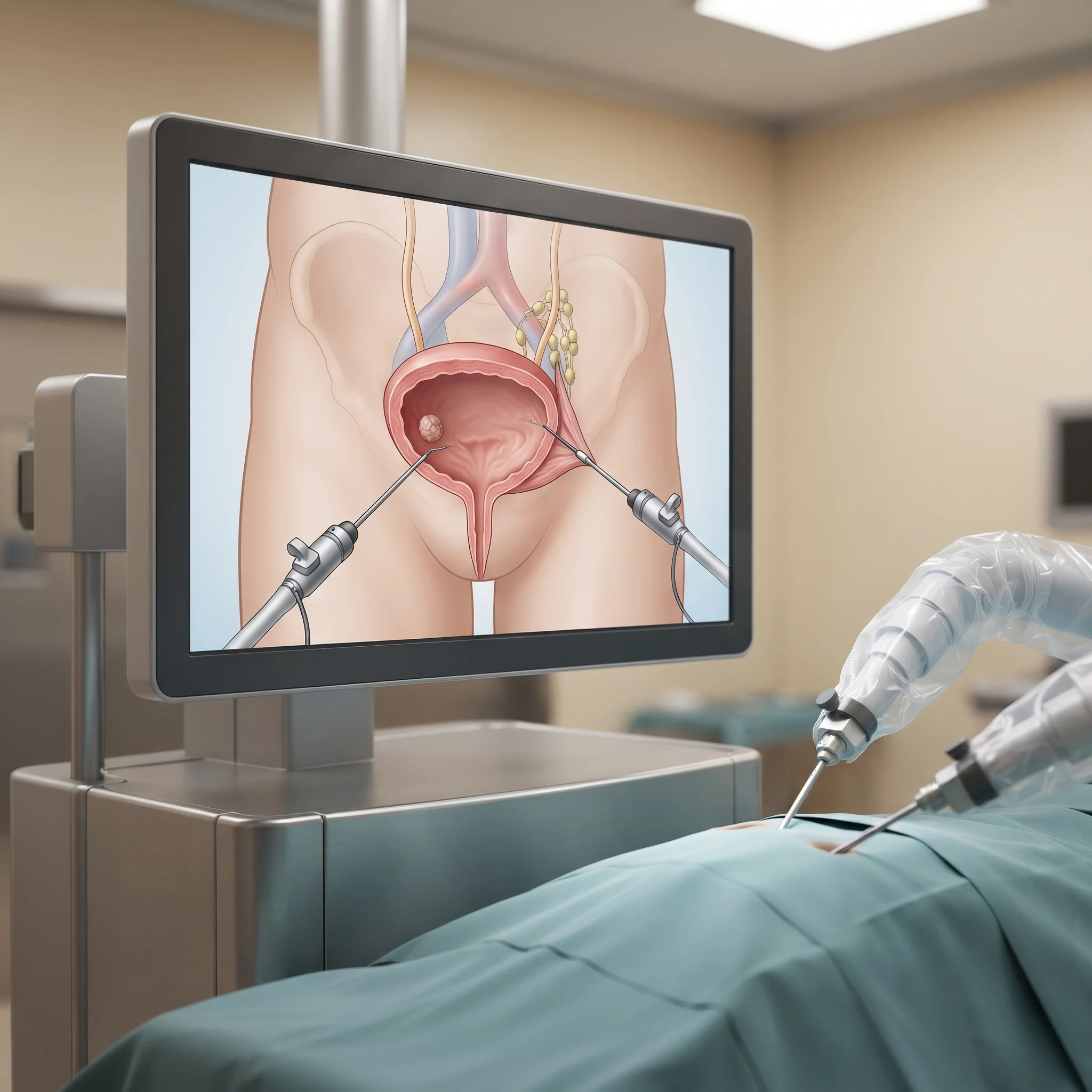
What is Robotic Radical Cystectomy?
Direct Answer: Robotic Radical Cystectomy is a minimally invasive operation to completely remove a urinary bladder affected by invasive cancer, along with surrounding pelvic lymph nodes and adjacent organs, followed by constructing a new pathway for urine to leave the body (urinary diversion). Using a robotic console, the surgeon operates multi-jointed instruments through small keyholes, achieving high oncological precision with minimal tissue trauma.
For men, standard radical cystectomy involves removing the urinary bladder, prostate gland, and seminal vesicles. For women, it typically includes the bladder, uterus, ovaries, and a small segment of the anterior vaginal wall, though organ-sparing techniques may be considered in selected candidates to preserve sexual function.
When is Robotic Bladder Cancer Surgery Required?
Bladder cancer is staged by how deeply it penetrates the layers of the bladder wall. Radical cystectomy is recommended in the following clinical scenarios:
Muscle-Invasive Bladder Cancer (MIBC)
- Tumors invading the muscularis propria layer (Stage T2)
- Tumors extending into perivesical fat tissue (Stage T3a / T3b)
- Locally advanced disease invading adjacent organs without distant metastases (Stage T4a)
- Often preceded by Neoadjuvant Chemotherapy (NAC) to optimize survival
High-Risk Non-Muscle-Invasive (NMIBC)
- Aggressive high-grade T1 tumors (T1G3) that recur despite immunotherapy
- Extensive Carcinoma in Situ (CIS) unresponsive to intravesical BCG therapy
- Rapidly recurrent large multifocal high-grade bladder lesions
- High-risk variant histologies (micropapillary, plasmacytoid, neuroendocrine)
Urinary Diversion: Reconstructing the Urinary Tract
Once the diseased bladder is removed, the kidneys still produce urine continuously. The surgeon reconstructs a new urinary reservoir or conduit using a short section of the patient’s own small bowel:
| Feature | Orthotopic Neobladder (Continent) | Ileal Conduit / Urostomy (Incontinent) |
|---|---|---|
| How It Works | 40–50 cm of small intestine is configured into a sphere and sutured to the native urethra. | A 15 cm isolated bowel segment channels urine to a stoma on the right lower abdomen. |
| Urination Method | Urine is passed through the penis or natural channel using abdominal muscles. | Urine drains continuously into an external waterproof pouch worn on the skin. |
| External Bag Needed? | No external bag | Yes (discreet urostomy appliance changed every 3–5 days) |
| Surgical Complexity | Higher complexity; requires meticulous robotic intracorporeal suturing. | Shorter operative time; technically straightforward. |
| Ideal Candidate | Motivated patients with good renal/hepatic function and cancer-free urethral margin. | Elderly patients, those with renal impairment, or severe medical comorbidities. |
| Long-Term Care | Pelvic floor rehabilitation to regain daytime and nighttime continence. | Basic stoma hygiene and routine appliance management. |
Robotic vs Open Radical Cystectomy
| Clinical Outcome | Robotic Radical Cystectomy (RARC) | Traditional Open Cystectomy |
|---|---|---|
| Blood Loss | Minimal (typically 200–350 mL) | Significant (often 800–1500 mL) |
| Blood Transfusion Rate | Significantly lower (<15%)< /td> | Commonly required (40–60%) |
| Pelvic Visualization | Magnified 3D high-definition view of deep narrow pelvic vessels & nerves | Restricted by deep pelvic bony anatomy |
| Postoperative Bowel Recovery | Faster peristalsis recovery; reduced risk of prolonged paralytic ileus | Slower bowel recovery due to bowel exposure and cooling |
| Hospital Length of Stay | Typically 5 to 7 days | Typically 10 to 14 days |
| Wound Complications | Small port incisions; lower risk of hernia or dehiscence | Long midline incision with higher incidence of wound pain/hernia |
Surgical Steps: What Happens During the Operation?
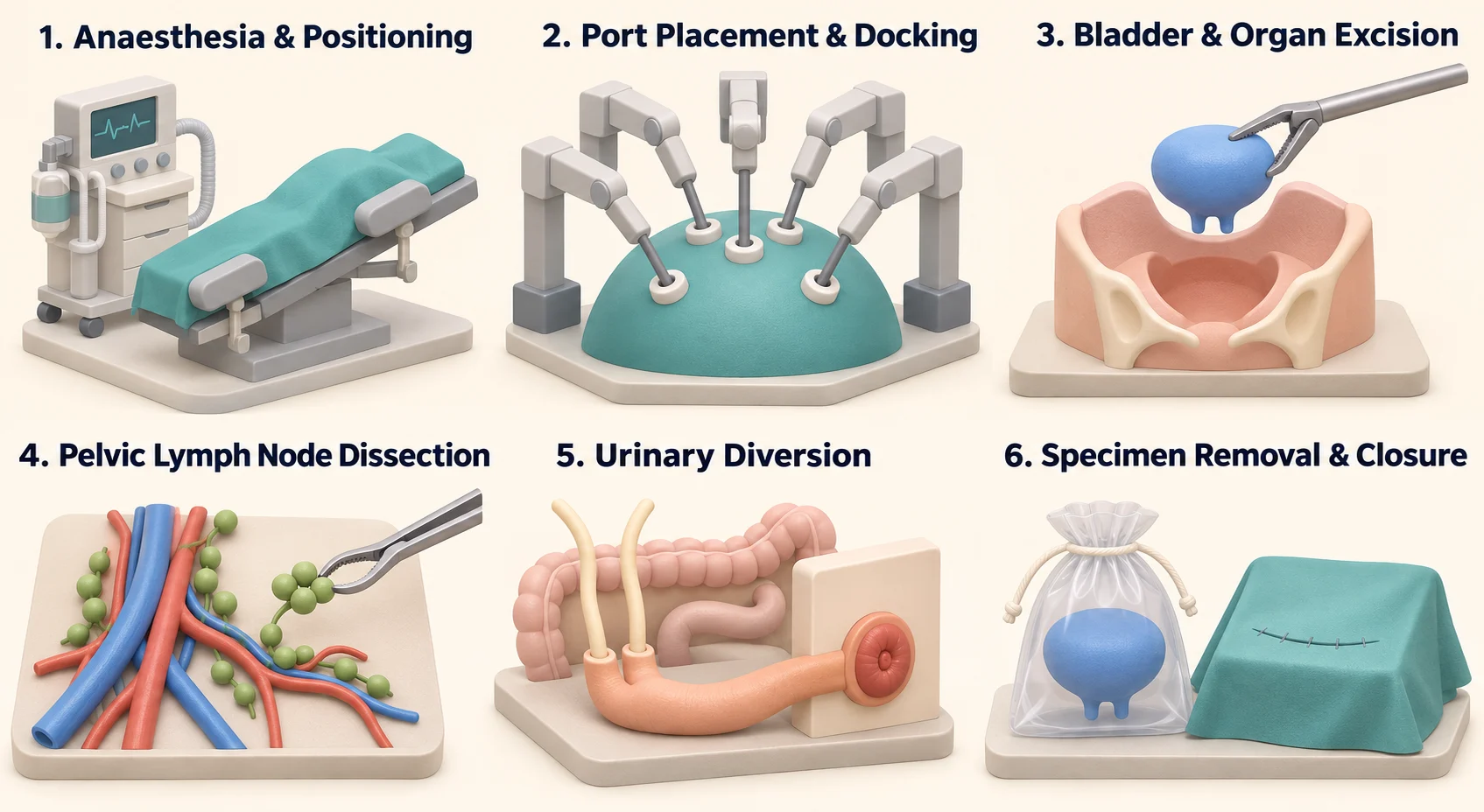
- Anaesthesia and Positioning: General anaesthesia is administered, and the patient is positioned in a steep Trendelenburg position to allow bowel loops to fall away from the pelvis naturally.
- Port Placement & Robotic Docking: Five or six keyhole ports are placed in the abdomen, and the robotic arms are docked over the patient.
- Bladder & Organ Excision: The ureters are divided and confirmed cancer-free via frozen section pathology. The bladder blood supply (vesical pedicles) is carefully controlled, and the entire bladder with surrounding fat is dissected en-bloc.
- Extended Pelvic Lymph Node Dissection (ePLND): Lymph nodes along the external, internal, and common iliac vessels and obturator fossa are meticulously removed to ensure complete oncological clearance and precise staging.
- Urinary Diversion Construction: The bowel segment is isolated and bowel continuity restored with surgical staplers. The ureters are reimplanted into the conduit or neobladder, and the urinary drainage system is secured with temporary internal stents.
- Specimen Removal & Closure: The removed organs are enclosed in an endoscopic retrieval bag and extracted intact through a small Pfannenstiel incision.
Recovery and Postoperative Care
Following the Enhanced Recovery After Surgery (ERAS) protocol speeds recuperation:
Days 1–3
Patients are assisted to sit out of bed and walk within 24 hours. Sips of water and gum chewing stimulate bowel recovery. Intravenous pain medication is quickly transitioned to oral analgesics.
Days 4–7
Soft diet is tolerated as normal bowel sounds return. Dedicated stoma nurses teach ileal conduit care and pouch changes. Patients are discharged once independently mobile and eating well.
Weeks 3–6
Ureteric stents and catheter are removed in outpatient clinic. Neobladder patients begin scheduled daytime voiding every 2–3 hours. Most patients return to light professional activities.
Potential Risks and Complications
Radical cystectomy is a major surgical procedure. In full alignment with NMC guidelines, risks are transparently discussed:
- Prolonged Ileus: Temporary sluggishness of bowel movements occurs in some patients after bowel manipulation, managed with intravenous hydration and gentle ambulation.
- Infection / Sepsis: Urinary tract infection or pelvic collection, treated with culture-sensitive antibiotics.
- Ureteral Stricture: Scarring at the site where the ureter joins the bowel occurs in 3% to 5% of cases and can be managed with endoscopic balloon dilation or stenting.
- Metabolic Acidosis or Vitamin B12 Deficiency: Regular blood tests monitor electrolytes and vitamin levels over long-term follow-up.
- Erectile / Sexual Function: Because nerves run close to the bladder and prostate, erectile function is affected in most men unless nerve-sparing surgery is safely feasible.
Frequently Asked Questions
Uro-Oncology Consultation in Chembur, Mumbai

Dr. Shyam Mohan
Explore related oncology procedures: Bladder Cancer Treatment in Mumbai and general uro-oncology care under Uro-Oncology Procedures.
Clinical Reference Sources
- European Association of Urology (EAU) Guidelines on Muscle-Invasive and Metastatic Bladder Cancer (2024).
- National Comprehensive Cancer Network (NCCN) Clinical Practice Guidelines in Oncology: Bladder Cancer.
- British Association of Urological Surgeons (BAUS) – Radical Cystectomy and Urinary Diversion Leaflet.