Second Opinion for Urological Cancer in Mumbai
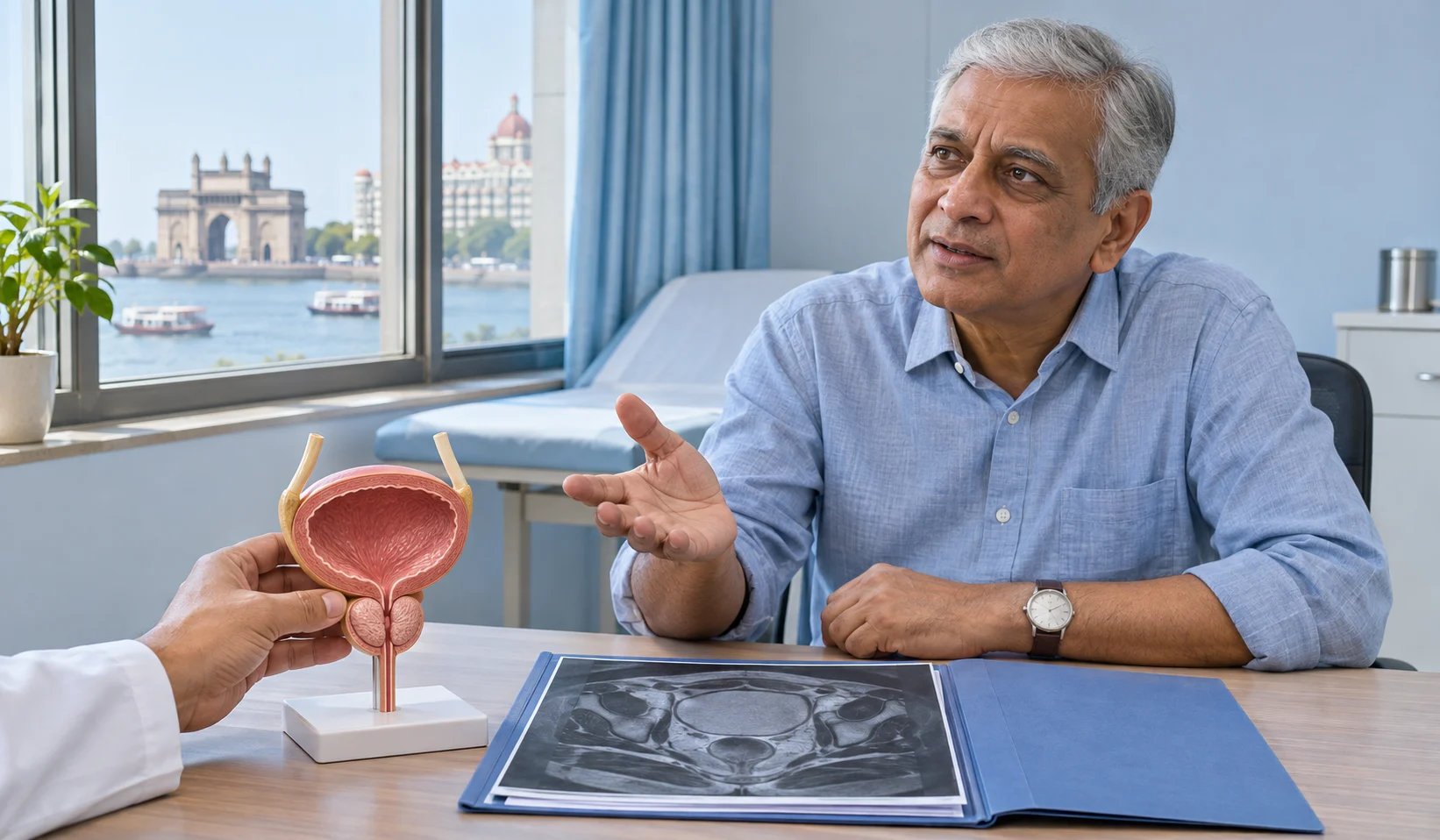
A second opinion for urological cancer in Mumbai is an independent review of your diagnosis, reports, pathology and scans by another specialist, so that you can understand your condition and the reasonable treatment options before you decide. It is a normal part of cancer care and a recognised right of every patient.
Dr. Shyam Mohan, Consultant Urologist, Uro-Oncologist & Robotic Surgeon, reviews cases of prostate, kidney, bladder, testicular, penile and upper tract urothelial cancer at Synergy Health Clinic in Chembur, Mumbai, working collaboratively with your existing treating team.
What is a Second Opinion in Urological Cancer?
Direct Answer: A second opinion in urological cancer is a consultation in which a uro-oncologist independently reviews your history, blood tests, biopsy or surgical pathology and imaging, and then explains the stage of the disease and the treatment options supported by current guidelines. It helps you make an informed decision together with your treating team.
Cancers of the urinary tract and male genital organs often have more than one accepted treatment pathway. A man with localised prostate cancer, for example, may reasonably be offered active surveillance, surgery or radiotherapy, each with different trade-offs. Hearing these options explained a second time, by a different specialist, can make a complex decision clearer.
A second opinion is not a judgement on the care you have received. In many cases it simply confirms the existing diagnosis and plan. Its value lies in reassurance, a fuller understanding of the choices, and the chance to ask questions at your own pace.
Which Urological Cancers Can Be Reviewed?
Prostate Cancer
Raised PSA, MRI and biopsy findings, Gleason score and Grade Group, PSMA PET-CT results, and choices between active surveillance, robotic prostatectomy, radiotherapy and hormone therapy.
Kidney Cancer
Small renal masses, cystic lesions graded by the Bosniak classification, and the choice between surveillance, ablation, partial nephrectomy or radical nephrectomy.
Bladder Cancer
TURBT pathology, grade and depth of invasion, BCG therapy, and the options for muscle-invasive disease such as radical cystectomy or bladder-preserving chemoradiotherapy.
Testicular Cancer
Orchidectomy pathology, tumour markers, staging and the choice between surveillance, chemotherapy, radiotherapy or RPLND. See testicular cancer treatment.
Penile Cancer
Biopsy findings, organ-sparing surgery versus partial or total penectomy, and assessment and management of the groin lymph nodes.
Upper Tract Urothelial Carcinoma
Tumours of the renal pelvis or ureter, ureteroscopic biopsy results, and the choice between kidney-sparing endoscopic treatment and radical nephroureterectomy.
When Should You Consider a Second Opinion?
There is no wrong time to ask, but a second opinion is most often sought in these situations:
- A new diagnosis of cancer, before starting any major treatment
- When more than one treatment option has been offered and you would like help weighing them
- When a major operation, such as removal of the prostate, kidney or bladder, has been recommended
- When you are considering active surveillance and want to understand what it involves
- A rare cancer type or an unusual pathology report
- Rising PSA or tumour markers, or recurrence after previous treatment
- When you simply want more time and information before deciding
Your right to seek another opinion is recognised in medical ethics and in Indian professional conduct standards. You remain free to continue treatment wherever you choose.
What Documents Should You Bring?
A thorough review depends on complete records. Original files are preferable to photographs on a phone.
| Document | Examples | Why It Matters |
|---|---|---|
| Consultation notes & summaries | Clinic letters, discharge summaries, treatment summaries | Shows the history and the reasoning behind the current plan |
| Blood reports | PSA (with dates), AFP, beta-hCG, LDH, kidney function | Trends over time help with staging and risk assessment |
| Histopathology reports | Prostate biopsy, TURBT, nephrectomy, orchidectomy reports | Grade, stage and margins guide treatment choices |
| Biopsy slides & paraffin blocks | Obtained from the original pathology laboratory on request | Allows independent review by a uropathologist |
| Imaging on CD/DVD with reports | Multiparametric MRI, CT urography, PSMA PET-CT, bone scan, ultrasound | Original images can be re-read, not just the written report |
| Procedure & operation notes | Cystoscopy, ureteroscopy or surgical notes | Describes findings that may not appear in scan reports |
| Medicines & other conditions | Current medication list, cardiac or diabetes records | Overall fitness influences which options are suitable |
What Does the Second-Opinion Review Involve?
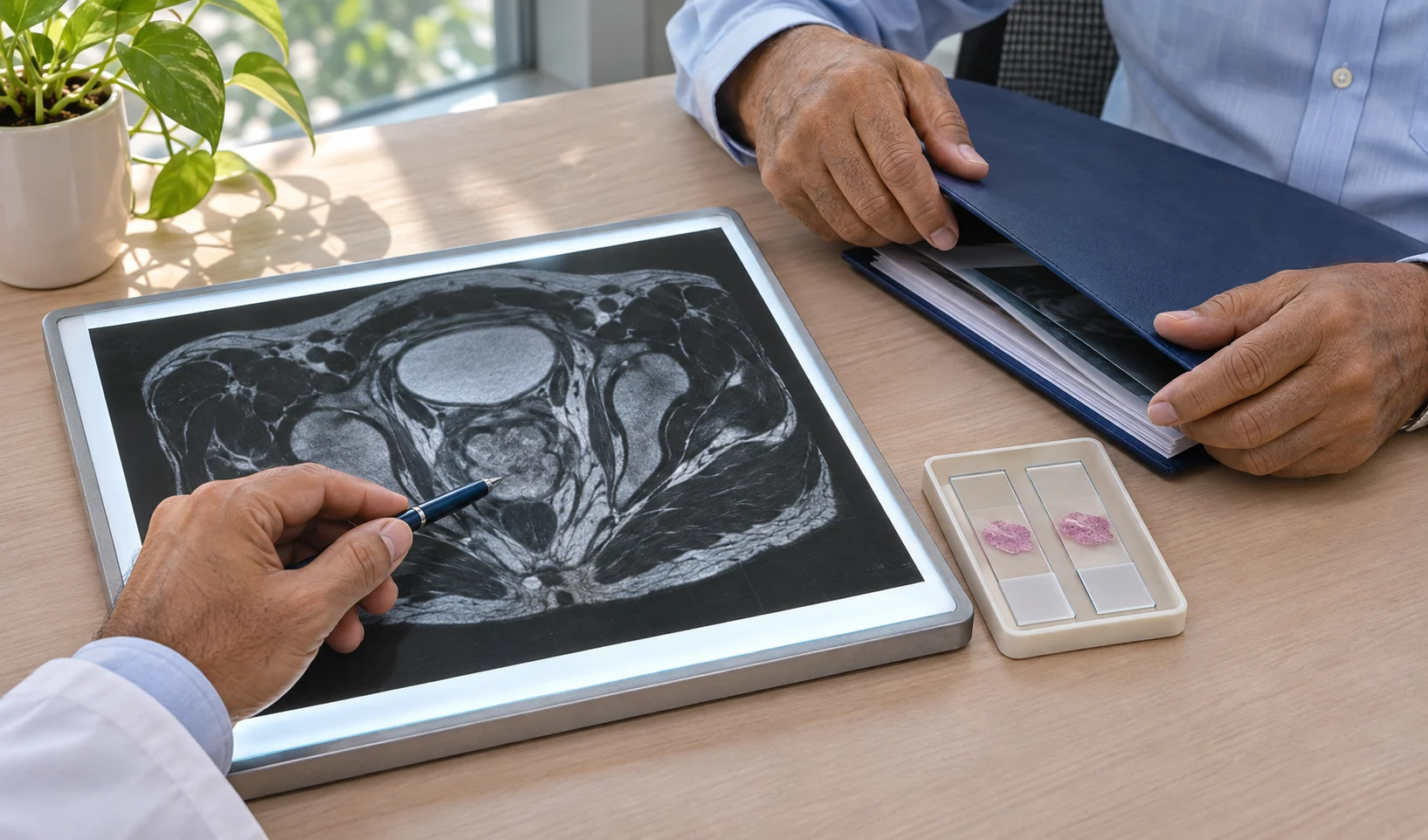
- Detailed history and examination: Your symptoms, general health, family history and personal priorities are discussed, followed by a relevant clinical examination.
- Review of records: Blood tests, pathology and imaging are studied in sequence to build a clear picture of the diagnosis and stage.
- Pathology and radiology review where needed: If helpful, slides or blocks may be sent for uropathology review, and imaging may be re-read by a radiologist.
- Additional tests, only if required: Occasionally a missing piece of information, such as an MRI or PSMA scan, may be suggested. Tests are not repeated unnecessarily.
- Discussion of options: All guideline-supported options are explained in plain language, including their aims, possible side effects and impact on daily life, continence, sexual function and fertility.
- Written summary: A summary of the opinion can be provided for you and your treating doctors, supporting a shared decision.
Treatment Options Commonly Discussed
Depending on the cancer type and stage, the following approaches are among those explained during a review. No single option is right for everyone.
Active Surveillance
Regular monitoring with tests and scans for selected low-risk cancers, with treatment offered if the disease changes.
Surgery
Open, laparoscopic or robot-assisted operations to remove the tumour, with organ-sparing approaches considered where appropriate.
Radiation & Systemic Therapy
Radiotherapy, hormone therapy, chemotherapy, immunotherapy or targeted therapy, delivered by radiation and medical oncology colleagues.
For complex cases, a multidisciplinary tumour board discussion involving urology, medical oncology, radiation oncology, radiology and pathology is encouraged, in line with international guidance.
How Does a Second Opinion Work With Your Treating Team?

A second opinion is collaborative. The aim is to support your decision, not to replace the relationship with your existing doctor. You are welcome to share the written summary with your treating specialist, and you may choose to continue treatment with them, seek care elsewhere, or take more time to decide. The choice always remains yours.
Patients who would like a general overview of cancer services can also visit our uro-oncologist in Mumbai page.
Frequently Asked Questions
Uro-Oncology Second Opinion in Chembur, Mumbai

Dr. Shyam Mohan
Related cancer pages: Prostate Cancer Treatment, Kidney Cancer Treatment, Bladder Cancer Treatment, Testicular Cancer Treatment and Uro-Oncology Procedures.
Medical disclaimer: This page is for general educational purposes and is not a substitute for an individual medical consultation. A second opinion is advisory; treatment decisions depend on clinical evaluation, complete records and discussion between you and your treating doctors.
Clinical Reference Sources
- European Association of Urology (EAU) Guidelines on Prostate Cancer, Renal Cell Carcinoma, Non-Muscle-Invasive and Muscle-Invasive Bladder Cancer, Upper Urinary Tract Urothelial Carcinoma, Testicular Cancer and Penile Cancer.
- National Comprehensive Cancer Network (NCCN) Clinical Practice Guidelines in Oncology for genitourinary cancers.
- American Urological Association (AUA) Guidelines on Clinically Localized Prostate Cancer and on Renal Masses and Localized Renal Cancer.
- National Institute for Health and Care Excellence (NICE) Guideline NG131: Prostate Cancer Diagnosis and Management.
- National Medical Commission (NMC) Registered Medical Practitioner (Professional Conduct) Regulations, 2023.