Cystoscopy in Mumbai
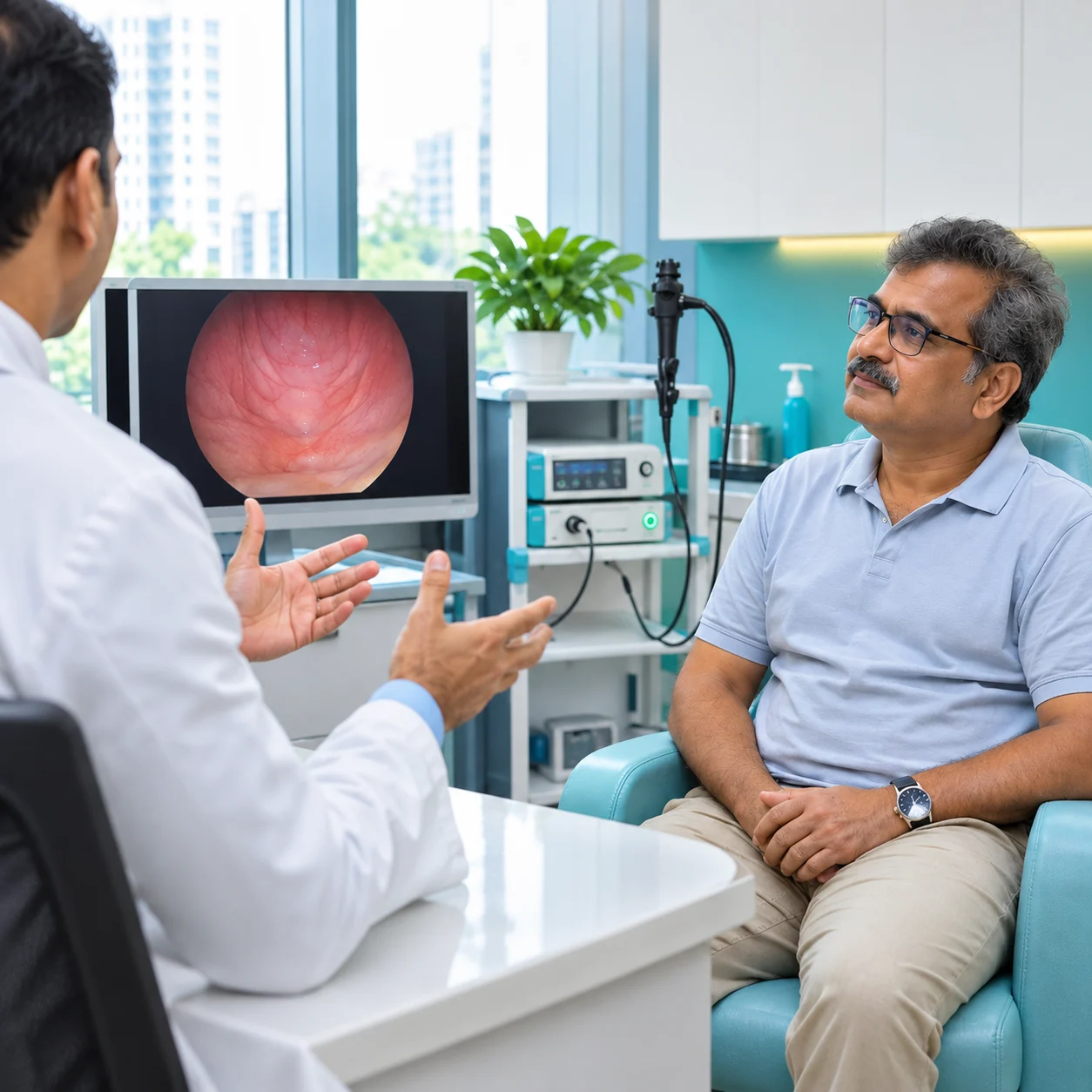
Cystoscopy (Cystourethroscopy) is the gold-standard diagnostic and therapeutic procedure in urology. By gently introducing a specialized miniature telescope through the natural urinary channel, a urologist obtains direct, magnified visual confirmation of the urethra, prostate, and interior bladder lining.
At Synergy Health Clinic in Chembur, Mumbai, Dr. Shyam Mohan—Consultant Urologist, Uro-Oncologist & Robotic Surgeon—utilizes high-definition flexible cystoscopy to provide gentle, rapid, and virtually painless evaluations for patients presenting with blood in the urine, recurrent urinary infections, or suspected bladder disorders.
What is Cystoscopy?
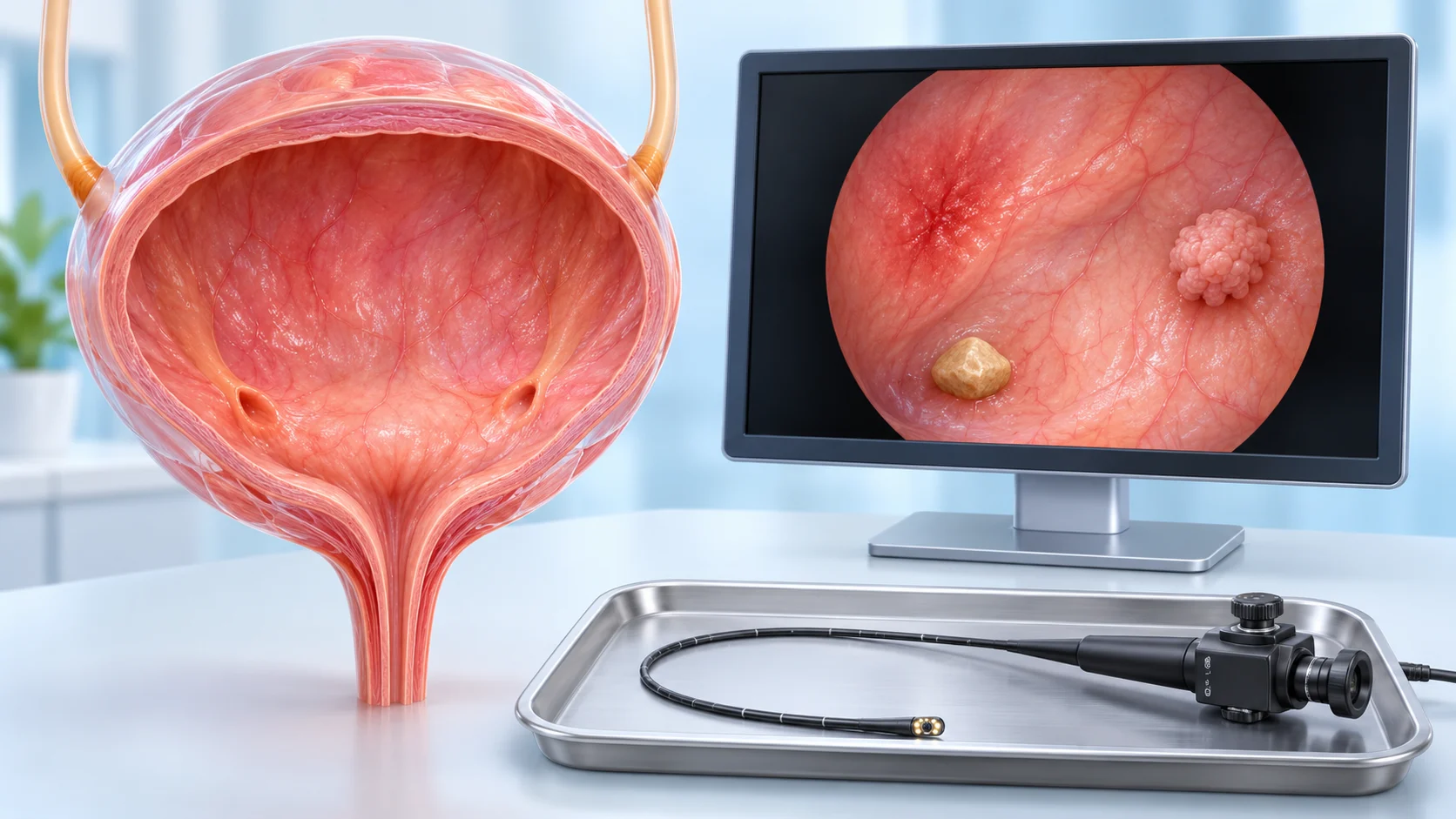
Direct Answer: Cystoscopy is an endoscopic medical examination where a urologist inserts a slender, lighted camera (cystoscope) through the urethra into the urinary bladder. It provides direct, real-time, high-magnification visualization of the urinary tract lining, detecting inflammation, strictures, stones, and bladder tumors that cannot be definitively identified on ultrasound, X-ray, or CT imaging.
The human urinary bladder is a muscular storage organ with a sensitive inner mucosal lining (urothelium). When patients experience unusual bleeding, persistent pelvic discomfort, or changes in voiding patterns, cystoscopy allows the specialist to directly inspect every square millimetre of the bladder wall and both ureteric orifices (where urine enters from the kidneys).
When is Cystoscopy Recommended?
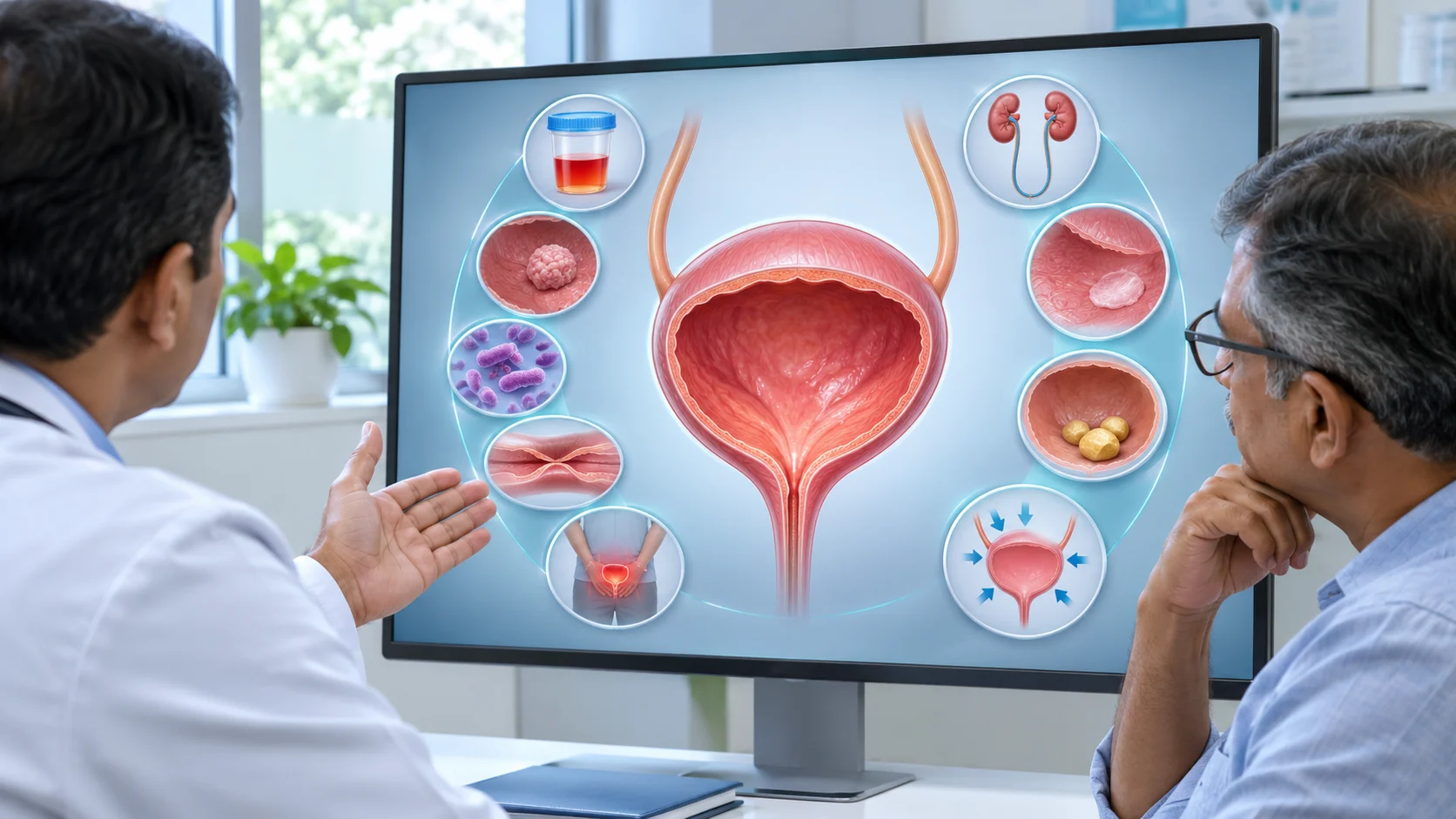
Dr. Shyam Mohan recommends cystoscopy when symptoms or prior investigative reports suggest an underlying pathology within the lower urinary tract:
Diagnostic Indications
- Blood in Urine (Hematuria): Visible red/brown urine or microscopic red blood cells on urine routine tests.
- Bladder Cancer Surveillance: Regular monitoring of patients previously treated for non-muscle-invasive bladder tumors.
- Recurrent UTIs: Investigating why infections repeatedly return in men or women.
- Urethral Stricture: Confirming narrowing or scar tissue in the urine passage causing a thin, strained stream.
- Severe Irritative Voiding: Persistent burning, intense frequency, or pelvic pain unexplained by routine tests.
Therapeutic Indications
- DJ Stent Removal: Extracting internal ureteral stents placed after kidney stone surgeries (such as RIRS or URSL).
- Bladder Biopsy: Taking miniature tissue samples of suspicious lesions for laboratory histopathology.
- Bladder Stone Removal: Fragmenting and extracting small stones formed inside the bladder cavity.
- Bladder Injections: Administering therapeutic Botox injections for refractory overactive bladder (OAB).
Flexible vs Rigid Cystoscopy: Key Differences
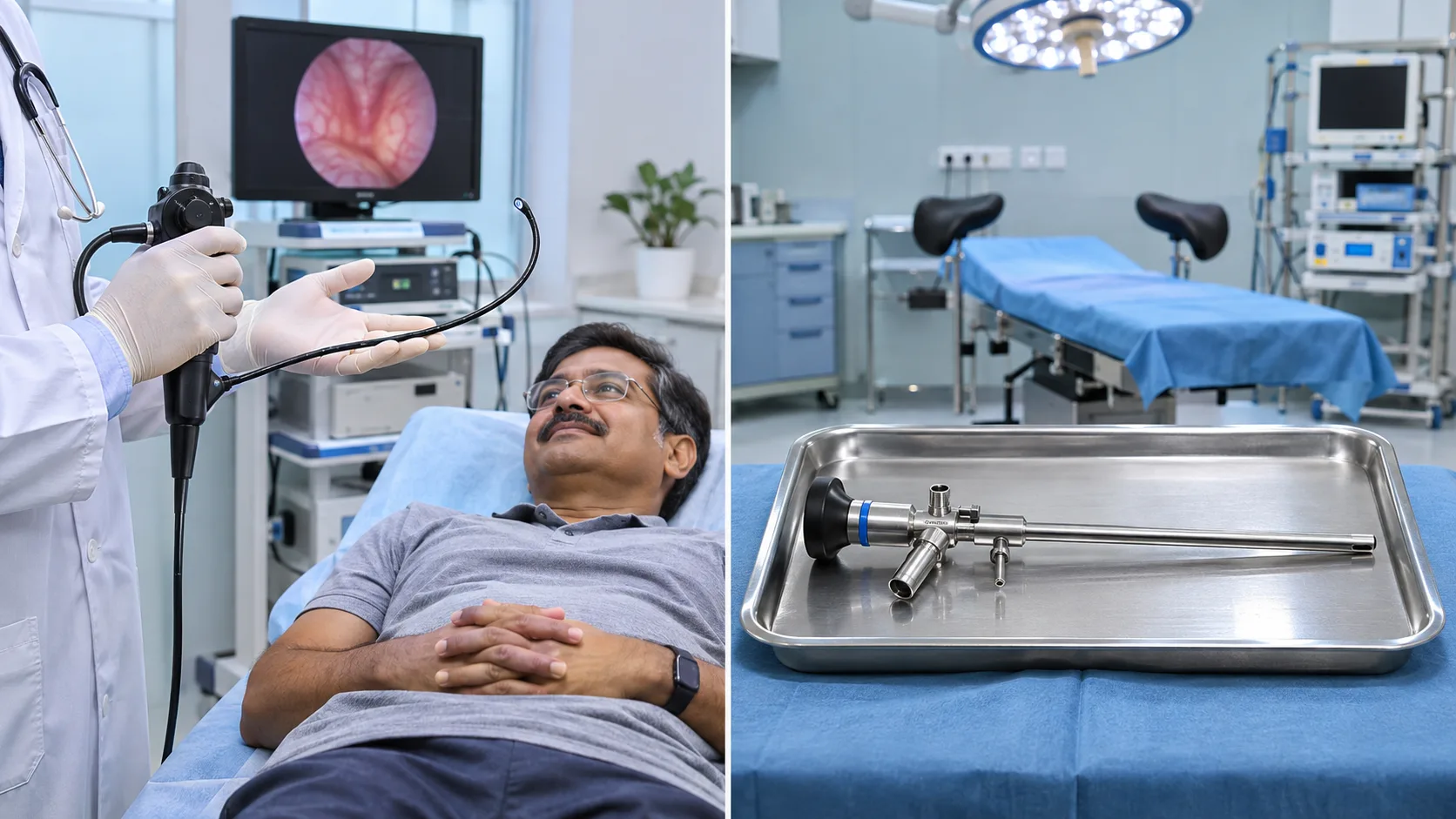
Modern urology offers two types of cystoscopes depending on whether the primary goal is diagnostic examination or operative intervention:
| Feature | Flexible Cystoscopy (Modern Standard) | Rigid Cystoscopy |
|---|---|---|
| Design & Material | Slim, bendable silicone scope with high-definition digital sensor | Solid stainless steel tubular telescope |
| Anaesthesia Used | Local topical gel only (instilled into urethra) | Spinal, intravenous sedation, or general anaesthesia |
| Setting | Outpatient clinic / day-care examination room | Operation theatre (OT) |
| Patient Position | Comfortable flat supine position | Lithotomy position (legs in stirrups) |
| Patient Comfort | Very high — Flexes gently along natural urethral curves | Requires regional numbness to prevent discomfort |
| Best Suited For | Diagnostic checks, routine cancer surveillance, DJ stent removal | Formal biopsies, heavy bleeding, stone crushing, resection |
Step-by-Step: What Happens During Flexible Cystoscopy?
- Preparation & Cleansing: You will be asked to empty your bladder before the test. You lie comfortably on an examination couch, and the genital area is cleaned with a gentle antiseptic solution.
- Local Anaesthetic Gel Application: A sterile syringe introduces a soothing local anaesthetic lubricating gel (2% lignocaine) into the urethra. This takes approximately 3 to 5 minutes to numb the nerve endings completely.
- Gentle Scope Insertion: Dr. Shyam Mohan gently advances the slim flexible scope. Because the scope actively deflects around the natural prostate curvature in men, you will feel only mild fullness or a fleeting urge to urinate.
- Saline Filling & Visual Inspection: Sterile saline solution is infused to gently expand the bladder folds. The high-definition camera provides a clear 360-degree panoramic view of the entire bladder mucosal surface, looking for inflammation, diverticula, or growths.
- Immediate Discussion of Findings: The procedure is completed within 5 to 10 minutes. The scope is gently withdrawn, you can empty the saline from your bladder, and Dr. Shyam Mohan immediately explains the visual findings with you.
Recovery: What to Expect After Cystoscopy

Because no surgical incisions are made, recovery is immediate. You can drive yourself home and resume normal work right after the appointment:
Normal Expected Sensations
- Mild stinging or burning during the first few urinations
- Slight pinkish tinge in the urine for the first 24 hours
- Increased urge to pass urine for a few hours
- Management: Drink an extra 1–2 litres of water throughout the day to flush the urinary tract naturally.
When to Contact the Clinic
- Persistent heavy bleeding with thick clots
- Inability to pass urine (acute urinary retention)
- Fever or chills (temperature > 38°C / 100.4°F)
- Severe burning or pelvic pain persisting beyond 48 hours
Safety and Ethical Disclosures
Cystoscopy is one of the safest medical procedures performed worldwide. In compliance with NMC guidelines, complications are exceptionally rare and manageable:
- Urinary Tract Infection: Occurs in less than 2% of patients; prevented by strict sterile techniques and prophylactic oral antibiotics when indicated.
- Temporary Hematuria: Usually mild and self-limiting within 24 to 48 hours.
- Urinary Retention: Occasionally seen in elderly men with severely enlarged prostates, resolved with temporary catheterisation.
Frequently Asked Questions
Urology Consultation in Chembur, Mumbai

Dr. Shyam Mohan
Related diagnostic resources: Blood in Urine (Hematuria) Evaluation, UTI Treatment in Mumbai, and Endourology Overview.
Clinical Reference Sources
- British Association of Urological Surgeons (BAUS) – Flexible Cystoscopy Patient Information.
- American Urological Association (AUA) / Society of Urodynamics Microscopic Hematuria Guideline.
- European Association of Urology (EAU) Guidelines on Diagnostic Urological Endoscopy.