Renal Transplantation Consultation in Mumbai
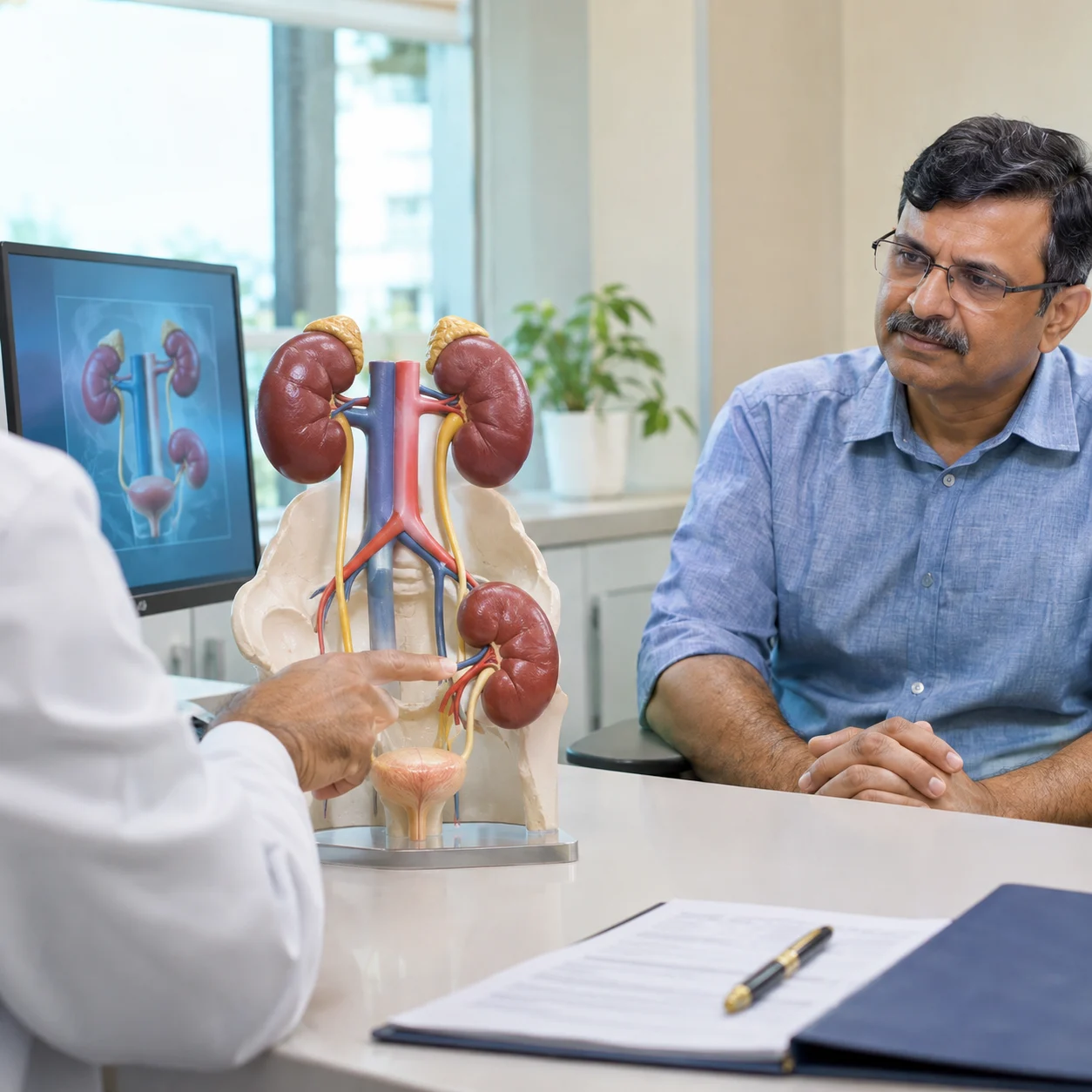
Renal Transplantation represents the definitive, life-enhancing treatment for patients with End-Stage Renal Disease (ESRD) and chronic renal failure. Achieving a successful transplant requires thorough pre-operative surgical evaluation of both recipient and living donor, precise surgical vascular and ureteric anastomosis, and rigorous post-transplant urological care.
At Synergy Health Clinic in Chembur, Mumbai, Dr. Shyam Mohan—Consultant Urologist, Uro-Oncologist & Robotic Surgeon—provides comprehensive transplant urology consultations. Working in tandem with nephrology teams and accredited transplant centres, Dr. Mohan guides patients through surgical workups, bladder optimization, and long-term urological health.
Understanding the Urologist’s Role in Kidney Transplantation
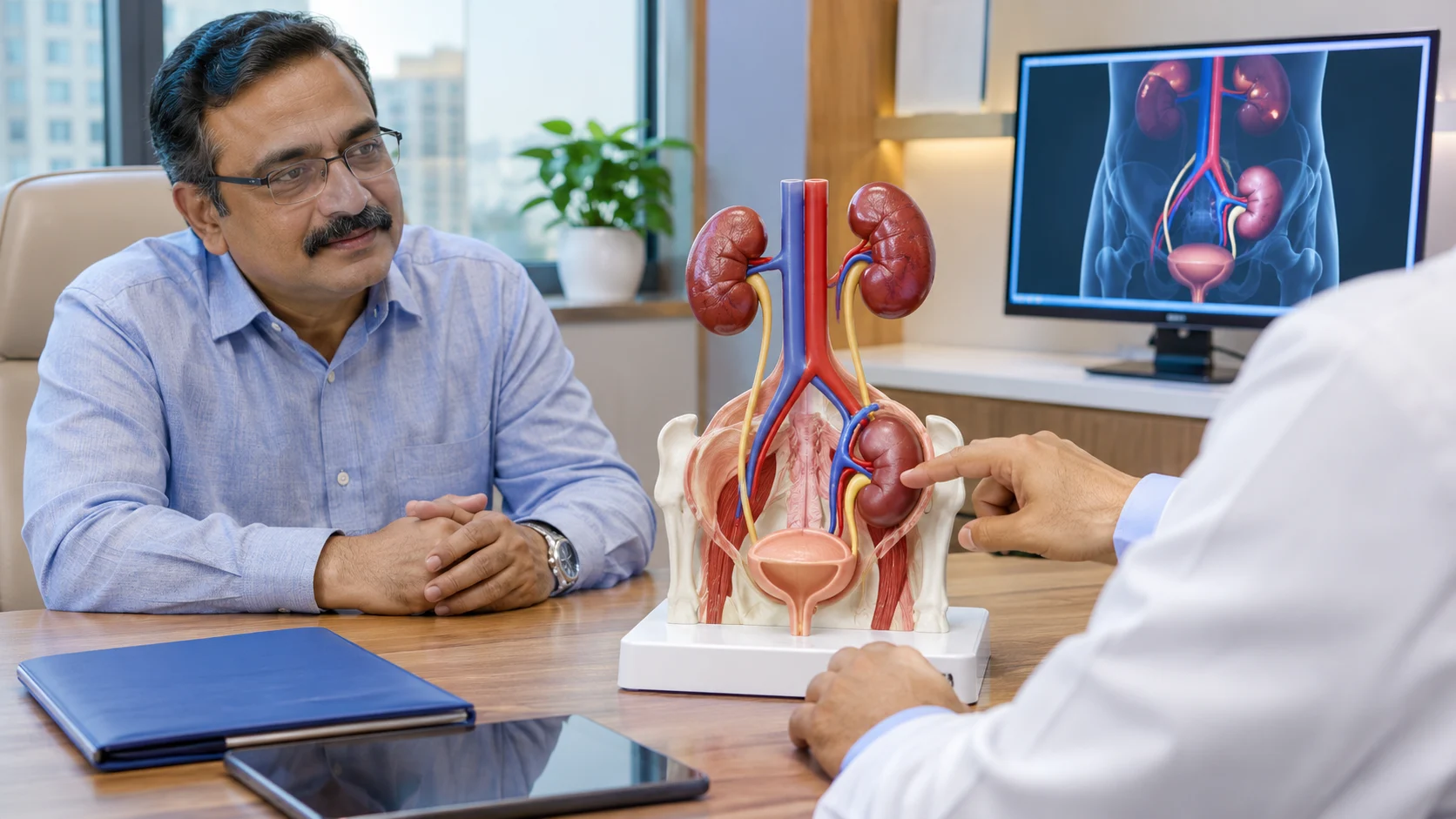
Direct Answer: In kidney transplantation, while nephrologists manage medical therapy, dialysis, and immunosuppression, the urologist/transplant surgeon is responsible for the surgical anatomy, vascular feasibility, bladder suitability, donor nephrectomy, graft implantation, and management of any post-transplant surgical complications.
For individuals living with irreversible Stage 5 Chronic Kidney Disease (CKD), a successful kidney transplant offers superior long-term survival, freedom from recurring haemodialysis or peritoneal dialysis sessions, and significantly restored energy and dietary freedom.
Recipient Pre-Transplant Urological Workup
Before an organ can be safely placed into a recipient, thorough urological evaluation is critical to ensure the body will receive and sustain the donor kidney:
Lower Urinary Tract Assessment
- Bladder Storage Dynamics: Anuric dialysis patients often develop a small, contracted bladder. Urodynamics tests confirm whether the bladder holds urine safely at low resting pressure.
- Voiding Dysfunction / Strictures: Men with enlarged prostates or urethral strictures require treatment before transplantation to avoid post-op graft obstruction.
- Reflux & Chronic Infection: Screening for severe vesicoureteral reflux or stagnant infected urine in non-functioning native kidneys.
Vascular & Native Kidney Factors
- Iliac Vessel Feasibility: Pelvic Doppler ultrasound or CT angiography checks for severe atherosclerosis or calcification in the iliac arteries where the graft will be attached.
- Native Nephrectomy Indications: Pre-transplant removal of native kidneys is reserved for intractable infection (chronic pyelonephritis), massive symptomatic polycystic kidney disease (ADPKD), severe nephrotic proteinuria, or renal tumor suspicion.
Living Kidney Donor Urological Assessment
In living donor kidney transplantation, donor safety is the absolute paramount medical priority. A prospective donor undergoes rigorous clinical verification:
| Investigation | Clinical Purpose |
|---|---|
| Triple-Phase CT Renal Angiography | Maps the number, diameter, and branching of renal arteries and veins, identifies any incidental cysts or stones, and examines ureteric anatomy to select the safer kidney for donation (leaving the donor with the better kidney). |
| Split Renal Function Scan (DTPA / EC) | Accurately measures individual kidney filtration (GFR) to ensure both kidneys contribute equally and that the donor will have optimal remaining kidney function. |
| 24-Hour Urine Protein & Creatinine | Confirms the absence of microscopic proteinuria, microalbuminuria, or underlying renal parenchymal disease. |
| Cardiovascular & Metabolic Profiling | Ensures the donor is free of significant diabetes, uncontrolled hypertension, or cardiovascular risks before clearing for laparoscopic donor nephrectomy. |
The Surgical Procedure: How the Transplant is Done
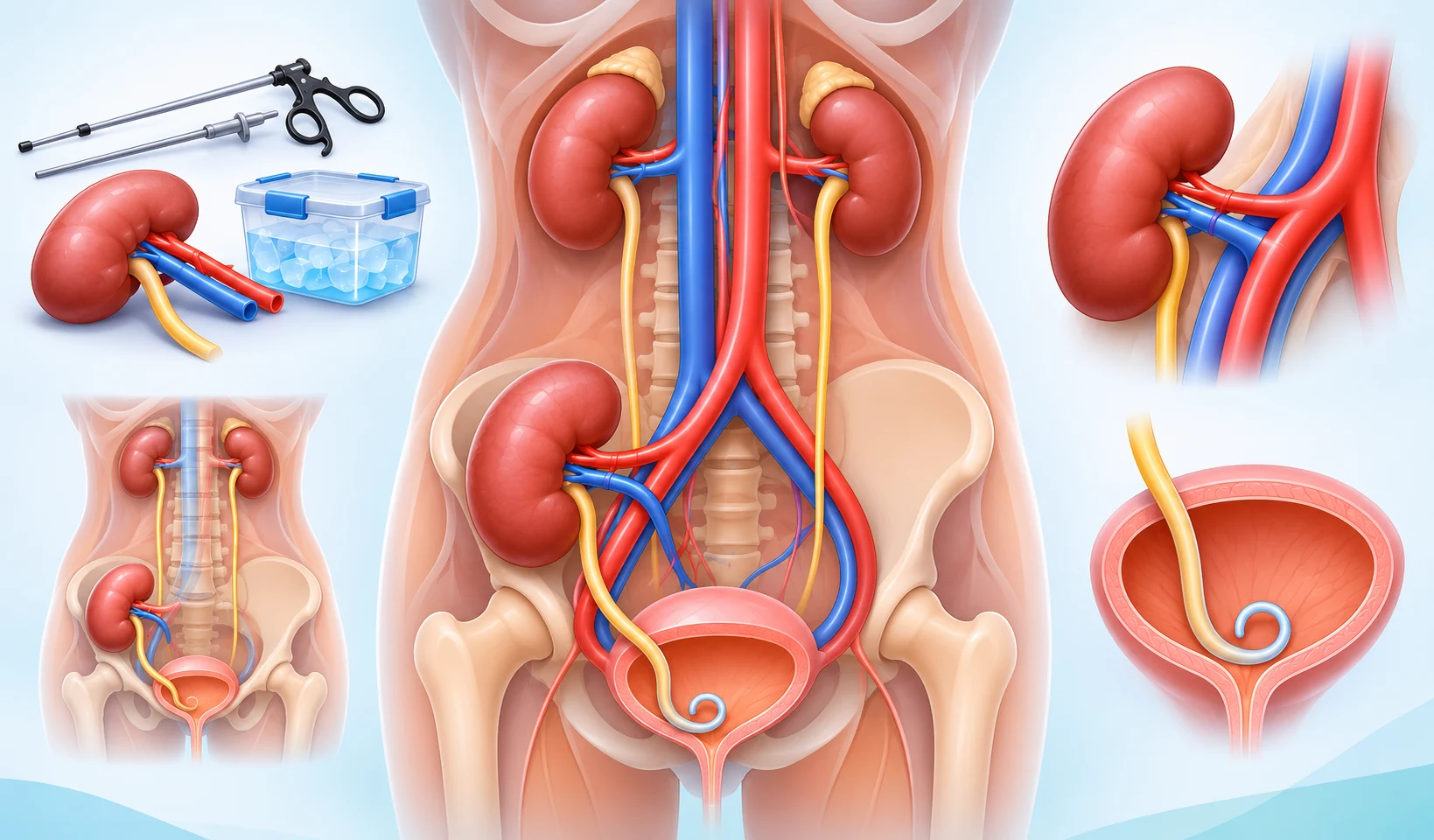
Kidney transplantation is performed in two synchronized surgical steps:
- Laparoscopic Donor Nephrectomy: In living donation, the donor kidney is retrieved using minimally invasive keyhole laparoscopy. The renal vessels are carefully preserved, and the kidney is immediately flushed with cold preservation solution (such as Custodiol HTK or Belzer UW) on ice.
- Recipient Implantation (Heterotopic Placement): The recipient’s diseased native kidneys are usually left untouched in their natural position. The donor kidney is placed in the right or left lower abdomen (iliac fossa) outside the peritoneal cavity.
- Vascular Anastomoses: The donor renal vein is micro-sutured to the recipient’s external iliac vein, and the donor renal artery is joined to the external or internal iliac artery. Vascular clamps are released, and the kidney instantly turns pink as blood circulates.
- Ureteric Reconstruction (Ureteroneocystostomy): The donor ureter is carefully tunnelled into the recipient's urinary bladder wall using an anti-reflux technique (Lich-Gregoir extravesical repair). A protective temporary Double-J (DJ) stent is placed internally to safeguard the delicate healing joint.
Post-Transplant Urological Management
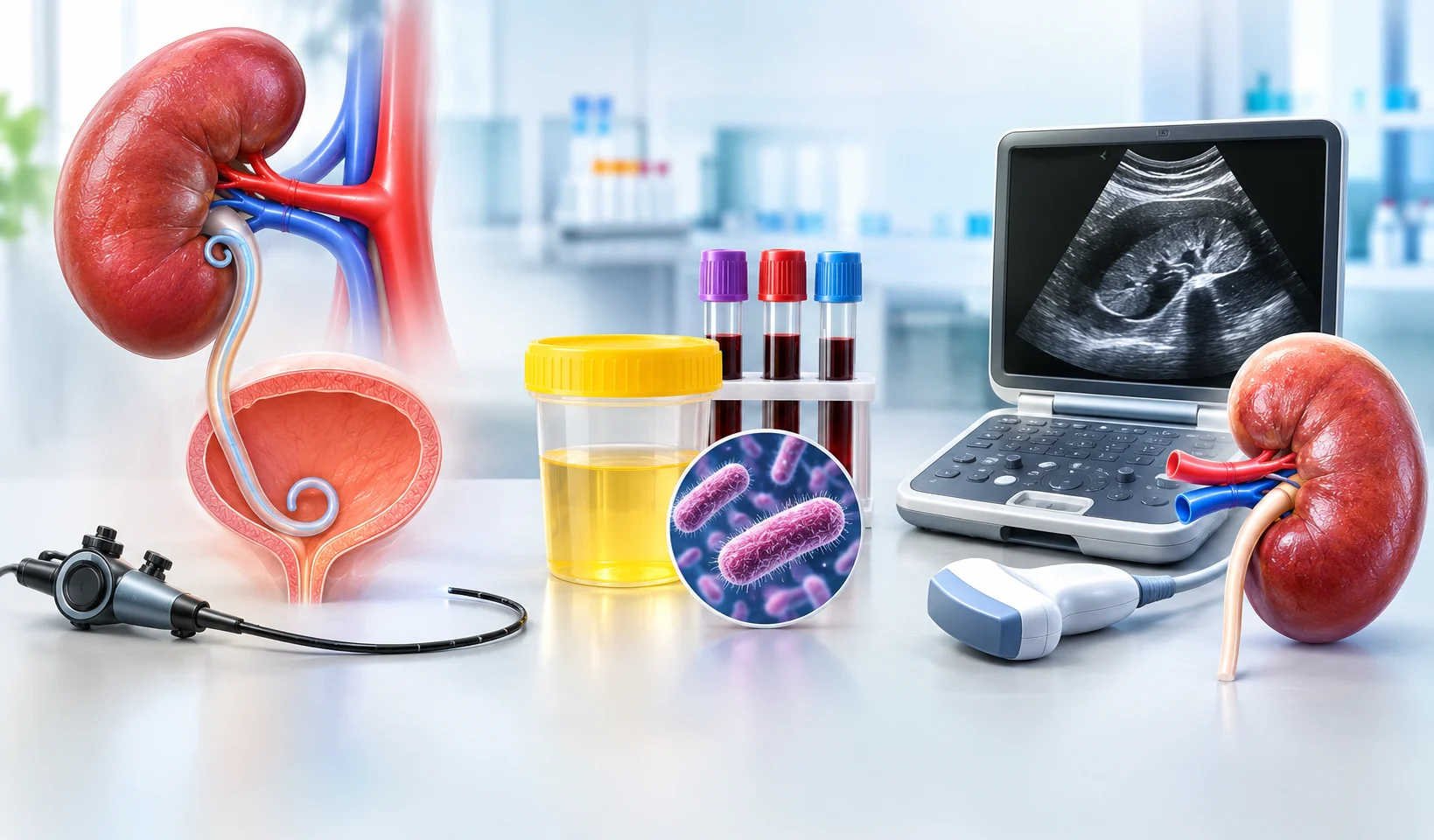
Careful urological surveillance continues long after hospital discharge:
Weeks 4–6 (Stent Removal)
The internal DJ stent is gently removed in the outpatient clinic using local anaesthetic flexible cystoscopy. This prevents encrustation, stone formation, or persistent urinary tract infection.
Infection Surveillance
Immunosuppressed transplant patients require prompt identification of urinary infections or opportunistic pathogens (such as BK virus or CMV) through regular urine cultures.
Surgical Complications
Ultrasonography monitors for uncommon surgical issues such as ureteric strictures, urinary leaks, perinephric fluid collections (lymphoceles), or renal artery stenosis.
Legal and Ethical Framework: THOTA Compliance

In accordance with Indian law and National Medical Commission (NMC) directives, all transplant consultations follow strict statutory standards:
- Transplantation of Human Organs and Tissues Act (THOTA 1994 & 2011/2014 Amendments): Commercial transactions or financial inducements for organ donation are strictly illegal and punishable by law.
- Near-Relative Donations: Spouses, parents, children, siblings, grandparents, and grandchildren are classified as near relatives, requiring legal documentation and identity verification.
- Authorization Committee Approval: Non-near relatives and foreign nationals require formal evaluation and approval from the State Government or Hospital Authorization Committee.
- Deceased Organ Donation: Coordinated transparently through government bodies including the Zonal Transplant Coordination Centre (ZTCC Mumbai), ROTTO, and NOTTO.
Frequently Asked Questions
Transplant Urology Consultation in Chembur, Mumbai

Dr. Shyam Mohan
Additional kidney surgical resources: Kidney Cancer Treatment, Kidney Stone Management, and General Urology Care.