Erectile Dysfunction Treatment in Mumbai
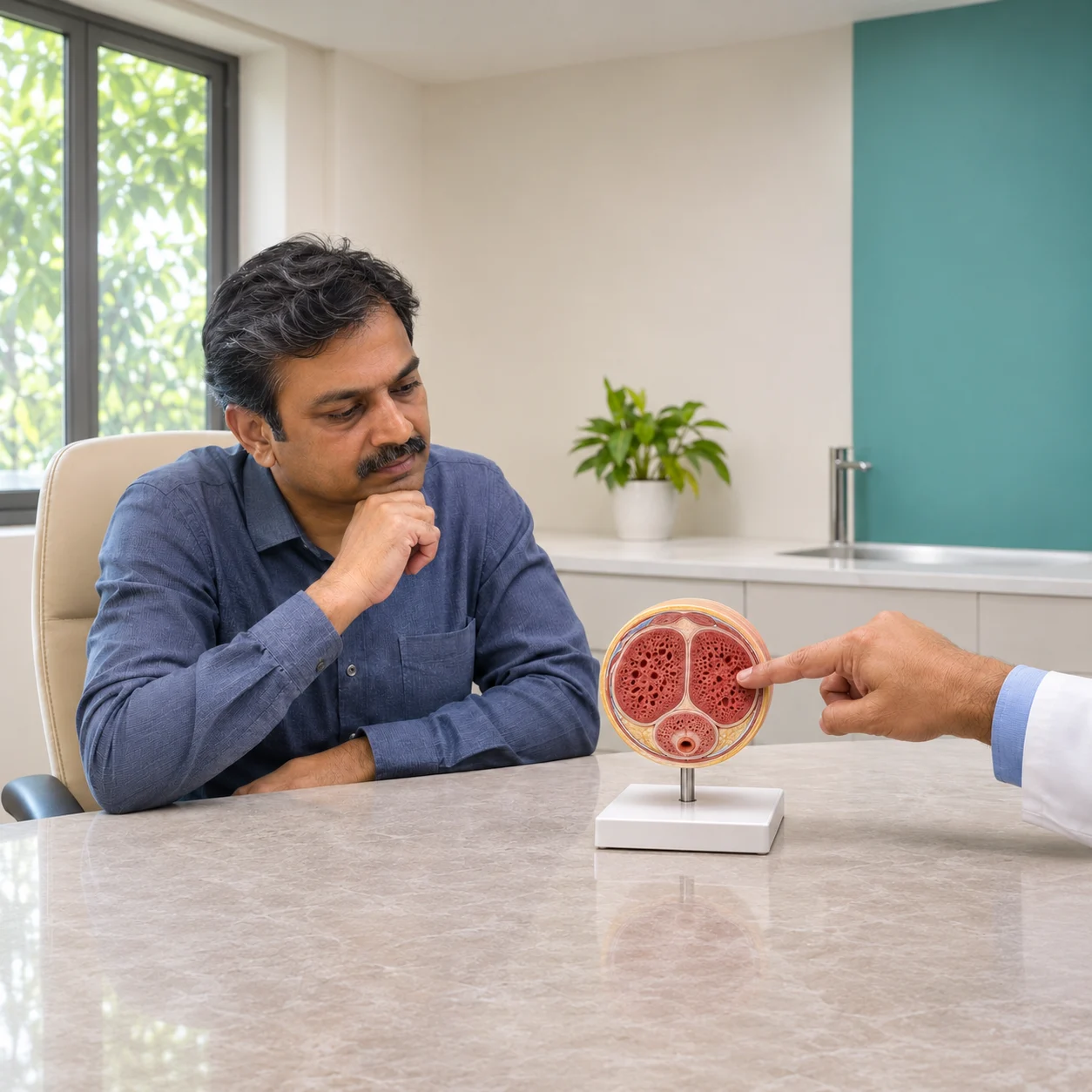
Erectile dysfunction (ED) is a common and treatable medical condition, not a personal failing. Seeking erectile dysfunction treatment in Mumbai from a urologist allows the cause to be identified properly – whether it relates to blood flow, nerves, hormones, medicines or emotional wellbeing – and allows treatment to be matched to your health and preferences.
Dr. Shyam Mohan offers confidential, respectful consultations at Synergy Health Clinic in Chembur, Mumbai. Partners are welcome to attend if you wish. The focus is on careful assessment, honest explanation and a step-by-step plan, starting with the simplest suitable options.
What Is Erectile Dysfunction?
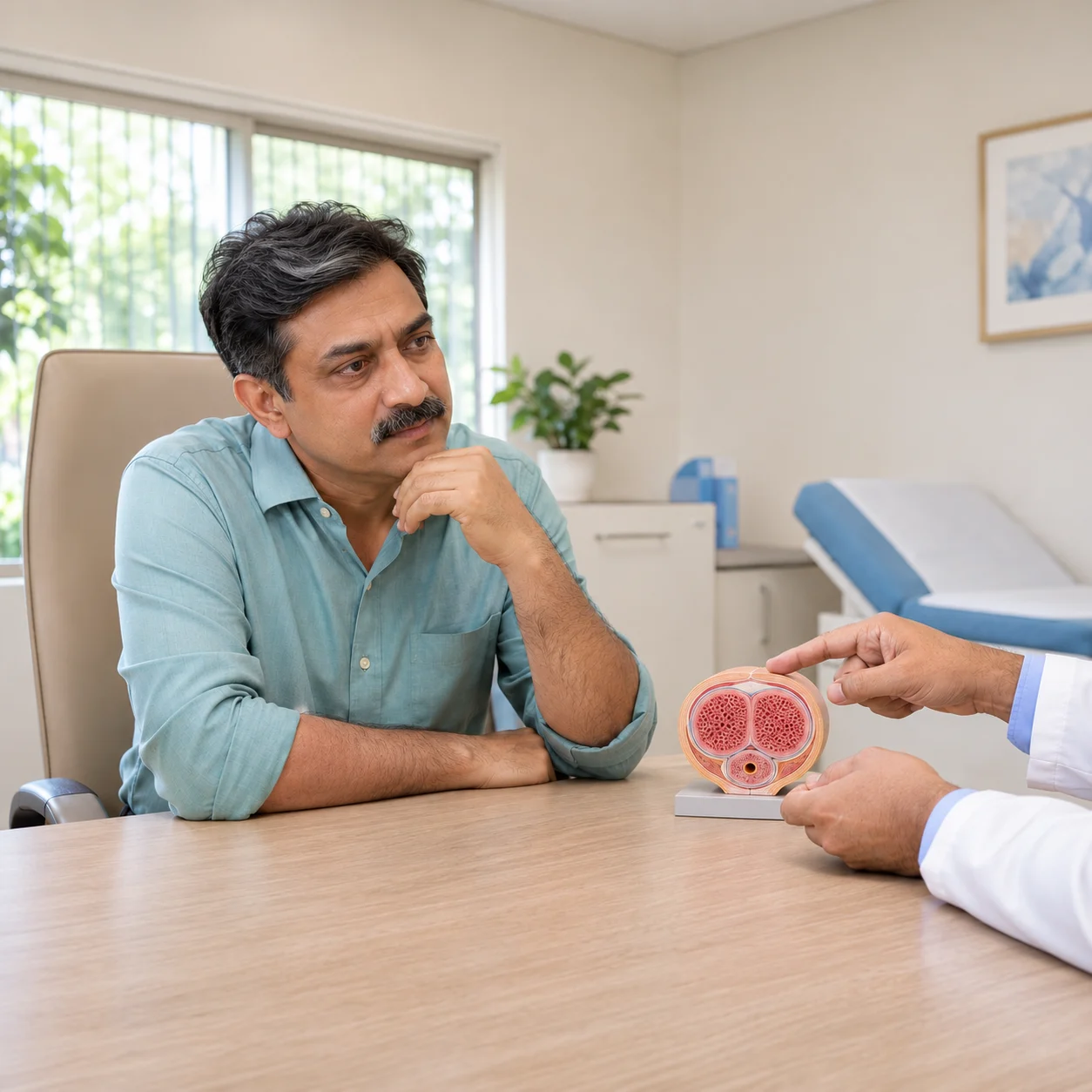
Direct Answer: Erectile dysfunction is the persistent inability to achieve or maintain an erection firm enough for satisfactory sexual activity. It is usually diagnosed when difficulty continues for several months. ED often has a physical cause, such as reduced blood flow, nerve damage or low testosterone, and is frequently linked to diabetes, blood pressure or heart health.
An erection depends on a coordinated response between the brain, nerves, hormones and the blood vessels of the penis. When sexual arousal occurs, nerve signals release chemical messengers such as nitric oxide, which relax the smooth muscle of the erectile tissue (corpora cavernosa) and allow it to fill with blood. A problem in any part of this chain can lead to ED.
Occasional difficulty, for example when tired, unwell or anxious, is a normal experience. Persistent difficulty, however, deserves a proper medical assessment, both to improve quality of life and because it can point to other health conditions that benefit from early attention.
What Causes Erectile Dysfunction?
ED is often due to a combination of factors. Identifying them helps decide which treatment is most appropriate.
Vascular Causes
- Narrowing of the arteries (atherosclerosis)
- High blood pressure and raised cholesterol
- Smoking
- Venous leak, where blood is not held within the erectile tissue
Metabolic & Hormonal Causes
- Diabetes, which can affect both blood vessels and nerves
- Low testosterone (hypogonadism)
- Thyroid disorders and raised prolactin
- Obesity and metabolic syndrome
Neurological & Surgical Causes
- Spinal cord injury, multiple sclerosis or Parkinson’s disease
- Pelvic surgery, including treatment for prostate cancer or bladder cancer
- Pelvic radiotherapy or pelvic trauma
Medicines, Lifestyle & Psychological Factors
- Some blood pressure medicines, antidepressants and hormonal treatments
- Excess alcohol, tobacco and recreational drug use
- Stress, performance anxiety, depression and relationship difficulties
- Peyronie’s disease (curvature due to penile scar tissue)
Why Can ED Be an Early Sign of Heart and Vascular Disease?
The arteries supplying the penis are narrower than those supplying the heart. Because of this, the same process that narrows blood vessels elsewhere in the body may show up first as erection difficulty. Guideline bodies such as the EAU and AUA therefore recommend that men presenting with ED are assessed for cardiovascular risk factors, including blood pressure, blood sugar, cholesterol, weight and smoking status.
Addressing these factors – with lifestyle changes and, where needed, treatment from your physician – is beneficial for general health and may also help erectile function. If heart symptoms such as chest pain or breathlessness on exertion are present, a cardiac evaluation may be advised before sexual activity is resumed or treatment is started.
How Is Erectile Dysfunction Diagnosed?
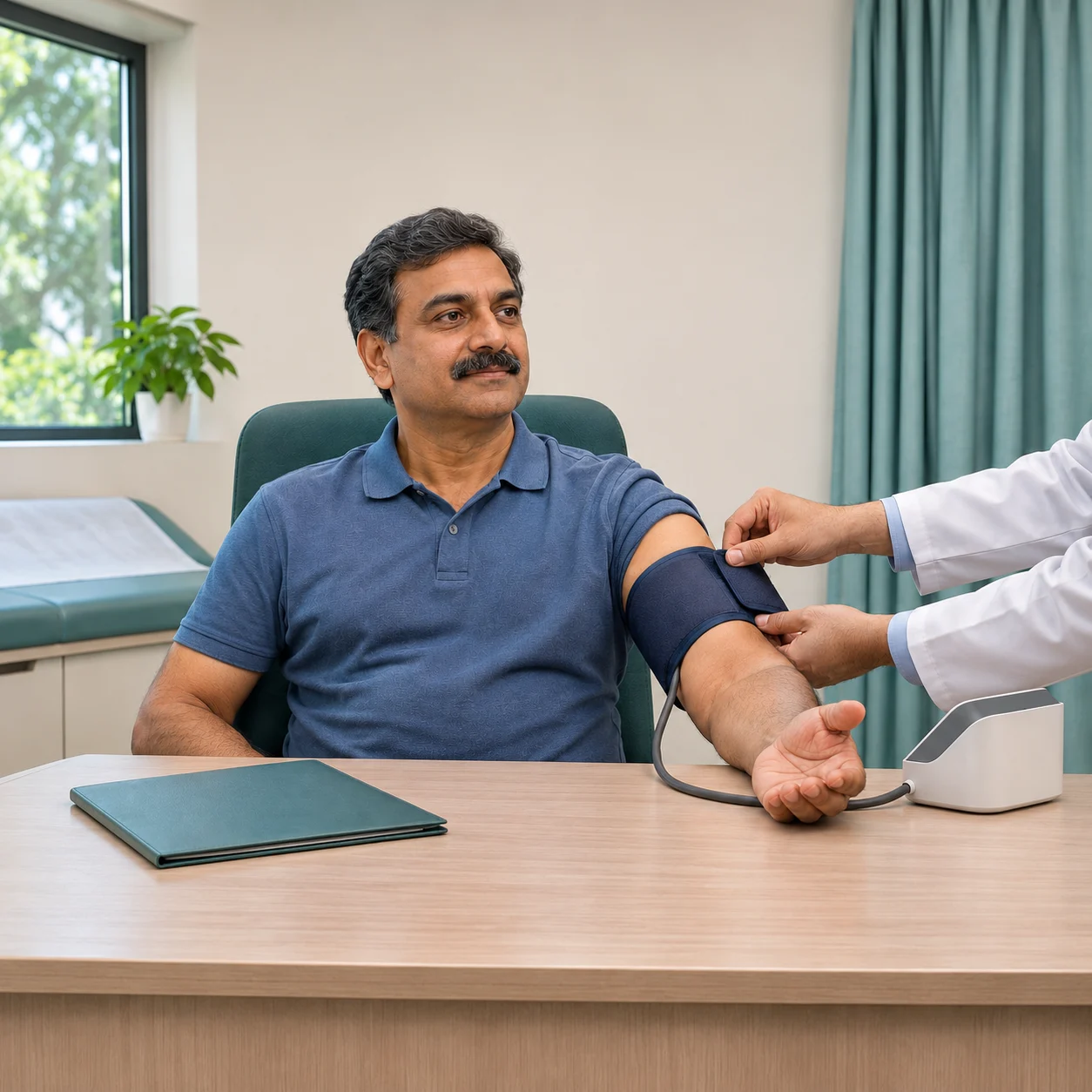
Most men need only a straightforward assessment. Specialised tests are reserved for selected situations.
- Confidential History: onset and pattern of symptoms, morning erections, libido, ejaculation, relationship context, medical conditions and current medicines. A validated questionnaire such as the IIEF-5 (SHIM) may be used.
- Physical Examination: blood pressure, body weight, genital examination for curvature, plaques or testicular changes, and signs of hormonal deficiency.
- Blood Tests: fasting glucose or HbA1c, lipid profile and morning total testosterone; additional hormones such as LH and prolactin when indicated.
- Specialised Tests (selected cases): penile Doppler ultrasound with an injected medicine to assess blood flow, or nocturnal erection testing when the cause is unclear.
- Shared Treatment Plan: findings are explained, and options are discussed in order of simplicity, safety and your own preferences.
Erectile Dysfunction Treatment in Mumbai: What Options Are Available?
Current guidelines favour a patient-centred approach in which the choice of treatment reflects the cause, other health conditions, effectiveness for the individual, side effects and the couple’s preferences. The main options are summarised below.
| Option | How It Works | Key Considerations |
|---|---|---|
| Lifestyle & Risk-Factor Control | Exercise, weight loss, stopping smoking, limiting alcohol and optimising diabetes and blood pressure control | Recommended for nearly everyone; benefits general health as well as erectile function |
| Oral PDE5 Inhibitors | Medicines such as sildenafil or tadalafil enhance the natural erection response to sexual stimulation | Must not be combined with nitrates; prescribed only after a medical review of heart health and other medicines |
| Treatment of Hormonal Deficiency | Testosterone replacement when a genuine deficiency is confirmed on repeated blood tests | Not used in men trying to conceive, as it suppresses sperm production; requires monitoring |
| Vacuum Erection Device | A cylinder and pump draw blood into the penis; a ring at the base maintains the erection | Drug-free option; requires practice and may feel less natural |
| Intracavernosal Injection | A small self-administered injection of a medicine such as alprostadil directly into the erectile tissue | Taught in clinic; risk of prolonged erection (priapism), which needs urgent attention |
| Psychosexual Therapy | Counselling for the individual or couple to address anxiety, stress and relationship factors | Useful alone or alongside medical treatment |
| Penile Prosthesis | An implanted inflatable or malleable device placed during surgery | Considered when other options are unsuitable or ineffective; irreversible, with specific surgical risks discussed in detail |
Low-intensity shockwave therapy is being studied for some men with vascular ED. Guideline bodies describe the evidence as still developing, and it is discussed on an individual basis where relevant.
ED After Prostate or Pelvic Surgery
Erectile function may be affected after radical prostatectomy, cystectomy or pelvic radiotherapy because the nerves controlling erection lie close to these organs. Recovery, where it occurs, can take many months. Early discussion of penile rehabilitation – for example the use of oral medicines, vacuum devices or injections during the recovery period – is part of comprehensive care after uro-oncology treatment and robotic surgery.
ED can also coexist with fertility concerns. Couples trying to conceive may find our page on male infertility evaluation helpful.
Frequently Asked Questions
Confidential ED Consultation in Chembur, Mumbai

Dr. Shyam Mohan
Related pages: Andrology & Men’s Health, Male Infertility Specialist in Mumbai, Varicocele Treatment, Prostate Enlargement Treatment and General Urology.
Medical disclaimer: This page provides general educational information and is not a substitute for an individual medical consultation. Medicines for erectile dysfunction should be taken only on medical advice. Diagnosis and treatment decisions depend on clinical evaluation of each person.
Clinical Reference Sources
- European Association of Urology (EAU) Guidelines on Sexual and Reproductive Health – Erectile Dysfunction.
- American Urological Association (AUA) Guideline: Erectile Dysfunction.
- British Society for Sexual Medicine (BSSM) Guidelines on the Management of Erectile Dysfunction in Men.
- British Association of Urological Surgeons (BAUS) – Patient Information on Erectile Dysfunction.