Urinary Incontinence Treatment in Mumbai

Urinary incontinence treatment in Mumbai begins with understanding why urine is leaking. Incontinence means the involuntary loss of urine, and it affects both men and women at different stages of life. It may happen when you cough or lift something, when you cannot reach the toilet in time, or as a constant dribble.
At Synergy Health Clinic in Chembur, Dr. Shyam Mohan, Consultant Urologist, evaluates stress, urge, mixed and overflow incontinence, including leakage after prostate surgery, and explains the full range of options from pelvic floor training and medicines to surgical procedures.
What is Urinary Incontinence?
Direct Answer: Urinary incontinence is the involuntary leakage of urine. The main types are stress incontinence (leakage on coughing or effort), urge incontinence (leakage after a sudden urge), mixed incontinence (both) and overflow incontinence (dribbling from a bladder that does not empty). Treatment depends on the type and usually starts with non-surgical measures.
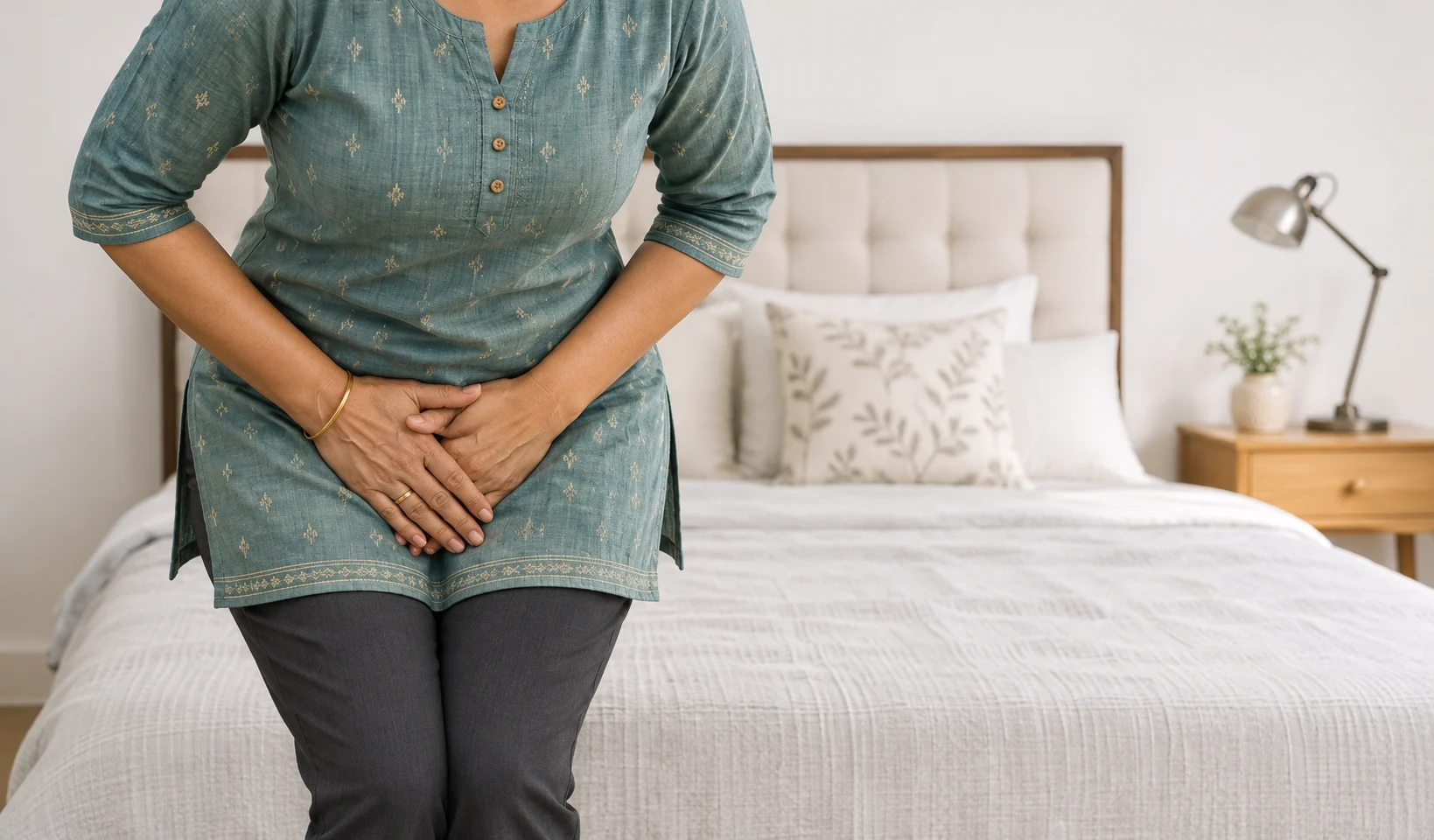
Normal bladder control depends on three things working together: a bladder muscle (detrusor) that relaxes while it fills, a urethral sphincter that stays closed until you choose to pass urine, and a pelvic floor that supports the bladder neck and urethra. Leakage occurs when one or more of these parts does not work as it should, or when the nerve signals that coordinate them are disturbed.
Incontinence can affect confidence, sleep, work, travel and intimacy, and many people delay seeking help out of embarrassment. In practice, it is a common reason for visiting a urologist, and a careful evaluation is the first step towards a plan that fits your symptoms and daily life.
What are the Types of Urinary Incontinence?
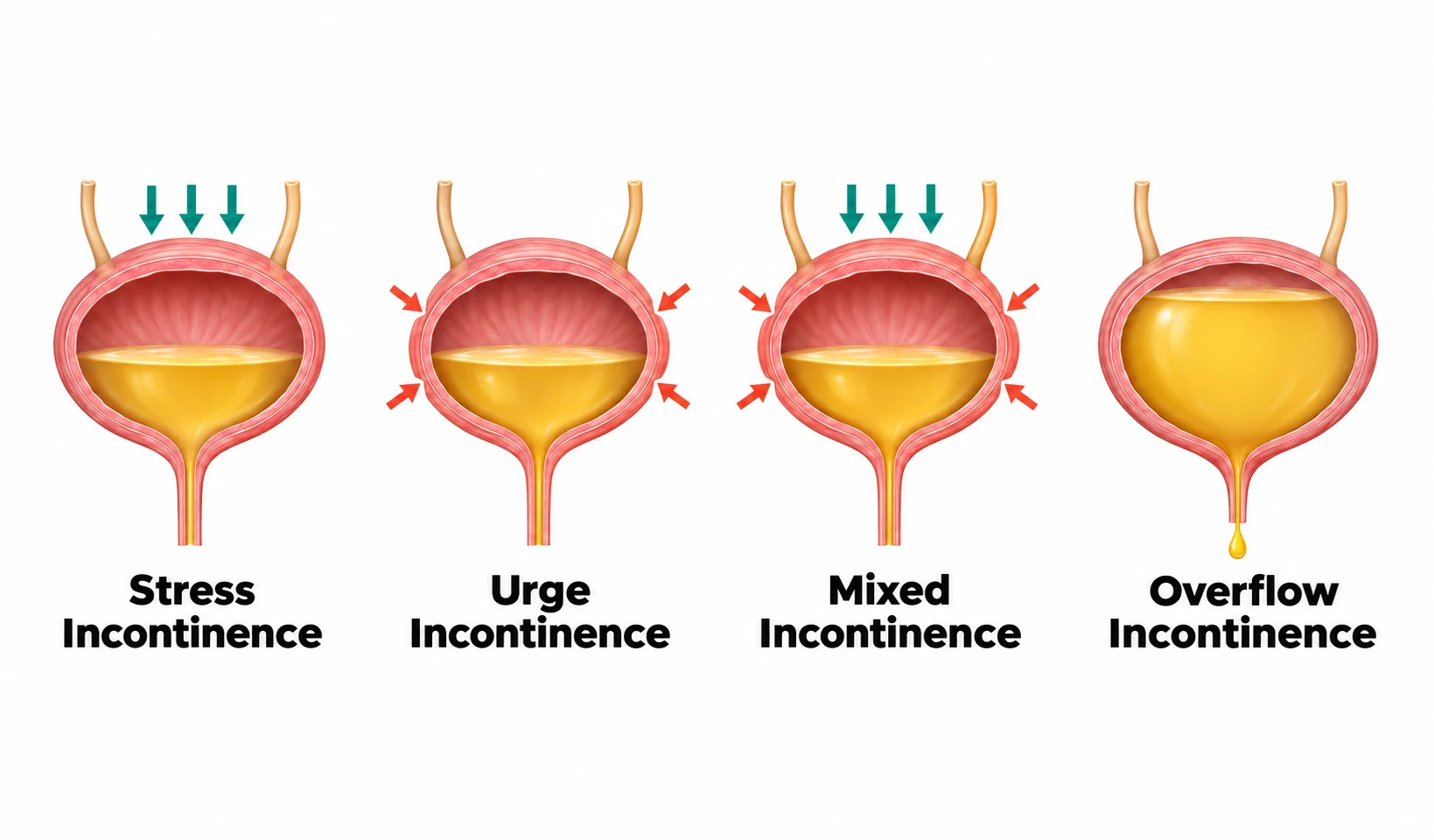
Identifying the type of leakage matters because each type has a different cause and a different treatment pathway:
Stress Urinary Incontinence (SUI)
Leakage with coughing, sneezing, laughing, exercise or lifting. In women it is commonly linked to pregnancy, childbirth, menopause and pelvic floor weakness. In men it is most often seen after prostate surgery, when the sphincter has been affected.
Urge Urinary Incontinence (UUI)
A sudden, strong urge to pass urine followed by leakage before reaching the toilet. It is usually part of overactive bladder, but can also follow infection, bladder irritation or neurological conditions.
Mixed Urinary Incontinence
A combination of stress and urge leakage. Treatment generally focuses first on whichever component is more troublesome, and the plan is adjusted as symptoms change.
Overflow Incontinence
Frequent dribbling from a bladder that does not empty fully. In men it is often related to prostate enlargement or a urethral stricture; in both sexes it may be linked to diabetes, nerve damage or certain medicines.
Less common forms include functional incontinence, where mobility or memory problems prevent timely toilet use, and continuous leakage, which may point to a fistula or an anatomical abnormality and needs specialist investigation.
Causes of Incontinence in Men and Women
The underlying causes differ between men and women, although some factors are shared:
- Women: vaginal childbirth, pregnancy, menopause-related tissue changes, pelvic organ prolapse, chronic constipation and previous pelvic surgery.
- Men: benign prostatic enlargement, urethral stricture, and treatment for prostate cancer, especially radical prostatectomy or radiotherapy.
- Both: urinary tract infection, obesity, chronic cough, diabetes, stroke, Parkinson's disease, multiple sclerosis, spinal cord problems, and medicines such as diuretics or sedatives.
- Lifestyle factors: high caffeine or fizzy drink intake, alcohol, and very high or very low fluid intake can make symptoms worse.
Post-prostatectomy incontinence
After radical prostatectomy for prostate cancer, many men notice leakage when the catheter is removed. In most men this improves gradually over the following months with pelvic floor muscle training. When significant stress leakage continues beyond the expected recovery period, the sphincter function can be assessed and further options discussed.
How is Urinary Incontinence Diagnosed?
A clear diagnosis guides the treatment plan. The evaluation at the Chembur clinic is usually carried out step by step:
- Detailed history: when leakage happens, how often, how much, the number of pads used, fluid habits, bowel function, past surgery, pregnancies and current medicines.
- Bladder diary: a simple record kept over about three days of fluid intake, times and volumes of urine passed, urgency episodes and leaks.
- Physical examination: abdominal and pelvic examination, and in men an assessment of the prostate; a cough test may be used to demonstrate stress leakage.
- Urine tests: urinalysis and culture to rule out infection or blood in the urine.
- Ultrasound and post-void residual: to check how well the bladder empties and to look at the kidneys and bladder.
- Further tests when needed: uroflowmetry, urodynamic studies (pressure-flow testing of bladder function) or cystoscopy, particularly when symptoms are complex or a procedure is being considered.
Urinary Incontinence Treatment Options in Mumbai
International guidelines recommend a stepwise approach, starting with the least invasive measures. The suitable option depends on the type of incontinence, its severity, your general health and your preferences.
1. Conservative and lifestyle measures
- Pelvic floor muscle training: regular, correctly performed exercises to strengthen the muscles that support the urethra; supervised training is often more effective than exercises learnt from a leaflet alone.
- Bladder training: gradually increasing the interval between visits to the toilet to improve bladder capacity and control.
- Fluid and diet adjustments: sensible fluid intake, reducing caffeine and alcohol, and managing constipation.
- Weight management and treating chronic cough, both of which increase pressure on the pelvic floor.
- Containment products such as pads or external devices, used as support while other treatment takes effect.
2. Medicines
For urge and mixed incontinence, medicines that calm the bladder muscle may be advised, including antimuscarinics and beta-3 adrenoceptor agonists. Vaginal oestrogen may be considered for some post-menopausal women. In men with overflow due to prostate enlargement, medicines that relax or shrink the prostate may help. Each medicine has potential side effects, which are discussed before starting.
3. Procedures and surgery
When conservative measures and medicines have not provided adequate relief, procedures may be discussed. These are described here for information; whether any of them is appropriate is decided only after full assessment.
- Mid-urethral sling (women): a narrow tape placed under the urethra to support it during effort; used for stress incontinence. The risks and benefits of mesh-based and non-mesh options are explained in detail.
- Autologous fascial sling and colposuspension: alternatives for stress incontinence that use the patient's own tissue or suspend the bladder neck.
- Urethral bulking agents: injections that add bulk to the urethral wall; less invasive, though the effect may lessen over time.
- Male sling: may be considered for some men with mild to moderate leakage after prostate surgery.
- Artificial urinary sphincter (AUS): an implanted device with a cuff around the urethra, controlled by a pump in the scrotum; generally considered for more significant male stress incontinence.
- Bladder-directed treatments for urge leakage: intravesical botulinum toxin injection and sacral or tibial nerve stimulation, discussed further on the overactive bladder page.
- Treating the cause of overflow: for example, prostate procedures such as TURP or treatment of a urethral stricture, or catheterisation where the bladder cannot empty.
Incontinence Types and Usual Treatment Pathways
The table below gives a general overview. Individual plans vary and are made after clinical evaluation.
| Type | Typical Trigger | First-Line Measures | Options if Symptoms Persist |
|---|---|---|---|
| Stress | Cough, sneeze, lifting, exercise | Supervised pelvic floor training, weight and cough management | Bulking agents, slings, colposuspension; in men, male sling or artificial urinary sphincter |
| Urge | Sudden, hard-to-defer urge | Bladder training, fluid and caffeine changes | Bladder-calming medicines, intravesical botulinum toxin, nerve stimulation |
| Mixed | Both effort and urgency | Pelvic floor and bladder training together | Treatment directed at the more bothersome component |
| Overflow | Constant dribbling, incomplete emptying | Identify and treat the cause of retention | Prostate or stricture treatment, intermittent self-catheterisation |
When Should You See a Urologist for Leakage?
Consider booking an assessment if leakage is affecting your daily life, or if it is accompanied by any of the following:
- Blood in the urine, or pain while passing urine
- Recurrent urinary infections
- A weak stream, straining or a feeling of incomplete emptying
- Continuous leakage day and night
- New leakage together with back pain, leg weakness or numbness, which needs urgent medical attention
- Persistent leakage after prostate or pelvic surgery
Frequently Asked Questions
Incontinence Consultation in Chembur, Mumbai

Dr. Shyam Mohan
Related pages: Overactive Bladder Treatment, Prostate Enlargement (BPH) Treatment, UTI Treatment, Reconstructive Urology and General Urology.
Medical disclaimer: The information on this page is for general education and is not a substitute for individual medical consultation. Treatment decisions depend on clinical evaluation, test results and a discussion of benefits and risks with your doctor. Outcomes vary from person to person.
Clinical Reference Sources
- European Association of Urology (EAU) Guidelines on Non-neurogenic Female Lower Urinary Tract Symptoms, including urinary incontinence.
- European Association of Urology (EAU) Guidelines on Non-neurogenic Male Lower Urinary Tract Symptoms.
- American Urological Association (AUA) / SUFU Guideline on Incontinence after Prostate Treatment.
- National Institute for Health and Care Excellence (NICE) Guideline NG123: Urinary incontinence and pelvic organ prolapse in women: management.
- International Continence Society (ICS) standardisation of terminology of lower urinary tract function.