Testicular Cancer Treatment in Mumbai
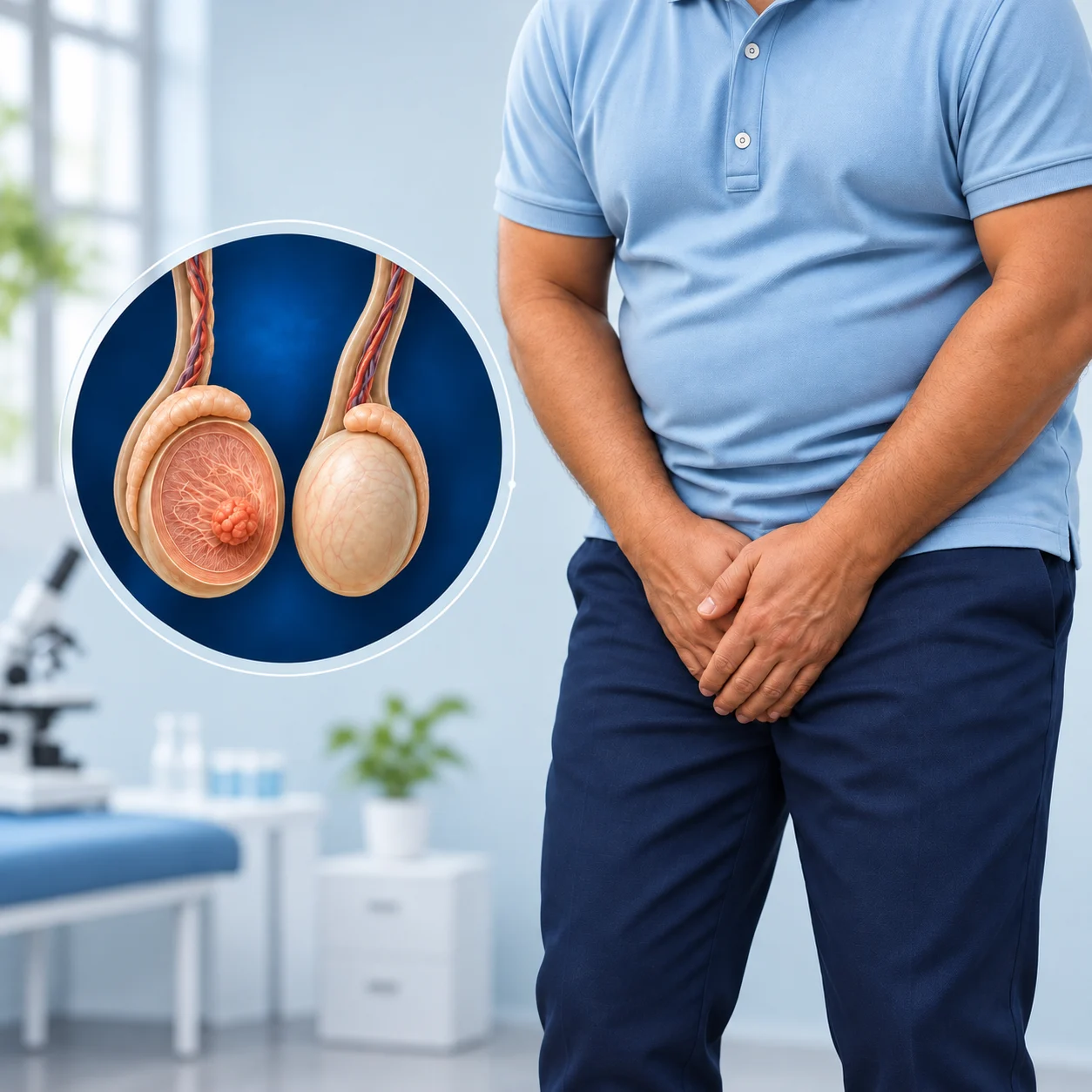
Testicular cancer treatment in Mumbai begins with a careful examination, a scrotal ultrasound and blood tumour markers, followed in most cases by radical inguinal orchidectomy to remove the affected testis and confirm the diagnosis. Further care is then planned according to the tumour type and stage.
Dr. Shyam Mohan, Consultant Urologist, Uro-Oncologist & Robotic Surgeon, evaluates testicular lumps, discusses fertility preservation before treatment and coordinates follow-up with medical and radiation oncology colleagues. Consultations take place at Synergy Health Clinic in Chembur, Mumbai.
What is Testicular Cancer?
Direct Answer: Testicular cancer is a malignant growth that starts in the testis, most often from germ cells that normally make sperm. It usually appears as a painless, firm lump in one testicle. Diagnosis relies on scrotal ultrasound and the blood markers AFP, beta-hCG and LDH, and the first treatment is usually removal of the testis through the groin.
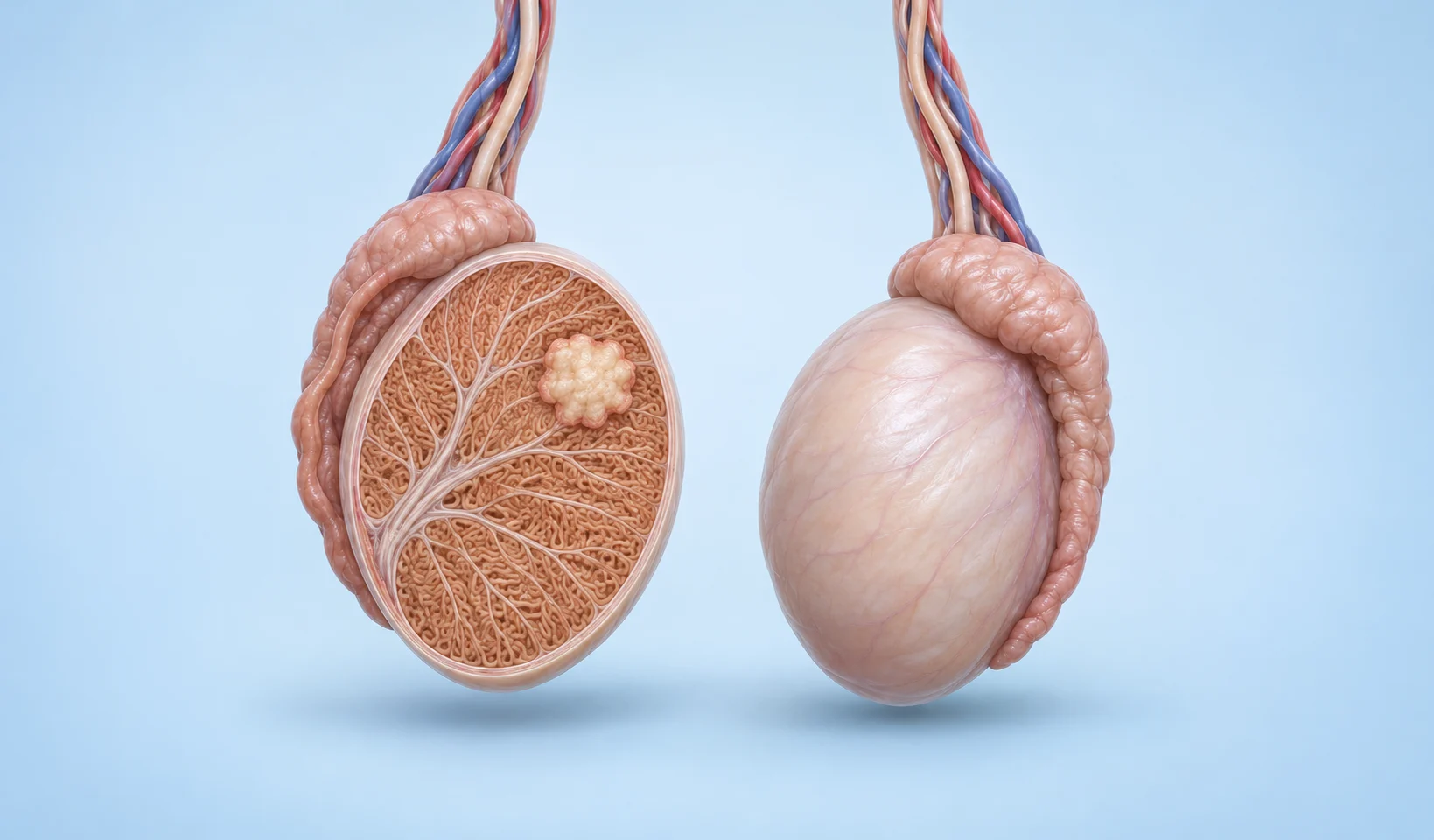
Testicular cancer is uncommon compared with other cancers, but it is one of the more frequent cancers in young and middle-aged men, typically between the late teens and the early forties. More than nine in ten testicular tumours are germ cell tumours. These are divided into two broad families, seminoma and non-seminomatous germ cell tumours (NSGCT), which behave differently and are treated differently after surgery.
Recognised risk factors include an undescended testis (cryptorchidism), a previous cancer in the other testis, a family history of testicular cancer in a father or brother, and certain conditions affecting testicular development. Many men who develop the disease have no identifiable risk factor, which is why awareness and self-examination matter.
What are the Symptoms, and How Do You Self-Examine?
Testicular cancer often causes few symptoms in its early phase. Knowing what is normal for your own body makes it easier to notice a change.
Common Warning Signs
- A painless lump or hard area within one testicle
- Swelling or enlargement of a testicle
- A feeling of heaviness or a dull ache in the scrotum or lower abdomen
- A sudden collection of fluid in the scrotum
- Less commonly, breast tenderness or enlargement (gynaecomastia), back pain or cough if the disease has spread
Monthly Self-Examination
- Examine after a warm bath or shower, when the scrotal skin is relaxed
- Roll each testicle gently between the thumb and fingers
- Feel for lumps, hard areas or a change in size or texture
- Remember the epididymis, a soft tube at the back of each testis, is normal
- It is common for one testis to be slightly larger or hang lower
Not every scrotal swelling is cancer. Conditions such as a hydrocele, epididymal cyst, epididymo-orchitis or a varicocele are far more common. The point of an early visit is simply to tell these apart with a proper examination and ultrasound.
How is Testicular Cancer Diagnosed?
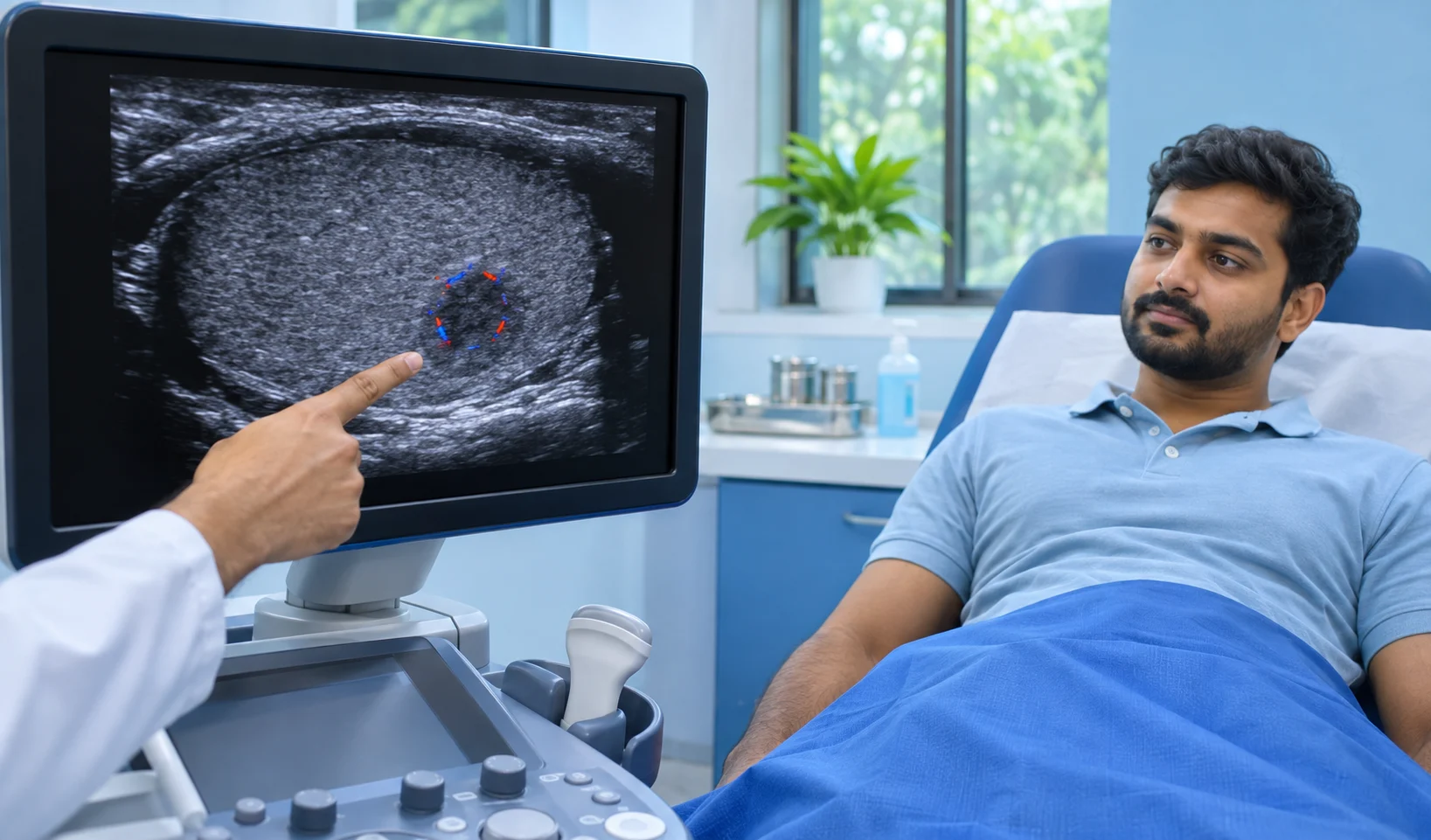
Evaluation of a suspected testicular tumour is usually completed quickly, often within days, so that treatment is not delayed.
- Clinical examination: Both testes, the groin and the abdomen are examined, along with a general assessment for any signs of spread.
- Scrotal ultrasound (with Doppler): A high-frequency ultrasound shows whether the lump is inside the testis, whether it is solid or cystic, and checks the opposite testis.
- Serum tumour markers: Blood tests for alpha-fetoprotein (AFP), beta human chorionic gonadotropin (beta-hCG) and lactate dehydrogenase (LDH) are taken before surgery and repeated afterwards.
- Staging imaging: A contrast-enhanced CT scan of the chest, abdomen and pelvis looks for spread to the retroperitoneal lymph nodes or lungs. MRI or other scans are used in selected situations.
- Histopathology: The final diagnosis and tumour subtype are confirmed by a pathologist examining the testis removed at orchidectomy.
Seminoma vs Non-Seminoma: What is the Difference?
The pathology report determines which of the two main germ cell tumour groups is present. This distinction shapes the follow-up plan.
| Feature | Seminoma | Non-Seminomatous Germ Cell Tumour (NSGCT) |
|---|---|---|
| Typical age group | Often slightly older men, commonly in the thirties and forties | Often younger men, commonly in the late teens to thirties |
| Subtypes | Classic seminoma | Embryonal carcinoma, yolk sac tumour, choriocarcinoma, teratoma, or mixed tumours |
| Tumour markers | AFP is normal; beta-hCG may be mildly raised; LDH may be raised | AFP and/or beta-hCG are frequently raised |
| Growth pattern | Generally slower growing | Can grow and spread more quickly |
| Sensitivity to radiotherapy | Sensitive to radiotherapy | Less sensitive; radiotherapy is rarely used |
| Options after orchidectomy | Surveillance, carboplatin-based chemotherapy or radiotherapy, depending on stage | Surveillance, cisplatin-based chemotherapy or RPLND, depending on stage and risk |
Radical Inguinal Orchidectomy: The First Step in Treatment
Radical inguinal orchidectomy is the removal of the affected testis together with its spermatic cord through a small incision in the groin. It serves two purposes: it removes the primary tumour and provides tissue for a definitive diagnosis. A biopsy through the scrotal skin is avoided because it can alter the lymphatic drainage and the pattern of possible spread.
- Anaesthesia: Usually spinal or general anaesthesia.
- Duration and stay: A relatively short operation, frequently performed as a day-care or overnight procedure.
- Testicular prosthesis: A silicone prosthesis can be offered at the same sitting or later, according to personal preference.
- Recovery: Most men return to desk work within one to two weeks and avoid heavy lifting for a few weeks while the groin wound heals.
- Possible issues: Bruising, scrotal swelling, wound infection or groin discomfort; these are discussed in detail before consent.
In selected situations, such as a small tumour in a single testis or tumours in both testes, testis-sparing (partial) surgery may be considered in a specialised setting. This decision is individual and follows guideline criteria.
Sperm Banking and Fertility Before Treatment
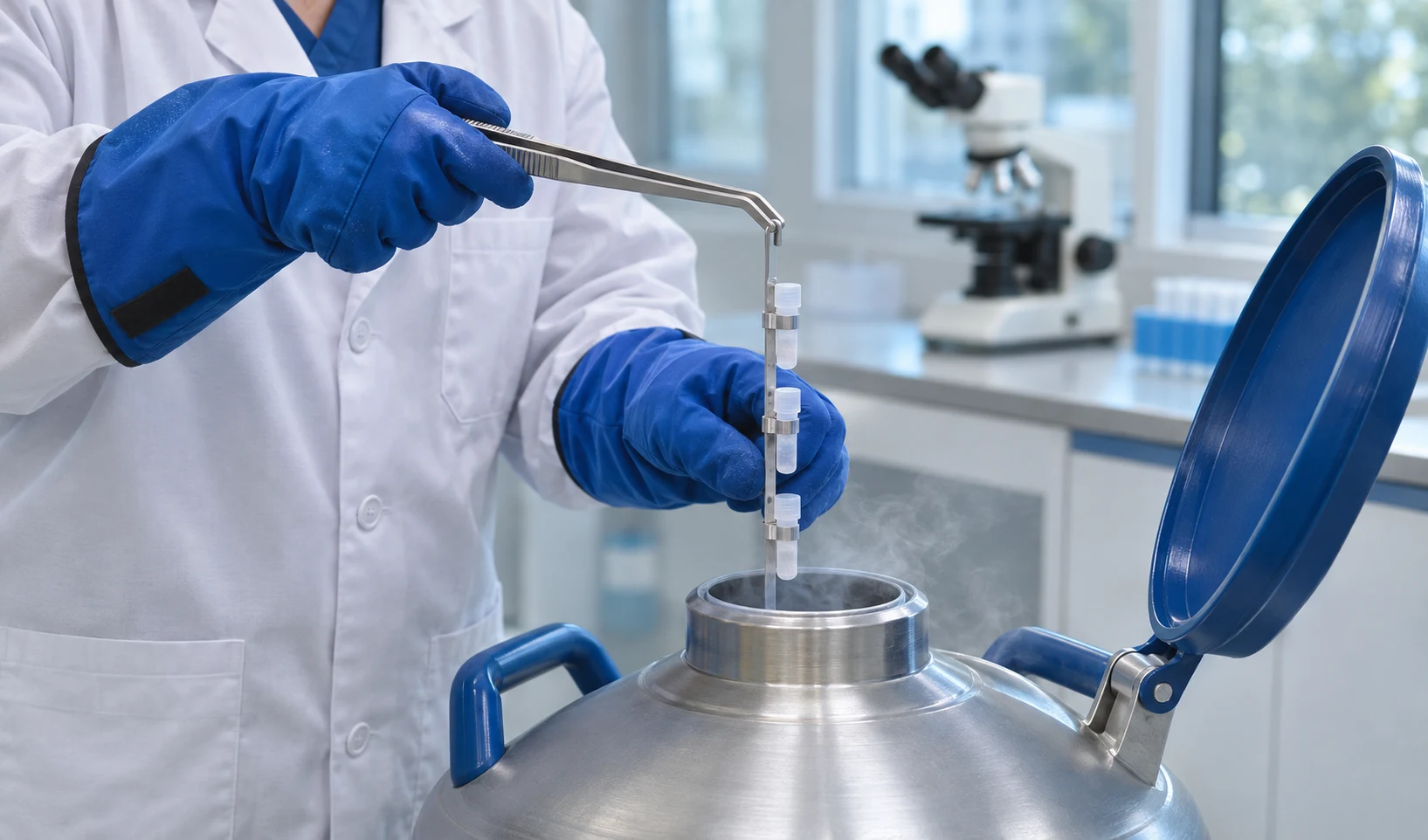
Testicular cancer and its treatment can both affect sperm production. Men may already have reduced sperm counts at the time of diagnosis, and chemotherapy or radiotherapy can lower fertility further, sometimes for a long period. For this reason, guidelines advise that sperm banking (semen cryopreservation) is offered before orchidectomy where practical, and certainly before chemotherapy or radiotherapy.
- A baseline semen analysis and hormone tests (testosterone, LH, FSH) are usually arranged.
- Sperm samples can typically be stored at an andrology or IVF laboratory within a few days.
- If no sperm is found in the ejaculate, sperm retrieval at the time of orchidectomy may be discussed.
For further details on assessment and fertility options, see our page on male infertility evaluation in Mumbai and our andrology services.
Staging and Treatment Options After Surgery
Testicular cancer is staged using the TNM system together with post-operative tumour marker levels. In broad terms, Stage I is confined to the testis, Stage II involves the retroperitoneal lymph nodes at the back of the abdomen, and Stage III means spread beyond these nodes, for example to the lungs. Advanced disease is further grouped into risk categories using the International Germ Cell Cancer Collaborative Group (IGCCCG) classification.
Active Surveillance
For many men with Stage I disease, regular check-ups with tumour markers and scans are an accepted option, with further treatment only if the cancer returns.
Chemotherapy
Platinum-based chemotherapy, given by a medical oncologist, may be used as a short adjuvant course in selected Stage I cases or as the main treatment for spread disease.
Radiotherapy
Used mainly for selected seminomas with limited lymph node involvement, planned and delivered by a radiation oncologist.
RPLND
Retroperitoneal lymph node dissection removes lymph nodes at the back of the abdomen, most often for residual masses after chemotherapy in non-seminoma. It may be open, laparoscopic or robot-assisted in selected cases.
Treatment after orchidectomy is ideally recommended through a multidisciplinary team (MDT) involving the urologist, medical oncologist, radiation oncologist, radiologist and pathologist. The choice between options is made together with the patient, taking into account the stage, risk features, personal preferences and possible side effects of each approach.
What Does the Care Pathway Look Like?
Step 1: Assessment
Examination, scrotal ultrasound, tumour markers and a discussion about fertility and sperm banking.
Step 2: Orchidectomy
Radical inguinal orchidectomy, histopathology and staging CT, with repeat markers after surgery.
Step 3: Plan & Follow-up
MDT review, agreed treatment or surveillance, and a structured follow-up schedule over several years.
Long-term follow-up also looks at general health, including blood pressure, cholesterol, testosterone levels and, after chemotherapy, hearing and kidney function. Men who notice new symptoms between visits are encouraged to contact the clinic.
Frequently Asked Questions
Testicular Cancer Consultation in Chembur, Mumbai

Dr. Shyam Mohan
Related pages: Uro-Oncology Procedures, Uro-Oncologist in Mumbai, Second Opinion for Urological Cancer, Male Infertility and Varicocele Treatment.
Medical disclaimer: This page is for general educational purposes and is not a substitute for an individual medical consultation. The diagnosis and treatment of testicular cancer depend on clinical examination, investigations and multidisciplinary review, and the appropriate plan differs from person to person.
Clinical Reference Sources
- European Association of Urology (EAU) Guidelines on Testicular Cancer.
- National Comprehensive Cancer Network (NCCN) Clinical Practice Guidelines in Oncology: Testicular Cancer.
- American Urological Association (AUA) / SUO Guideline on Diagnosis and Treatment of Early-Stage Testicular Cancer.
- European Society for Medical Oncology (ESMO) Clinical Practice Guidelines on Testicular Seminoma and Non-Seminoma.
- World Health Organization (WHO) Classification of Tumours: Urinary and Male Genital Tumours.